How to Get Promoted as a Remote Software Engineer


 CareerClimb
Working remotely?
Get AI coaching on building a promotion case your manager can champion from anywhere.

Share this article
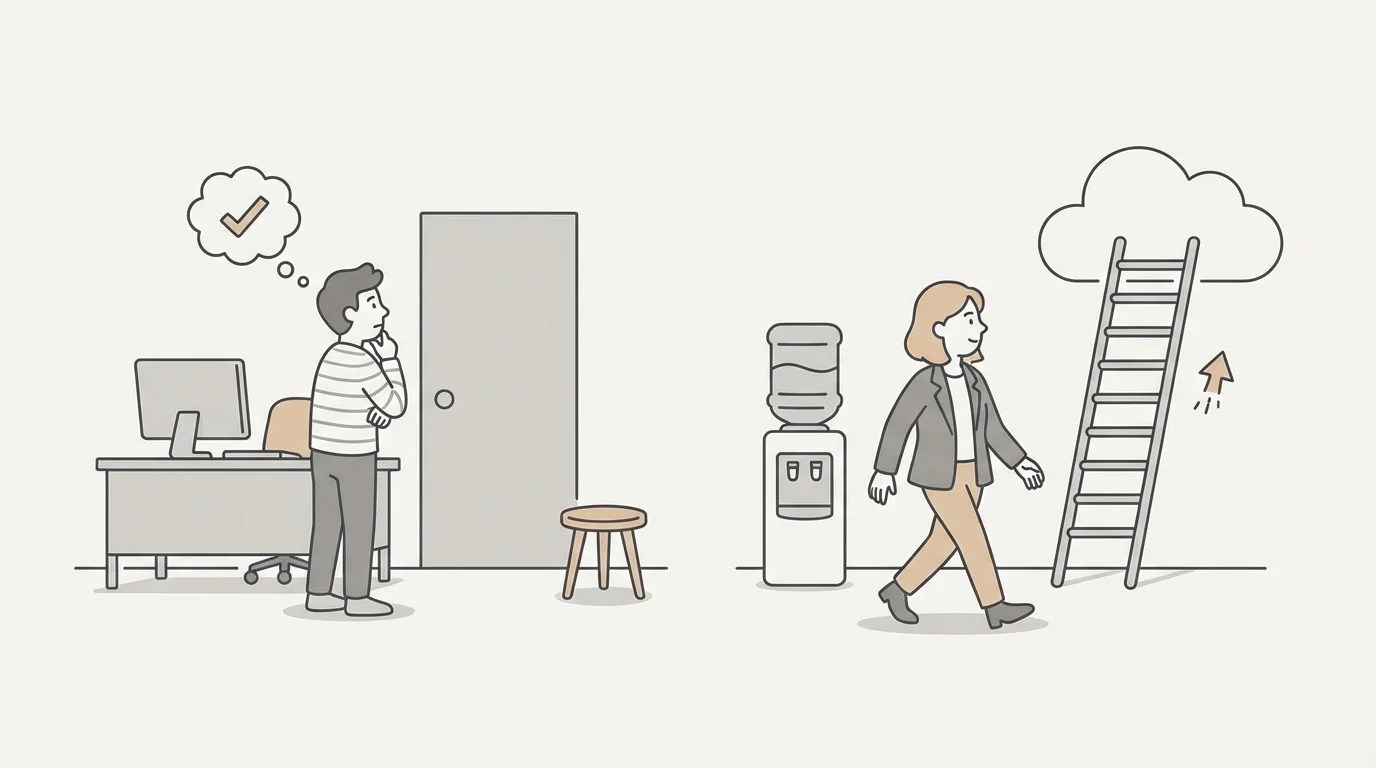
Your in-office coworker grabbed coffee with your skip-level last Tuesday. They mentioned a project they are excited about. Your skip-level remembered that conversation when a high-visibility project needed an owner two weeks later.
You were on mute in a Zoom call at the time, camera off, fixing a bug.
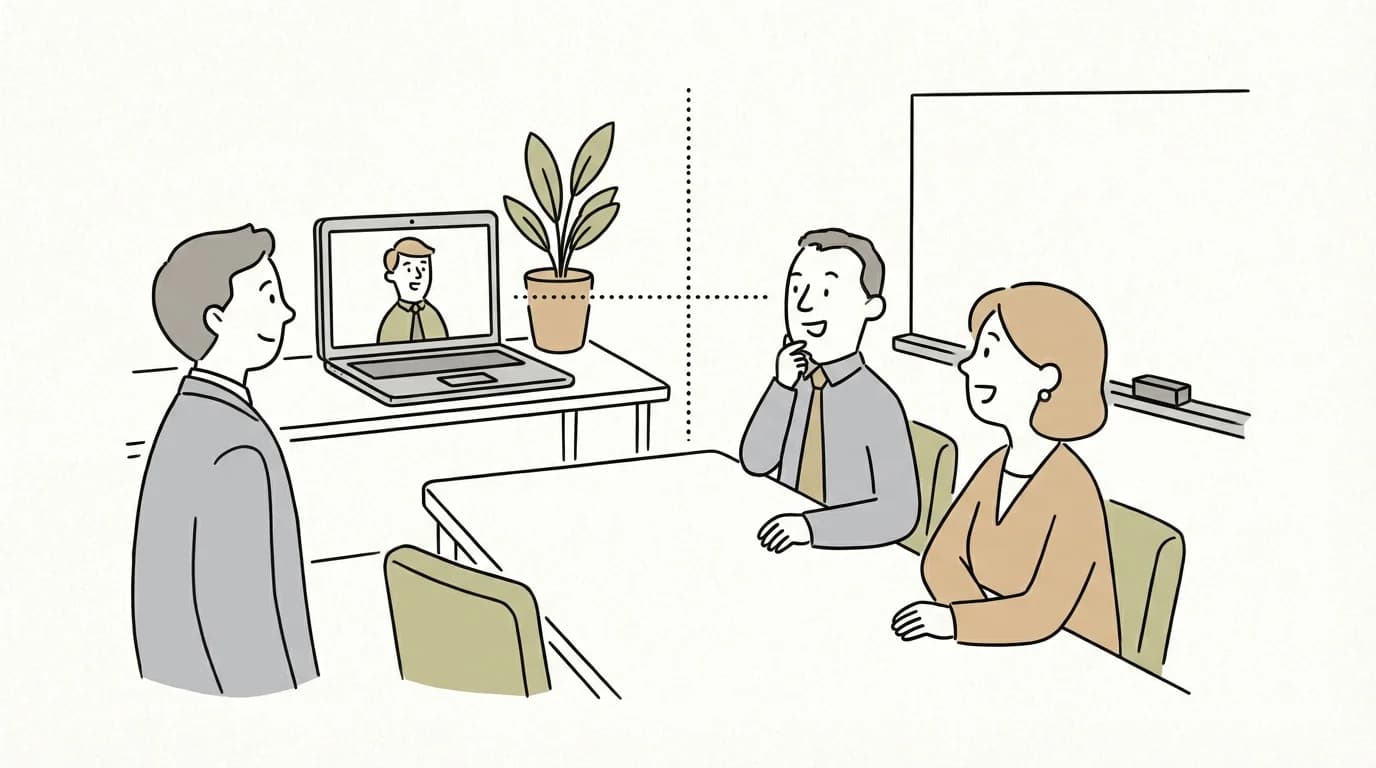
This is the remote promotion problem. The work is the same. The bar is the same. But the informal visibility that helps in-office engineers get noticed does not exist for you. Nobody wanders past your desk. Nobody overhears you solving a problem in real time. Nobody pulls you into an impromptu whiteboard session that turns into a project assignment.
If you are remote and want to get promoted, you have to build systems that replace what office workers get for free.
The visibility gap is real
There is no clean study proving that remote engineers get promoted less often than in-office ones. But there is plenty of indirect evidence. A 2023 survey by Herbert Smith Freehills found that 47% of employers view remote work as a privilege, and some companies tie remote access to seniority or performance. That framing means remote is already positioned as a reward, not a starting point for further advancement.
The bigger issue is proximity bias. Managers are human. They remember the person who was in the room during the discussion, not the person who typed a comment in Slack three hours later. They think of the engineer who presented at the whiteboard, not the one who wrote the same idea in a Google Doc.
This bias is not malicious. It is structural. And it means remote engineers need to work harder at being remembered, even when their actual work is strong.
Replace hallway conversations with written artifacts
The hallway conversation is the single biggest visibility mechanism that remote engineers lose. In-office engineers get constant low-effort exposure: bumping into their manager in the kitchen, chatting with a tech lead before a meeting, mentioning a project to someone in passing.
You need to replace this with written artifacts that serve the same purpose.
Weekly updates. A short summary of what you shipped, what you unblocked, and what you are working on next. Send it to your manager every Friday. This is your substitute for the casual "what are you up to?" conversations that happen naturally in an office.
Project summaries. For every significant project, write a brief document with the problem, your approach, and the result with numbers. Post it where your team can find it. This creates a paper trail that outlives any single conversation.
Design docs and proposals. When you identify a problem or have an idea for an improvement, write it up. Do not wait for a meeting. Written proposals travel further than spoken suggestions because they can be forwarded, referenced, and discussed asynchronously.
The goal is to create a persistent record of your contributions that does not depend on anyone's memory.
Over-communicate on purpose
In an office, your manager absorbs information about your work passively. They see you in meetings. They overhear your conversations. They notice when you are heads-down on something.
Remote, none of that happens. Your manager knows what you tell them, and nothing else.
This means you need to communicate more than feels natural. Share progress in team channels before anyone asks. Flag blockers early. Celebrate team wins publicly in Slack or your equivalent. When you finish something, say so. When you start something, say so.
This is not bragging. It is operational communication. Your in-office coworker does this automatically by being physically present. You need to do it deliberately.
The engineers who feel "invisible" as remote workers almost always under-communicate. They assume their commits and PRs speak for themselves. They do not. Your manager cannot see your commit history from the calibration meeting. If you suspect you are already being overlooked, how remote engineers get overlooked for promotions breaks down the five specific ways it happens and how to spot the early warning signs.
Own your 1:1s
Your 1:1 with your manager is the most important meeting on your calendar. For remote engineers, it is often the only meeting where career growth gets discussed.
Do not let it become a status update. Your manager can read your tickets. Use this time to talk about:
- Your promotion progress. Where do you stand against the criteria you discussed? What gaps remain?
- Your visibility. Does your manager know about the cross-team work you did last month? Did they see the design doc you wrote?
- Your next move. What project would demonstrate the scope you need? Is there a cross-team opportunity coming up?
Come to every 1:1 with an agenda. If your manager does not bring up your career, you bring it up. This is not pushy. This is the only reliable channel you have.
Build cross-team relationships intentionally
In an office, cross-team relationships happen by accident. You sit near someone from another team. You end up at the same lunch table. You meet people at company events.
Remote, you have to create these opportunities. The most effective approaches:
- Volunteer for cross-team projects. When a working group forms or an initiative spans multiple teams, raise your hand. This puts your name in front of engineers and managers you would never interact with otherwise.
- Be the responsive person on shared services. If your team owns something other teams depend on, be the engineer who answers questions quickly and follows through. Over time, people outside your team start to associate your name with reliability.
- Schedule occasional 1:1s with engineers on other teams. Not a networking call. A "I use your team's API and I wanted to understand the roadmap" call. Genuine collaboration builds genuine relationships.
Document everything for the promotion case
Remote engineers have one structural advantage: if you have been documenting your work all along, your promotion case is stronger than your in-office coworker who relied on being remembered.
Your brag sheet should include, for each significant contribution:
- Context. What was the problem and why did it matter?
- Your role. What specifically did you do? Did you lead, design, implement, or coordinate?
- Result. What happened? Include numbers when possible.
- Artifacts. Links to the design doc, the PR, the post-mortem, the dashboard showing the improvement.
When your manager goes to write your promotion narrative, or when a promotion committee reviews your case, this document is what they work from. The more concrete it is, the less your physical absence matters.
The remote promotion playbook
Month 1 to 3. Set up the infrastructure: weekly updates, 1:1 agendas, a brag sheet document. Tell your manager you are thinking about promotion and ask for specific criteria.
Month 4 to 8. Pursue a project with measurable cross-team impact. Be aggressively visible: post updates, write summaries, present in team meetings even when your camera is off elsewhere.
Month 9 to 12. Compile your case. Review your brag sheet with your manager. Get feedback from at least two people outside your team who can speak to your work. Push for the promotion conversation.
The remote engineer who gets promoted is not the one who works the hardest. It is the one who made sure the right people knew about their work. That is true for everyone, but for remote workers, it is the whole game. The underlying skill is learning how to stop being invisible at work, which applies whether you are remote, hybrid, or just naturally quiet.