SpaceX Software Engineer Career Ladder
Every level of SpaceX's software engineering ladder from L1 to L4 — typical timelines, what changes at each level, why engineers get stuck, and how promotions actually work.
Last updated: March 25, 2026
 CareerClimb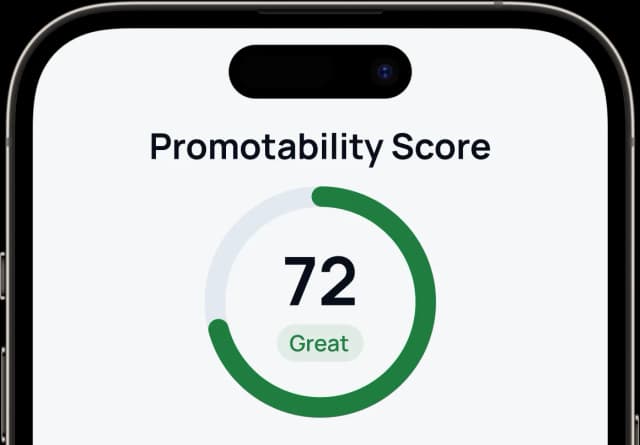
Aiming for your next level at SpaceX?
Get a personalized promotion plan with AI coaching.

Share this article
Level Overview
| Level | Title | Typical Years | Median TC | Terminal? |
|---|---|---|---|---|
| L1 | Software Engineer | 1–2 yr | $184K | No |
| L2 | Software Engineer II | 2–3+ yr | $237K | No |
| L3 | Senior Software Engineer | 3–5+ yr | $366K | Yes |
| L4 | Staff Software Engineer | 4–6+ yr | $404K | Yes |
Promotion Cycle
Frequency
No fixed cadence — promotions happen when your manager and leadership agree
Decision Maker
manager
Manager-driven with leadership advocacy. There is no formal promotion committee like at Google or Meta. Your manager identifies you as ready, builds your case, and advocates to their leadership chain. For senior levels (L3+), multiple leaders must vouch for you. Promotions are based on demonstrated next-level performance for at least 6 months, not on meeting a checklist or waiting out a timeline.
Key Details
- •No fixed promotion cycle — promotions can happen at any time but tend to cluster around performance review periods
- •Manager advocacy is the primary driver — if your manager doesn't push for it, it won't happen
- •You must demonstrate next-level responsibilities for at least 6 months before being considered
- •Some managers promote high performers within a year; others take 2-3+ years for the same transition
- •For L3+ promotions, multiple leaders beyond your direct manager must vouch for your readiness
- •Peer comparison within your team matters — performance is evaluated relative to others at your level
- •SpaceX uses RSUs tied to its private valuation; equity is illiquid and sold via tender offers roughly twice a year
- •Management track tends to get promoted faster due to organizational growth and backfill needs
- •SpaceX prioritizes impact and shipping over tenure — time-in-level alone means nothing
- •At senior levels, direct interaction with Elon Musk can factor into career trajectory — unpredictably
Are You Ready for Your Next Level at SpaceX?
Get a personalized score and find out what's holding you back.
8 questions · about 2 minutes · free score
1 of 8
If your manager had to make the case for your promotion tomorrow, could they — without calling you first?
L1 — Software Engineer
Junior / New GradEntry point for new grads. You write production code under close supervision, learn SpaceX's codebase and internal tools, and execute well-scoped tasks assigned by senior engineers. SpaceX expects new hires to ship working code within weeks — the ramp is fast and unforgiving.
Typical Time at Level
1–2 years (typical: ~1.5 years)
Total Compensation (US)
$155K–$210K (median: $184K)
Source: Levels.fyi
Why Engineers Get Stuck Here
- •Waiting for someone to hand you work instead of seeking out tasks proactively
- •Not ramping fast enough on SpaceX's internal tools and codebase — the learning curve is steep and the patience is short
- •Writing code that works but skipping tests, monitoring, and production reliability
- •Staying invisible — not communicating progress or blockers to your manager
L2 — Software Engineer II
Mid-LevelYou own features end-to-end and make sound technical decisions within your domain. Your manager gives you problems, not step-by-step instructions. You write production-quality code independently, contribute to design discussions, and start reviewing others' code with substantive feedback.
Typical Time at Level
2–3+ years (typical: ~3 years)
Total Compensation (US)
$195K–$280K (median: $237K)
Source: Levels.fyi
Why Engineers Get Stuck Here
- •Executing well on assigned work but never identifying problems on your own
- •No evidence of technical leadership — never authoring design docs or driving technical decisions
- •Avoiding cross-team work and staying inside your immediate team's codebase
- •Not building relationships with senior engineers who can advocate for your promotion
- •Assuming time-in-level earns a promotion — SpaceX explicitly rewards impact over tenure
- •Being on a team with limited scope or visibility, making it harder to demonstrate next-level work
L3 — Senior Software Engineer
SeniorTeam-level ownership and technical leadership. You design systems, mentor L1/L2 engineers, and drive projects that span multiple components. You identify technical problems before they become urgent and propose solutions without being asked. L3 is the most common senior level at SpaceX and where most engineers plateau.
Typical Time at Level
3–5+ years (typical: ~5 years)
Total Compensation (US)
$300K–$420K (median: $366K)
Source: Levels.fyi
Why Engineers Get Stuck Here
- •Operating at team scope only — L4 requires influence beyond your immediate team
- •Doing all the work yourself instead of multiplying impact through others
- •Lacking visibility with leadership — your manager's manager doesn't know your name or your contributions
- •No cross-team design artifacts or architectural influence outside your team
- •Not being recognized as the best in the company at something specific and meaningful
- •Being on a non-priority team where promotion slots are scarce and attention from leadership is low
- •Burnout from SpaceX's intense culture making it hard to sustain the extra effort required for Staff-level visibility
L4 — Staff Software Engineer
StaffOrganization-wide scope and influence. You set technical direction across multiple teams, drive architecture decisions that affect entire product areas, and grow senior engineers. Multiple leaders must vouch for you at this level. Your work is visible to directors and VPs, and at the highest levels may involve direct interaction with Elon Musk.
Typical Time at Level
4–6+ years (typical: ~6 years)
Total Compensation (US)
$350K–$470K (median: $404K)
Source: Levels.fyi
Why Engineers Get Stuck Here
- •Impact limited to a single team or product area
- •Not influencing technical direction at the org level
- •Lacking executive visibility — senior promotions require scrutiny from SpaceX's leadership chain
- •No evidence of growing the organization beyond individual mentorship
Additional Context
SpaceX is a private company with a less formalized career ladder than traditional big tech. There are no published promotion rubrics, no committee-based reviews, and no guaranteed cadence. Promotions depend heavily on manager advocacy and leadership visibility. SpaceX grants RSUs tied to its private valuation rather than publicly traded stock, meaning equity compensation is illiquid — shares can only be sold during periodic tender offers (typically twice a year). The engineering culture is mission-driven, fast-paced, and demands long hours. Teams vary significantly in promotion dynamics — Starlink, Falcon, Dragon, and Starship software teams each have different leadership and different promotion tempos. Attrition is high, which creates promotion opportunities but also means institutional knowledge is constantly lost.
Keep exploring
Software Engineer ladders at other companies
Data sourced from Levels.fyi (verified SpaceX employees), Team Blind (verified employee threads), Reddit r/cscareerquestions, and 6figr. Compensation figures from Levels.fyi. Last verified March 2026.