Target Software Engineer Career Ladder
Every level of Target's software engineering ladder from TLP to L7 — typical timelines, what changes at each level, why engineers get stuck, and how promotions work.
Last updated: March 25, 2026
 CareerClimb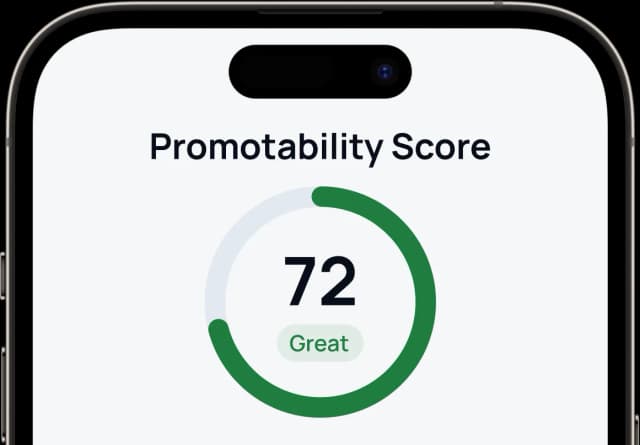
Aiming for your next level at Target?
Get a personalized promotion plan with AI coaching.

Share this article
Level Overview
| Level | Title | Typical Years | Median TC | Terminal? |
|---|---|---|---|---|
| TLP | Associate Engineer | 1–2 yr | $97K | No |
| L4 | Software Engineer | 1.5–4 yr | $101K | No |
| L5 | Senior Software Engineer | 2–3+ yr | $132K | Yes |
| L6 | Lead Engineer | 3–4+ yr | $210K | Yes |
| L7 | Principal Engineer | 4–6+ yr | $308K | Yes |
Promotion Cycle
Frequency
Annual performance review cycle (semi-annual check-ins reported)
Decision Maker
hybrid
Manager-driven with committee approval at senior levels. Engineers write self-reviews documenting contributions and impact. Peer feedback is collected, and managers assess readiness for the next level. At L5+ promotions, a promotion case is built and reviewed by leadership. The process is described by employees as slow and bureaucratic compared to FAANG companies.
Key Details
- •Annual performance review is the primary promotion window
- •Self-reviews, peer reviews, and manager assessments feed into the process
- •At senior levels (L5+), promotions require building a case that goes beyond your manager
- •Promotion process is described on Blind and Glassdoor as slow, bureaucratic, and rare
- •Engineers must demonstrate they are already performing at the next level before promotion
- •18-month minimum in role before promotion eligibility (reported, not officially confirmed)
- •The L5-to-L6 promotion is the most competitive — it comes with a massive comp increase ($80K+)
- •TLP engineers typically promote to L4 after 1-1.5 years in the program
- •Politics and manager favoritism are cited as factors by multiple sources
- •S.M.A.R.T. goals for personal development are part of the review process
Are You Ready for Your Next Level at Target?
Get a personalized score and find out what's holding you back.
8 questions · about 2 minutes · free score
1 of 8
If your manager had to make the case for your promotion tomorrow, could they — without calling you first?
TLP — Associate Engineer
Entry-Level / New GradEntry point through Target's Leadership Program (TLP). You learn Target's systems, retail technology domain, and engineering practices under close mentorship. Most TLP engineers rotate through projects before landing on a permanent team.
Typical Time at Level
1–2 years (typical: ~1.5 years)
Total Compensation (US)
$88K–$105K (median: $97K)
Source: Levels.fyi
Why Engineers Get Stuck Here
- •Not ramping quickly on Target's retail tech domain and internal tooling
- •Staying in rotation mode too long without demonstrating ownership of a feature
- •Not building relationships during TLP rotations that translate to a strong permanent team placement
- •Failing to demonstrate independence — L4 expects you to own tasks without close guidance
L4 — Software Engineer
Mid-LevelStandard mid-level role. You own features independently, contribute to design discussions, and deliver production code with minimal oversight. Stock and bonus components are minimal at this level, with base salary making up nearly all of your compensation.
Typical Time at Level
1.5–4 years (typical: ~2.5 years)
Total Compensation (US)
$92K–$115K (median: $101K)
Source: Levels.fyi
Why Engineers Get Stuck Here
- •Executing well at L4 scope without taking on L5-level complexity
- •Not writing or contributing to technical design documents
- •Not mentoring TLP or junior engineers on your team
- •Waiting for your manager to identify promotion-ready projects for you
- •Limited visibility outside your immediate team
L5 — Senior Software Engineer
SeniorTeam-level technical leadership. You own medium-to-large projects end-to-end, author design documents, mentor junior engineers, and drive technical decisions for your team. L5 is a common hiring level for experienced external candidates. Stock and bonus remain small relative to L6+.
Typical Time at Level
2–3+ years (typical: ~3 years)
Total Compensation (US)
$118K–$155K (median: $132K)
Source: Levels.fyi
Why Engineers Get Stuck Here
- •Impact stays within your team — Lead requires cross-team influence and architectural scope
- •Not driving initiatives with measurable business impact at scale
- •Promotion process is slow and bureaucratic — even strong performers wait multiple cycles
- •Manager advocacy is inconsistent — promotions depend heavily on having the right manager
- •Not developing system design and architecture skills needed for L6
- •The L5-to-L6 comp jump is massive ($132K to $210K), making the bar correspondingly high
- •Politics and favoritism reported as factors in L6 promotion decisions
L6 — Lead Engineer
Staff / LeadCross-team technical leadership with significant compensation growth. Stock and bonus become meaningful at this level ($19K stock + $17K bonus vs. negligible amounts at L5). You drive architectural decisions, lead planning for multi-team initiatives, and mentor Senior engineers. The L5-to-L6 jump is the most transformative in Target's ladder.
Typical Time at Level
3–4+ years (typical: ~4 years)
Total Compensation (US)
$185K–$245K (median: $210K)
Source: Levels.fyi
Why Engineers Get Stuck Here
- •Impact scoped to a single team or product area rather than the broader org
- •Limited L7 headcount — Principal slots are rare at Target
- •Not driving org-level technical strategy
- •Requires sustained visibility with directors and VPs to advance further
L7 — Principal Engineer
PrincipalOrganization-wide scope. You define technical strategy across Target Tech, drive company-wide engineering initiatives, and are among the most senior individual contributors. Extremely rare — most L7 engineers were hired externally at this level or promoted after many years.
Typical Time at Level
4–6+ years (typical: ~6 years)
Total Compensation (US)
$270K–$322K (median: $308K)
Source: Levels.fyi
Why Engineers Get Stuck Here
- •Very few positions above L7 exist at Target
- •Requires sustained org-wide impact and executive visibility
- •Most engineers at this level focus on deepening impact rather than seeking further promotion
Additional Context
Target is a Fortune 500 retailer headquartered in Minneapolis, MN. Target Tech (the company's technology arm) has grown significantly, building in-house platforms for supply chain optimization, e-commerce, store operations, and data analytics. The Target Leadership Program (TLP) is a well-known new grad pipeline that feeds into the engineering org. Compensation is lower than FAANG at equivalent levels, but cost of living in Minneapolis is substantially lower than Bay Area or Seattle. Stock and bonus are minimal at lower levels (TLP through L5), making the L5-to-L6 jump the most meaningful compensation inflection point in the ladder.
Keep exploring
Software Engineer ladders at other companies
Data sourced from Levels.fyi (300+ Target profiles), 6figr (206 profiles), Team Blind, Glassdoor, Indeed, and Target job postings. Compensation figures from Levels.fyi (US, primarily Minneapolis HQ). Last verified March 2026.