What's Capping Your Promotion Chances (And How to Fix It)

 CareerClimb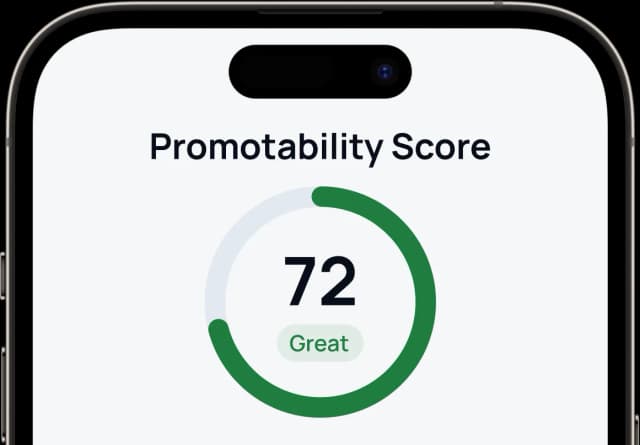
Find out what's actually blocking your promotion
The CareerClimb app measures your promotion readiness and shows you exactly which cap is holding you back.

Share this article
You're doing good work. You've been doing it for a while. And you keep watching other people get promoted instead of you.
So you work harder. Take on a bigger project. Volunteer for the on-call rotation nobody wants. Stay late. Ship faster. And the next review cycle passes with the same result.
Your output is fine. Promotions have hard caps that no amount of effort breaks through. Most professionals hit these caps without realizing they exist. They assume working harder will eventually push them over the line. It won't. Not until the cap is removed.
Three specific caps block the majority of stalled promotion cases. Each one has a fix. But you have to know it's there first.
Cap 1: You haven't had the conversation
This is the biggest one. And it's the one almost nobody wants to deal with.
Only 30% of employees say their manager involves them in goal-setting, according to Gallup. That leaves 70% of professionals working toward promotion without their manager's direct involvement.
That's not a strategy. That's hoping to get picked.
The conversation isn't "How am I doing?" or "What should I focus on this quarter?" Those are fine conversations, but they're not this one. This conversation is specific: "I want to be promoted in the next cycle. What do you think I need to do to make that happen?"
Why this cap exists. Promotion decisions aren't made by you. They're made by your manager, in a room full of other managers, arguing for their own people. If your manager doesn't know you're targeting promotion, they won't prepare a case. If they don't prepare a case, nobody else will either. Your work might be excellent. Without this conversation, it stays invisible to the process that decides your career.
Why people avoid it. Fear. Fear of hearing "you're not ready." Fear of seeming entitled. Fear that bringing it up will somehow count against you. 46% of employees say their manager doesn't even know how to help with career development, according to INTOO/Workplace Intelligence. So even when you work up the nerve, there's a chance your manager fumbles the response.
But avoiding the conversation doesn't protect you. It caps you. The documentation, the visibility work, the extra projects: none of it gets you past the halfway point until your manager knows what you're working toward and has told you what's missing.
How to fix it. Have the conversation. Not someday. Before your next review cycle. Come in with a specific ask: "I want to get promoted to [level] in the [cycle]. What gaps do you see?" Write down whatever they say. That response becomes your roadmap.
68% of professionals who directly asked for a promotion received one. The conversation itself changes the dynamic, because it forces your manager to either back you or tell you what needs to change. Both outcomes are better than silence.
Cap 2: Your manager supports you but hasn't said yes
There's a version of the manager conversation that feels productive but doesn't move anything.
It sounds like this: "You're doing great. Keep it up. I think you'll get there."
That's encouragement, not sponsorship. There's a hard cap between the two.
Support means your manager likes your work and wants good things for you. Sponsorship means your manager is planning to argue for your promotion in the next calibration meeting and believes it can happen.
Why this cap exists. Calibration is competitive. Your manager usually has a limited number of promotions they can push for. If they're "supportive" of five people and one slot opens, four of those people discover that support didn't mean what they thought it meant. Calibration rewards managers who show up with a specific, evidence-backed case for a specific person. A vague sense that someone is doing well doesn't survive that room.
How to tell the difference. After the initial promotion conversation, follow up with a harder question: "Do you believe I can be promoted this cycle? Not eventually. This cycle. And what would need to happen between now and then to make it real?"
If the answer is specific ("You need one more cross-team project and to close the gap on mentorship"), you have sponsorship. If the answer is "keep doing what you're doing" or "let's see how things go," you have support without commitment. That distinction is the difference between your manager walking into calibration prepared to fight for you and your manager hoping your name comes up.
How to fix it. You can't force sponsorship. But you can give your manager what they need to commit. What managers look for when promoting employees boils down to evidence they can cite and confidence the promotion committee won't push back.
Build that evidence, surface it to your manager in structured updates, and ask directly: "Do you have what you need to make my case?" Make it easy for them to say yes.
Cap 3: Your evidence has a hole in it
You've been documenting your work. You have a running list of wins. You've shipped projects, hit deadlines, solved hard problems.
And your evidence still has a gap that will cost you in calibration.
Most professionals document what comes naturally. Engineers document technical delivery. Managers document team execution. Product people document launches. But promotion rubrics don't evaluate one dimension. They evaluate several. And balanced evidence across all of them is what separates the people who get promoted from the people who get told "strong in some areas, but not enough breadth."
Why this cap exists. 62% of performance rating variance comes from rater bias, according to Scullen et al. Promotion committees correct for this by looking across categories. If you're exceptional at delivery but have zero evidence of mentorship, leadership, or cross-team collaboration, the committee sees an unbalanced profile. The strongest single-dimension case still loses to a well-rounded one.
Common gaps people miss:
- Mentorship evidence. You helped three junior engineers this quarter. Did you document it? Can you name specific outcomes from your guidance?
- Cross-team impact. You solved a problem that unblocked another team. Did you write down who it unblocked and what the business impact was?
- Leadership without authority. You drove alignment on a contentious technical decision. Did you capture what the situation looked like before you stepped in and what it looked like after?
Documenting your work takes minutes a day. The bottleneck is awareness, not effort. You can't document what you don't realize counts.
How to fix it. Pull up your promotion rubric. List every category it evaluates. For each one, count how many documented wins you have. If any category has zero or one entry, that's your gap. Fill it before review season, not during it.
 CareerClimb
Hard work isn't the bottleneck. Find out what is.
CareerClimb shows you exactly which gap is holding you back.
Why you can't see your own cap
These three caps share something in common: they're invisible from the inside.
The person who most needs the manager conversation assumes their manager already knows. The person who most needs explicit sponsorship mistakes encouragement for commitment. And the person with the documentation gap thinks "I wrote down my big project" counts as balanced evidence.
Self-assessment fails here. People overestimate their readiness in areas where they lack information, and these caps are about information you don't have.
You need something external that measures where you stand and tells you what's holding you back.
How the CareerClimb app surfaces your cap
The CareerClimb app built its Promotability Score around these exact caps.
The score measures your promotion readiness across four pillars: documentation, visibility, manager alignment, and clarity. Each one weighted equally. The hard caps are built in:
- Your score can't exceed 50 until you've had the manager conversation. No matter how strong your documentation, no matter how visible your work. The app won't let you believe you're halfway ready when the most important step hasn't happened.
- Your score can't exceed 80 until your manager has confirmed promotion is possible this cycle. Support without sponsorship has a ceiling, and the score reflects it.
- Your score can't exceed 90 without balanced evidence across your rubric categories. A strong case in one area with nothing in another is a liability in calibration.
These thresholds reflect how promotion decisions work. The score tells you what's capping you. The action plan tells you what to do about it. As you take each step, the cap lifts and your score moves.
Harkin et al. (2016) analyzed 138 studies and found that monitoring progress toward a goal improves attainment (d = 0.40). Knowing the number makes you act. Not knowing keeps you stuck.
Hard work isn't the bottleneck
If effort alone determined promotions, you'd already have yours. The bottleneck is almost never your performance. It's a conversation you haven't had, a commitment your manager hasn't made, or a gap in your evidence you can't see from the inside.
Those are fixable. But only once you know which one is capping you.
Find out what's actually blocking your promotion. The CareerClimb app measures your promotion readiness across four pillars and tells you exactly which cap is holding you back. Download CareerClimb free and start closing the gap.