Spotify Product Manager Career Ladder
Every level of Spotify's PM ladder from Associate PM to Group PM — typical timelines, what changes at each level, why PMs get stuck, and how promotions work.
Last updated: March 24, 2026
 CareerClimb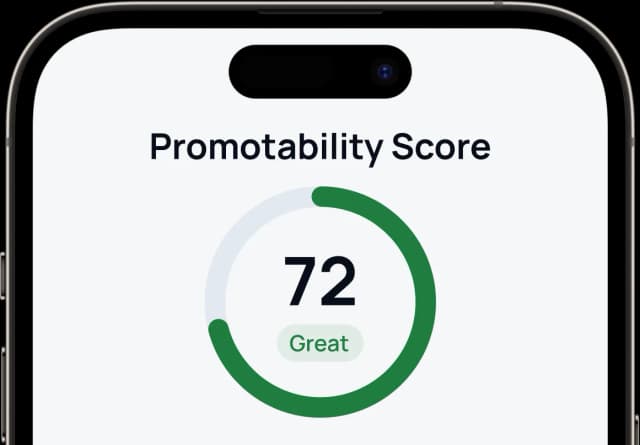
Aiming for your next level at Spotify?
Get a personalized promotion plan with AI coaching.

Share this article
Level Overview
| Level | Title | Typical Years | Median TC | Terminal? |
|---|---|---|---|---|
| Associate | Associate Product Manager | 1–2.5 yr | $141K | No |
| PM I | Product Manager I | 1.5–3.5 yr | $163K | No |
| PM II | Product Manager II | 2–3+ yr | $201K | Yes |
| Senior | Senior Product Manager | 2–4+ yr | $251K | Yes |
| Group | Group Product Manager | 3–5+ yr | $297K | Yes |
Promotion Cycle
Frequency
Continuous (no fixed promotion windows)
Decision Maker
hybrid
Manager-driven with peer consultation. Your manager recommends promotion when you consistently demonstrate next-level behaviors and sustained impact. Peer feedback is gathered (Spotify uses a tool called Loops for 360 feedback). Mid-level promotions require tribe lead approval. Senior promotions require CTO sign-off.
Key Details
- •Promotions are not tied to annual review cycles — they happen when you're ready
- •Spotify uses a 'Steps' framework for career progression, mapping scope from squad to company level
- •Your manager must recommend you — self-nomination is not the standard path
- •Peer feedback through the Loops tool plays a meaningful role in the decision
- •Mid-level promotions (PM I to PM II, PM II to Senior) require tribe lead sign-off
- •Senior-to-Group PM transitions require CTO-level approval
- •Promotions come with immediate compensation increases
- •Spotify emphasizes sustained impact over tenure — years in role are not sufficient on their own
- •The 'pick and mix' equity program lets you choose between RSUs, stock options, or cash upon promotion
Are You Ready for Your Next Level at Spotify?
Get a personalized score and find out what's holding you back.
8 questions · about 2 minutes · free score
1 of 8
If your manager had to make the case for your promotion tomorrow, could they — without calling you first?
Associate — Associate Product Manager
Entry-Level PMEntry point for new PMs. You own a narrow slice of a squad's roadmap, run discovery on well-scoped problems, and learn how Spotify ships. Your manager defines your priorities and reviews your work closely.
Typical Time at Level
1–2.5 years (typical: ~1.5 years)
Total Compensation (US)
$125K–$160K (median: $141K)
Source: Levels.fyi
Why Engineers Get Stuck Here
- •Waiting for direction instead of proposing what to build next
- •Writing specs without understanding the underlying data or user behavior
- •Not building relationships with engineers and designers on your squad
- •Treating the role like project management — tracking tasks instead of making product decisions
PM I — Product Manager I
Product ManagerYou own your squad's roadmap independently. You define problems, prioritize based on data, and ship without someone reviewing every decision. Cross-functional collaboration with engineering and design is expected, not guided.
Typical Time at Level
1.5–3.5 years (typical: ~2 years)
Total Compensation (US)
$145K–$185K (median: $163K)
Source: Levels.fyi
Why Engineers Get Stuck Here
- •Staying reactive to stakeholder requests instead of driving your own product strategy
- •Shipping features without measuring outcomes or connecting work to business results
- •Not communicating trade-offs clearly to leadership — just presenting the plan, not the reasoning
- •Avoiding hard conversations with engineers about scope and timelines
- •Lack of cross-squad visibility — doing good work that nobody outside your squad knows about
PM II — Product Manager II
Mid-Level PMMulti-squad or complex feature scope. You drive product strategy for a larger surface area, coordinate across squads, and influence the tribe roadmap. You are expected to mentor junior PMs and shape how your area thinks about problems.
Typical Time at Level
2–3+ years (typical: ~3 years)
Total Compensation (US)
$175K–$230K (median: $201K)
Source: Levels.fyi
Why Engineers Get Stuck Here
- •Operating as a senior individual contributor instead of influencing across squads
- •Not building a vision beyond the current quarter — only thinking tactically
- •Struggling to delegate discovery and execution to junior PMs while staying accountable for outcomes
- •Missing the political awareness to navigate cross-tribe dependencies and competing priorities
- •Failing to connect product metrics to business-level outcomes that leadership cares about
Senior — Senior Product Manager
Senior PMTribe-level scope. You define product strategy for an entire product area, influence organizational priorities, and are expected to develop other PMs. Cross-tribe collaboration is routine. You represent your area to senior leadership and make decisions that affect multiple squads.
Typical Time at Level
2–4+ years (typical: ~4 years)
Total Compensation (US)
$220K–$290K (median: $251K)
Source: Levels.fyi
Why Engineers Get Stuck Here
- •Impact limited to a single tribe when Group PM requires multi-tribe influence
- •Not shaping organizational strategy — reacting to what leadership decides instead of proposing direction
- •Failing to develop a PM team — Group PM requires growing other Senior PMs
- •Lack of executive communication skills — can't compress a complex product area into a clear narrative for C-level stakeholders
Group — Group Product Manager
Group PMMulti-tribe scope. You own product strategy across multiple product areas, set organizational direction, and are accountable for business outcomes at scale. You develop and lead a team of PMs and represent your area at the executive level.
Typical Time at Level
3–5+ years (typical: ~5 years)
Total Compensation (US)
$260K–$350K (median: $297K)
Source: Levels.fyi
Why Engineers Get Stuck Here
- •Requires sustained multi-tribe impact over several years
- •Must be recognized across the organization as a product leader, not just a strong PM
- •Director-level roles depend on organizational need and headcount, not just individual performance
Additional Context
Spotify organizes product work using the squad/tribe model. Squads are small cross-functional teams, tribes are collections of squads working on related areas. PM career progression maps to this structure: Associate and PM I own a squad, PM II spans multiple squads, Senior PM owns a tribe area, and Group PM spans multiple tribes. Spotify's equity compensation uses a 'pick and mix' model where employees choose between RSUs, employee stock options (at-the-money or out-of-the-money), or additional cash. Bonuses are not a standard component of PM compensation.
Keep exploring
Product Manager ladders at other companies
Other Spotify career ladders
Data sourced from Levels.fyi (compensation, Feb 2026), Spotify engineering blog (Steps framework), and aggregated reports from 6figr. Limited Team Blind/Reddit data available for PM-specific roles at Spotify. Last verified March 2026.