Palantir Product Manager Career Ladder
Palantir's PM career path from PM to Group PM — what changes at each level, why PMs get stuck, and how advancement works in a flat-hierarchy culture.
Last updated: March 24, 2026
 CareerClimb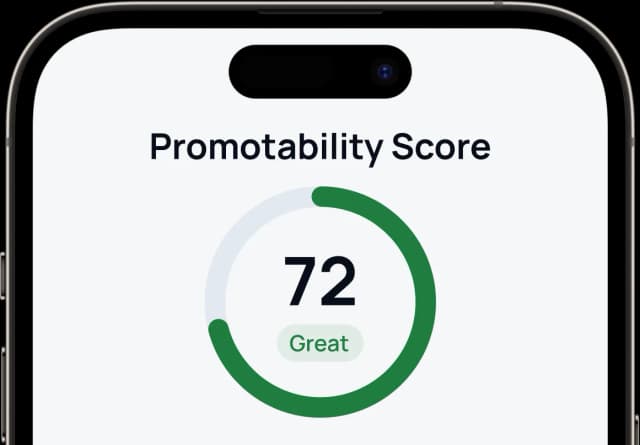
Aiming for your next level at Palantir?
Get a personalized promotion plan with AI coaching.

Share this article
Level Overview
| Level | Title | Typical Years | Median TC | Terminal? |
|---|---|---|---|---|
| L3 | Product Manager | 2–5 yr | $195K | No |
| L4 | Senior Product Manager | 2–4+ yr | $250K | Yes |
| L5 | Group Product Manager | 3–5+ yr | $300K | Yes |
Promotion Cycle
Frequency
No fixed cycles (impact-driven)
Decision Maker
manager
Palantir does not use formal promotion cycles or structured promotion packets. The organization describes itself as 'truly flat' with customizable career paths. Advancement depends on demonstrated impact, taking ownership of harder problems, and building internal relationships. Feedback can be subjective due to infrequent reviews and indirect manager involvement.
Key Details
- •No fixed promotion timeline or formal criteria — advancement depends on demonstrated impact
- •No formal promotion cycles documented — unlike big tech companies with biannual reviews
- •Palantir describes its structure as 'truly flat' — titles and levels are less formalized than at peers
- •Growth is measured by solving complex problems, taking early responsibility, and expanding scope
- •Employees define their trajectory (IC, tech lead, or people lead) through project selection and relationships
- •Feedback can be subjective due to infrequent reviews and indirect manager involvement
- •An informal 'shadow hierarchy' exists despite the flat structure on paper
- •RSU vesting schedule varies: either 4-year (25% Y1, then quarterly) or 5-year (20% per year)
- •Early-career roles offer outsized impact and learning, but paths can feel unclear without structured guidance
Are You Ready for Your Next Level at Palantir?
Get a personalized score and find out what's holding you back.
8 questions · about 2 minutes · free score
1 of 8
If your manager had to make the case for your promotion tomorrow, could they — without calling you first?
L3 — Product Manager
Product ManagerStandard IC PM role. You own product areas, translate customer needs into technical requirements, and work with engineering to ship. Palantir gives PMs high ownership early — you are expected to confront ambiguity and operate with minimal guidance from day one.
Typical Time at Level
2–5 years (typical: ~3 years)
Total Compensation (US)
$160K–$230K (median: $195K)
Source: Levels.fyi
Why Engineers Get Stuck Here
- •Not navigating Palantir's informal 'shadow hierarchy' — the org is flat on paper, but knowing who influences decisions matters
- •Waiting for formal feedback that rarely comes — Palantir's review cadence is infrequent
- •Lacking the self-advocacy to surface your own impact without a structured promotion process
- •Not building the technical credibility to have influence with Palantir's engineering-heavy teams
- •Treating the role as feature delivery instead of solving complex customer problems end-to-end
L4 — Senior Product Manager
Senior PMHigher ownership and broader scope. You drive product strategy for your area, influence cross-team decisions, and are expected to mentor junior PMs. In Palantir's flat culture, this level is less about a title change and more about the scope of problems you are trusted to own.
Typical Time at Level
2–4+ years (typical: ~4 years)
Total Compensation (US)
$200K–$300K (median: $250K)
Source: Levels.fyi
Why Engineers Get Stuck Here
- •Impact limited to your immediate product area when Group PM requires multi-team influence
- •Not building relationships with leadership in an organization with infrequent formal reviews
- •Struggling to make your impact visible without the structured promotion process that exists at larger companies
- •Not developing the executive communication skills to shape organizational product direction
L5 — Group Product Manager
Group PMPeople management or senior IC scope. You own product strategy across multiple teams, develop other PMs, and influence company-level decisions. At Palantir, reaching this level requires sustained demonstrated impact and strong internal relationships — there is no formal promotion process to carry you here.
Typical Time at Level
3–5+ years (typical: ~5 years)
Total Compensation (US)
$230K–$370K (median: $300K)
Source: Levels.fyi
Why Engineers Get Stuck Here
- •Requires sustained multi-team impact over several years with limited formal recognition along the way
- •Must build influence through relationships and demonstrated results, not through a structured process
- •Director/Head of Product roles (L6+) are extremely limited and depend on organizational need
Additional Context
Palantir operates with a deliberately flat hierarchy and does not use a traditional career ladder with rigid levels and titles for product managers. The L3/L4/L5 level structure used here is inferred from H1B filings and compensation data, not from official Palantir documentation. Internally, growth is described as 'far more individual' — driven by ownership, challenging projects, mentorship, and team switches rather than hierarchical promotions. Multiple sources mention an informal 'shadow hierarchy' where knowing who influences decisions is as important as your individual output. PMs at Palantir need strong self-advocacy skills because the absence of structured promotion processes means your impact must be visible without formal artifacts like promotion packets.
Keep exploring
Product Manager ladders at other companies
Other Palantir career ladders
Data sourced from Levels.fyi (compensation), Comparably, Glassdoor, H1B salary data, and Palantir employee reviews. Levels are inferred from compensation data and H1B filings — Palantir does not publicly document a formal PM career ladder. Very limited Team Blind/Reddit data. Last verified March 2026.