What to Do on Day One of a PIP


 CareerClimb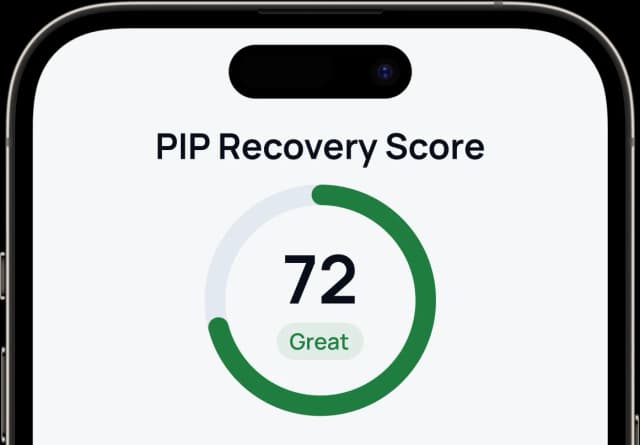
Upload your PIP. Get a plan.
The CareerClimb app reads your PIP document, extracts every requirement, and coaches you through each gap.

Share this article
You just got handed a PIP. Your chest is tight. Your brain is already running worst-case scenarios. You're reading the document but not absorbing it, because half your attention is on what this means for your mortgage, your reputation, the conversation you'll have to have with your partner tonight.
This is normal. Almost every person who receives a Performance Improvement Plan (PIP) spends day one in some version of this state. The document sits on your screen or your desk, and you read it once, feel the weight of it, and then either spiral into panic or shut down entirely.
You need a specific set of actions, in a specific order, that turns a scary document into a working plan. The emotional side is its own piece. The fight-or-leave decision is a separate question. This is about the practical first-day moves.
Why day one matters more than you think
PIPs run on a clock. Most last 30, 60, or 90 days. That's not a lot of time, and every day you spend frozen is a day you're not building the record that proves improvement.
The deeper problem: most PIPs are written in language that sounds specific but isn't. "Demonstrate consistent ownership of cross-functional deliverables" is not a measurable goal. It's a direction. If you don't translate it into concrete, trackable actions on day one, you'll spend the next 30 days guessing whether you're making progress. Your manager will be the only one who knows, and by the time they tell you, the window might be closed.
Approximately 41% of employees pass their PIP and stay in their roles, according to a Blind poll. That's not a great number. But the ones who pass have something in common: they treated the PIP document as an operating manual, not a death sentence. They broke it apart, tracked each piece, and built a paper trail of progress from the first day.
Step 1: Read the document like an analyst, not an employee
Your first read of the PIP will be emotional. Let it be. Feel what you feel. Then read it again, this time with a different question: what specifically am I being asked to do?
Go line by line. For each requirement or goal listed, write down:
- What's being asked — in plain language, not corporate speak
- Whether it's measurable — is there a number, a deliverable, a date, an observable outcome?
- Whether it's vague — if two reasonable people could disagree on whether you met it, it's vague
Most PIPs contain a mix. Some goals are concrete ("Close 3 deals by end of Q2"). Others are subjective ("Improve collaboration with cross-functional partners"). The vague ones are dangerous, because your manager can later decide you didn't meet them regardless of what you did.
Flag every vague goal. Clarify these with your manager, in writing, within the first few days. You're getting alignment on what "done" looks like.
Step 2: Break it into trackable items
A PIP is a single document with multiple requirements. Most people treat it as a single thing to "pass" or "fail." That framing makes it feel like one giant, ambiguous test.
Better framing: it's a checklist. Each requirement is a separate item. Each item needs its own evidence, its own timeline, and its own definition of success.
Write them out as individual items. For example, if your PIP says:
"Demonstrate improved ownership by leading at least one project end-to-end and proactively identifying and resolving blockers."
That becomes two items:
- Lead one project end-to-end — identify which project, confirm with manager, track milestones
- Proactively identify and resolve blockers — document each instance as it happens (what was the blocker, what did you do, what was the outcome)
This is what separates "I think I've been doing better" from "Here are seven documented instances of what the PIP asked me to demonstrate."
Recording progress improves goal attainment, according to a meta-analysis of 138 studies by Harkin et al. The effect is meaningful (d = 0.40). Tracking is the mechanism of PIP recovery.
Step 3: Identify what you've already done
Most people skip this step.
You didn't start from zero the day the PIP landed. You've been doing work. Some of that work probably addresses parts of the PIP, even if nobody framed it that way at the time.
Go through your trackable items and ask: do I already have evidence for any of these?
- Emails where you led a decision
- Slack threads where you unblocked someone
- Project deliverables that shipped before the PIP was issued
- Feedback from peers or stakeholders that speaks to the criteria
Gather what exists. You're establishing a baseline, not arguing the PIP is wrong. If item 3 out of 5 already has partial evidence, you know where your gaps are and where to focus.
Step 4: Build the tracking system before you start executing
The temptation right now is to start sprinting. Ship something. Fix something. Show your manager you're already improving. Resist this for one more hour.
The most common mistake on a PIP is effort without documentation. You do the work, but the only record lives in your memory and your manager's subjective impression. When the PIP review meeting arrives, you have your word. They have their perception.
Set up a system to capture evidence as it happens. Not at the end of the week. Not the night before your check-in. As it happens.
What to track for each PIP requirement:
- Date — when the action occurred
- What you did — specific, factual description
- How it maps to the PIP — which requirement does this satisfy?
- Who was involved — names of people who can corroborate
- Outcome — what changed because of your action?
This doesn't have to be elaborate. A running document works. A spreadsheet works. If you can't show it, it didn't happen. Build the system on day one so you're not reconstructing from memory on day 15.
Step 5: Request a clarification meeting with your manager
You've broken the PIP into pieces. You've flagged the vague goals. Now bring your analysis to your manager.
You're asking your manager to help you succeed at the PIP. Frame it that way:
- For each vague goal: "I want to make sure I'm working toward the right thing. Can you help me understand what success looks like here? What would you need to see?"
- For each measurable goal: "I understand this one clearly. Here's my plan to hit it. Does this align with what you're expecting?"
- For the overall timeline: "Can we set up weekly or biweekly check-ins so I can get feedback along the way, not just at the end?"
Get this in writing. Send a follow-up email summarizing what was agreed. Your manager sees someone taking the process seriously, and you have a record if expectations change.
Employment lawyers recommend documenting all PIP-related conversations in writing. Written records remove ambiguity for both sides, and they protect you if definitions shift later.
What most people get wrong
Three patterns destroy PIP recoveries before they start:
Treating the PIP as a single pass/fail event. It's not one test. It's a collection of requirements. You can be strong on some and weak on others. The people who track each item separately can see exactly where they're falling short and redirect effort before the deadline.
Working harder without tracking. Effort doesn't count unless it's documented. You might be doing exactly what the PIP requires, but if the only evidence is your memory and your manager's impression, you're gambling on their attention and goodwill. People forget roughly 67% of new information within 24 hours. Your manager forgets too. The documentation is the proof.
Waiting for the first check-in to start building evidence. By the time your first formal check-in arrives (often week 2 or 3), you've already lost days of potential evidence. The people who survive PIPs start their tracking system on day one and walk into the first check-in with a document, not a story.
The day-one checklist
The full sequence:
- Read the PIP once emotionally. Let yourself feel it. Then set it aside for 30 minutes.
- Read it again analytically. Extract every requirement. Separate measurable goals from vague ones.
- Break it into individual trackable items. Each requirement gets its own row. Each row needs a definition of "done."
- Audit what you've already done. Gather existing evidence that maps to any of the items.
- Build your tracking system. Set up a place to capture evidence as it happens. Date, action, PIP requirement, people involved, outcome.
- Request a clarification meeting. Bring your broken-down list. Confirm definitions. Establish check-in cadence. Send a written summary.
Six steps. All before you start executing on the PIP itself. Execution without structure is how people work themselves to exhaustion and still fail the review. Once you've done these, you're ready for the first week.
 CareerClimb
On a PIP right now?
Get a plan, not just advice. Free to start.
How the CareerClimb app does this for you
The CareerClimb app has a Document Analyzer built for exactly this situation.
Upload your PIP document (photo, PDF, or text). The app reads it and extracts every criterion, requirement, and milestone. Then it walks you through each one: Have you done this? Do you have evidence?
For items you've already addressed, it asks for evidence to document. For gaps, it connects you to Summit, the app's AI career coach, with full context of what you need to work on. Summit already knows your PIP requirements. You skip the part where you re-explain your situation from scratch and go straight to coaching on the gap.
Progress is tracked against each criterion over time. Your Recovery Score updates as you close gaps, so you always know where you stand. A number broken down by the categories in your actual PIP document.
Most people read their PIP once and panic. The CareerClimb app breaks it into trackable items and coaches you through each one.
Upload your PIP. Get a plan. The CareerClimb app reads your PIP document, extracts every requirement, and coaches you through each gap. Download CareerClimb free and start your recovery today.