How to Get Promoted When You Work Remotely


 CareerClimb
Doing great work nobody sees?
Get a plan to make your work visible to the people who decide what happens to your career.

Share this article
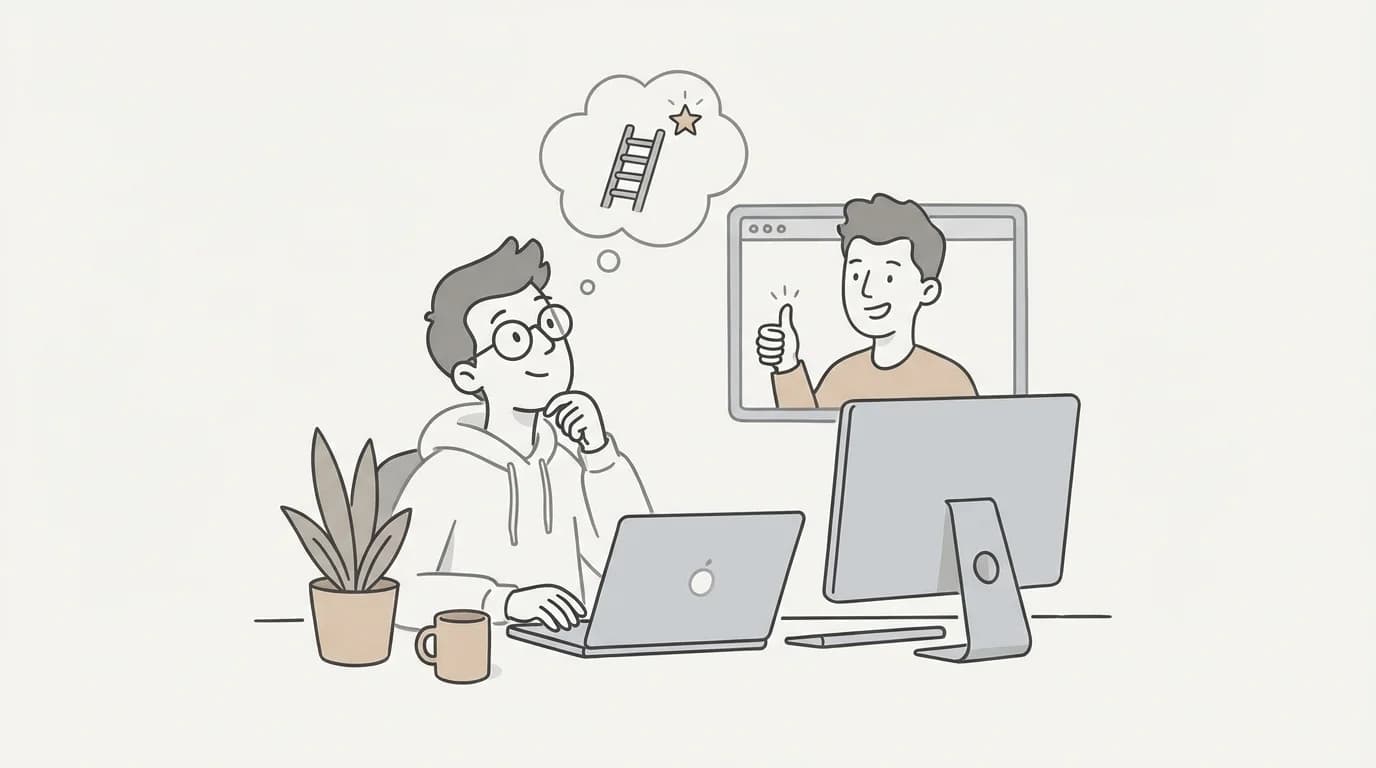
You shipped the feature. You ran the post-mortem. You mentored the new hire through their first on-call rotation. And when the promotion announcement went out last week, the person who got it was the one who sits three desks from your manager.
You know this because you watched the Slack celebration from your home office, 800 miles away.
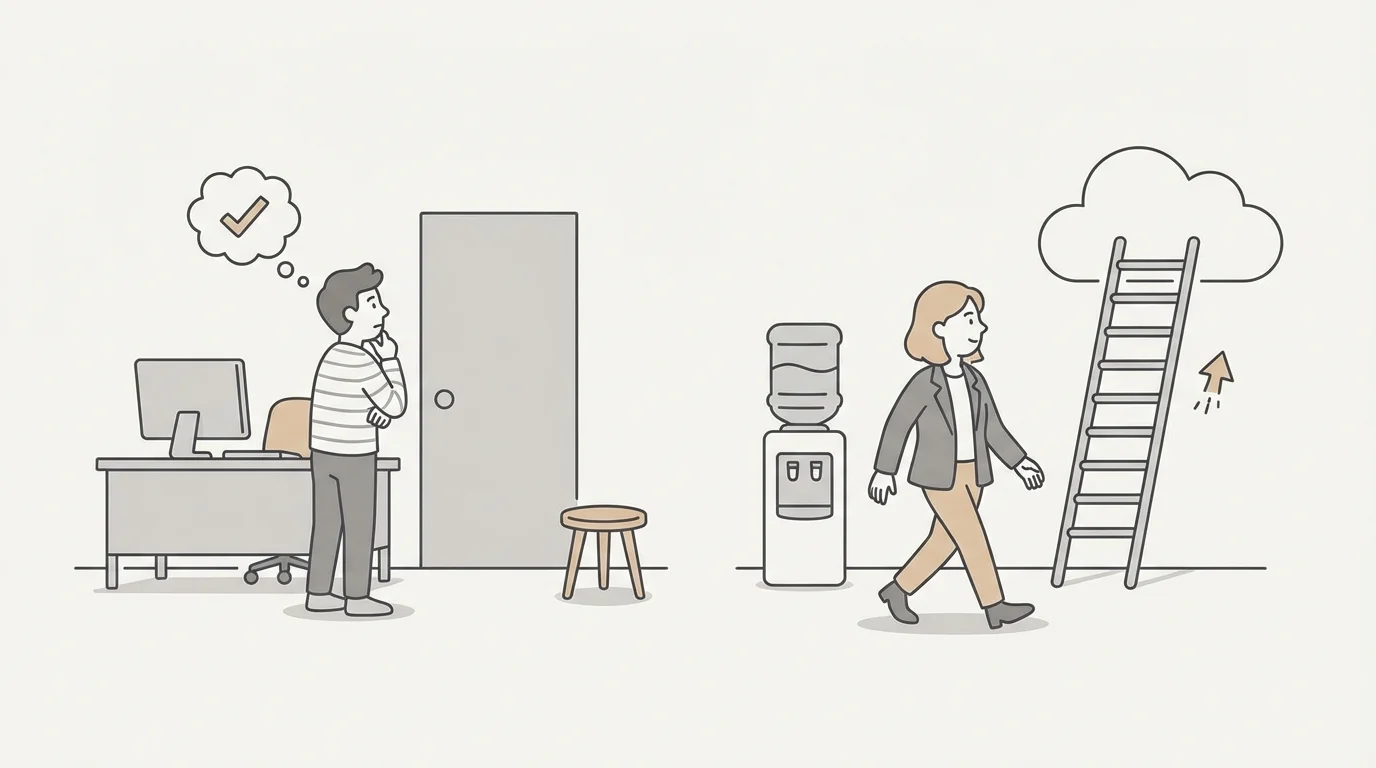
This is not about whether you deserved it. Maybe they did too. The part that stings is the question you can't stop asking: would the outcome have been different if your manager could see you every day?
The data says yes, probably. And the remote engineer promotion gap is wider than most people realize.
The visibility gap is real, and it's measured
A Live Data Technologies analysis of two million white-collar workers found that fully remote employees were promoted 31% less frequently than their in-office or hybrid peers. Not because they performed worse. Their work was comparable. They were just less present in the rooms, hallways, and casual conversations where reputations get built and reinforced.
The mechanism behind this has a name: proximity bias. An Envoy/Wakefield Research survey found that 96% of executives admit they notice in-office contributions more than remote ones. And a Harvard Business Review study reported something worse: 42% of managers admit they sometimes forget about remote workers when assigning tasks. Not deprioritize. Forget.
This isn't malice. It's cognition. Your manager's brain does what all brains do: it builds a richer picture of the people it encounters every day. The person who walked past their desk, who mentioned a debugging win over coffee, who was present when the VP asked a question — that person has a more vivid presence in your manager's memory. You, on the other end of a Zoom call, have a thinner one.
Stanford economist Nick Bloom's research adds a useful distinction. His study of hybrid workers at a large tech company found no significant promotion penalty for employees working two days remotely per week. The penalty hits fully remote workers hardest. Bloom calls favoring in-office employees over equally performing remote ones "discrimination."
How calibration works against you when you're not in the building
The promotion decision doesn't happen in your one-on-one. It happens in calibration, a closed meeting where your manager argues for you against other managers arguing for their people. HBR's analysis of calibration sessions found that these meetings, designed to reduce bias, can actually introduce it.
Here's how it plays out for remote engineers:
Your manager has weaker stories. In-office, your manager watches you debug the outage, overhears you coaching a teammate, sees you present to a director. Those experiences become vivid evidence they can deploy in calibration. Remote, your best work produces a PR, a Slack thread, a doc link. Less memorable. Harder to narrate under time pressure.
The room doesn't know you. When your manager's peers have encountered your work through a cross-team project or a tech review, your manager's pitch lands as confirmation. When they haven't, your manager is asking the room to take their word for it. That's a harder sell, every time.
You're the path of least resistance. When calibration requires forced ranking — and most cycles do — the person the group knows least well is easiest to move down. A verified Meta engineer on Team Blind described this pattern directly: people outside office hubs get the leftover projects, don't get invited to cross-functional tasks, and absorb the performance consequences of reduced access. The engineer put it bluntly: "While it's normal to have bias towards people seen almost daily, this happens enough that it looks planned but with deniability."
Your manager may genuinely want to fight for you. But walking into that room without vivid, specific evidence is like showing up to court without exhibits. Intent doesn't matter if the material isn't there.
What to actually do
The fix is not "work harder." Remote engineers already work harder. The fix is engineering visibility into your workflow so that the people who make promotion decisions have what they need, even when they never see you in person.
Build a paper trail of impact, not activity
Every week, send your manager one short update. Not what you did. What changed because of what you did.
- Status update: "Finished the auth migration."
- Impact update: "Auth migration is live. Login latency dropped from 420ms to 80ms, which unblocks the iOS team's Q2 release."
The second version is what your manager can actually use in calibration. The first one disappears from memory inside a week.
Write it down, send it in Slack or email, and keep a copy. Over six months, these add up into something your manager can actually draw from instead of reconstructing your year from memory. The full approach to writing weekly updates that actually register covers the format and cadence in detail.
Share your thinking in public channels
Steph Ango, CEO of Obsidian, published advice that went viral on Hacker News: if you're remote, ramble. Share questions, observations, and discoveries in team channels instead of DMs. Not every thought, but enough that people encounter your thinking without you having to push it on them.
In-office engineers build ambient awareness by being overheard. Remote engineers build it by writing in places people can find. A question you post in a shared channel can teach the whole team something. A debugging insight you share publicly gets noticed by people you've never met. Over months, this creates the same kind of passive familiarity that hallway conversations produce for in-office workers.
Author artifacts that carry your name
Design documents, RFCs, architecture proposals, runbooks, post-mortems. These are read by senior engineers and leadership. They persist. They carry your name. And they show the kind of scope and judgment that promotion committees look for at senior levels.
A PR closes and vanishes into the git log. A design doc lives on a wiki that your skip-level's manager might actually read six months from now. For remote engineers, written artifacts are the closest thing to being physically present in the conversations that shape your reputation.
Give your manager the exact language for calibration
Don't assume your manager will find the right words under pressure. Tell them.
In your one-on-ones, after a significant win: "Here's how I'd describe the impact of this project in one sentence: I identified that our alerting noise was causing on-call responders to ignore real incidents, redesigned the alerting pipeline, and cut false pages by 60%. If that framing is useful for calibration, I wanted you to have it."
You are writing their script. This isn't presumptuous. It's the single most useful thing a remote engineer can do for their own promotion case.
Build relationships with people you've never met in person
Your skip-level might not know your name. That's fixable.
- Volunteer for cross-team demos and tech reviews. As Pragmatic Engineer's research on promotions notes, if a manager two or three levels up hears your name twice a year in a positive context, that alone can be enough to tip the balance when your case comes up.
- Arrive early to video meetings. The two minutes of small talk before a meeting starts is where relationship-building happens naturally for in-office workers. Remote workers who join at the exact start time miss it entirely.
- Find a sponsor, not just a mentor. A mentor talks to you. A sponsor talks about you: in calibration, in staffing discussions, when a high-visibility project needs an owner. Remote engineers often have mentors (easy to arrange over video) but lack sponsors (hard to build without proximity). That gap matters more than any other for promotion.
Decide whether in-person face time before review season is worth it
If your company has an office and you can visit, consider timing a trip for the month before calibration opens. Not to "play politics." To make it physically easier for the people in the room to picture you when your name comes up.
This isn't always possible and shouldn't be required. But if you have the option and the stakes are high enough, one in-person week can produce more relationship density than three months of Zoom calls. Use it to meet your skip-level, have a working lunch with your manager's peers, and present something in person that the room will remember.
The mistakes that keep remote engineers stuck
Assuming good work speaks for itself. In-office, your work has passive visibility. Remote, all visibility must be actively created. If you don't tell anyone what you did, it didn't register.
Overworking instead of over-communicating. Remote engineers feel pressure to prove they're working by being online constantly. This leads to burnout without proportional career progress. The problem was never your output. It was that nobody could see it.
Treating one-on-ones as status reports. Your manager is your proxy in every room you're not in. If you use your 30 minutes to review Jira tickets instead of building a shared picture of your impact, you're wasting the most direct influence you have on your own promotion.
Waiting to be assigned high-visibility work. 42% of managers forget about remote workers when assigning tasks. If you wait, you get the leftovers. Volunteer for the cross-team project, the incident response lead, the demo to the director. Put yourself where the decisions are being made.
Having mentors but no sponsors. Mentors help you get better. Sponsors put their reputation on the line to advocate for you. Without someone willing to fight for you in calibration, your promotion case sits in a pile with everyone else's.
Remote-friendly vs. remote-tolerant: know the difference
Some companies built their systems around distributed work. Meetings default to video. Decisions happen in written channels. Promotion criteria are based on documented outcomes, not hallway impressions. These companies are remote-friendly.
Others added a remote option during the pandemic and have been slowly tightening the rope since. Dell told remote employees they couldn't be promoted without returning to the office. Google tightened its work-from-anywhere policy so that one remote day counts as a full remote week. Amazon mandated five-day return to office. These companies are remote-tolerant at best.
If you're remote at a company that's moving toward return-to-office mandates, the visibility tactics in this article will help. But they're fighting a current. The honest assessment: at some companies, the career ceiling for fully remote engineers is real and structural, not just a visibility gap you can engineer your way around.
Knowing which kind of company you're at changes the strategy. At a remote-friendly company, the tactics above are the whole game. At a remote-tolerant one, they buy you time while you decide whether the tradeoff is worth it.
The system wasn't built for you. Build your case anyway.
CareerClimb tracks your wins and builds your promotion case automatically — so when calibration happens, your manager has the specific, vivid evidence to fight for you, even if they've never seen you in person. Download CareerClimb