How to Stop Being Invisible at Work


 CareerClimb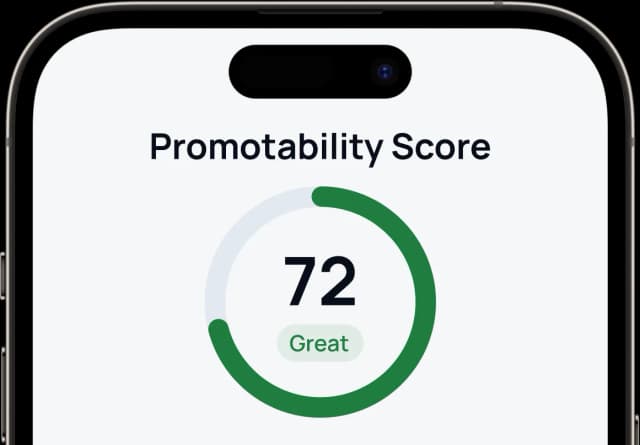
Feel invisible at work?
Get a plan to make your impact impossible to miss.

Share this article
You've been getting strong feedback at every review. Your manager says you're solid. The work is real. And somehow, the person who joined the company eight months after you just got promoted to senior.
You're not underperforming. The quality of your work isn't the issue. But something isn't translating, and you can't quite name what.
Why this feels wrong (and it is)
The frustration makes sense. The implicit deal (do good work, advance) felt real. In school, the exam grade reflected your performance on the exam. The evaluator had access to all the evidence. Work was supposed to work the same way.
It doesn't, and nobody explains that when you join.
Gallup's research on manager-employee relationships found that only 30% of employees strongly agree their manager involves them in setting career goals. That's not 30% of disengaged employees. That's across the board. Most managers, even well-meaning ones, are working with an incomplete picture of what their reports actually want and what their reports are actually doing.
The math of management makes this worse. A typical engineering manager has eight to fifteen direct reports, their own deliverables, and their own performance review cycle. The bandwidth to actively track your contributions week over week is much smaller than the system pretends it is.
So when engineers describe the experience of being invisible (real work, decent reviews, no promotion), the problem is almost never their performance. It's a gap between what they're doing and what the people with promotion input actually know about them. That gap is real, it's structural, and it's fixable.
What's actually happening
Two cognitive mechanisms make workplace invisibility nearly automatic, and understanding them changes how you think about the problem.
The first is egocentric attribution bias. Ross & Sicoly (1979), across five experiments with discussion groups, married couples, and sports teams, found a consistent result: people reliably overestimate their own contributions to shared work. Not because they're dishonest, but because their own contributions are far more available in memory. You remember every decision you made, every problem you identified, every evening spent tracking down that bug. The people around you (including your manager) remember much less of it.
The second is memory decay. A 2015 replication of Ebbinghaus's original forgetting curve research, published in PLOS ONE, confirmed the original pattern: without reinforcement, people retain only about 25% of information after a week. Your manager was present when you shipped that major project two months ago. The details that weren't re-surfaced since then are mostly gone.
Put those two together. Your own contributions feel vivid and permanent because you did them. To your manager, who is also tracking nine other people, those contributions fade within days unless something keeps bringing them back.
By the time calibration happens, what exists in that room is what was communicated clearly, repeatedly, and recently. Everything else, regardless of how impressive, doesn't have a presence there.
An Amazon engineer described this precisely after watching a teammate named Jake get promoted for an authentication migration system the engineer had spent four months building. Jake hadn't built it. But Jake had presented it, to the right people, consistently. The manager's explanation was blunt:
"He drove the visibility of it. Promotion is about perception."
The engineer's framing, looking back: "I called it 'my work.' He called it 'perception management.' Same project. Different definitions."
On Team Blind, where engineers post under verified company email, this pattern comes up constantly: "Your hard work means nothing if leadership can't see it. Doesn't matter how good you are."
None of this means the system is fully fair. It isn't. But the source of the problem is clearer than it first appears, and that matters.
The uncomfortable part: most of what creates the gap between quality of work and visibility of work is within your control. Headcount freezes, promotion budgets, and committee composition are outside factors. The gap between your actual impact and what your manager knows about your impact? That part you can close.
Is Your Work Invisible to Decision-Makers?
See whether the people who decide promotions actually know your name.
7 questions · about 2 minutes · free score
1 of 7
After you ship something, what happens next?
What to actually do
Send a weekly impact update
Once a week, pick one meaningful result from your work and send it to your manager. Three sentences, that's it:
- What you worked on and what it involved
- What actually happened: the outcome, progress, or unblocking effect
- What comes next
The specificity is what makes this work. "Finished the auth migration" disappears. "Finished the auth migration, reduced session latency by 40ms on the login path, which unblocks the iOS team's Q1 release" stays.
Julia Evans, who made the term "brag document" standard in engineering culture through a widely-read post on jvns.ca, documented that managers consistently report this kind of structured tracking "makes my job way easier." The update isn't bragging. It's giving your manager what they need to represent you accurately at calibration, the room where you won't be present.
This works because it counteracts both mechanisms above. It keeps your contributions salient for your manager (counters the forgetting curve) and creates a shared record rather than a solo memory only you hold (corrects the attribution asymmetry).
Use your 1:1s as a career tool, not a status report
Most engineers treat 1:1s like ticket reviews. "Done. Blocked on X. Next week I'm picking up Y." That's a missed opportunity every time.
Your 1:1 is the most direct line you have to the person who will represent you in calibration. Use it to build a shared understanding of your work and your ambitions, not just to report progress.
Have the explicit conversation: "I want to be promoted to senior. What am I still missing from my case?" Most engineers avoid this because it feels awkward. The engineers who get unstuck have it, and they have it early enough to act on the feedback before review season. The deeper reason most managers can't recognize your work without prompting, and how to close that gap, is covered in why your manager doesn't recognize your work.
A manager who posted on Team Blind after watching multiple promotion cycles from inside the process was direct: "If this is the first time your manager ever hears you're interested in a promotion, it's likely not going to happen soon."
After the conversation, ask for specifics. What would your manager say about you in calibration to make the case? What does "demonstrating senior scope" look like on this team, concretely? The answers convert vague expectations into a clear picture of what to build toward.
For a deeper look at how calibration meetings actually work and what your manager needs to say there, this breakdown of the calibration process covers it directly.
Work on things that exist above your team
Not all work registers equally when promotion decisions get made. Work that only your immediate team knows about carries limited weight in a room full of people who don't know you personally.
A verified L6 engineer on Team Blind, with 10 years of experience, described this directly: "Nobody cares about team goals. When you deliver, understand how it impacts VP and Director goals. That's what matters."
Work that unblocks other teams, work tied to something leadership visibly prioritizes, work that produces artifacts others can reference: that's what calibration committees remember and can point to. Refactoring your module cleanly matters. Coordinating the cross-team migration that unblocks three teams matters more in that room.
This doesn't mean dropping infrastructure work. It means being intentional about including at least one project with visibility beyond your immediate orbit, and making sure the output of everything you do is legible to people who weren't in the room when it happened — a problem that compounds when you work remotely and don't have the passive visibility that comes from being in the building.
Write up your work, even when it feels unnecessary
A 25-year senior engineer named Mark wrote about this pattern on dev.to after watching it repeat across many teams. He described two developers working in parallel.
Developer A rewrote a critical billing component. Cleaner architecture, lower deployment risk, meaningful technical improvement. Merged the PR, closed the ticket, moved on. No write-up, no summary, no narrative about what the rewrite actually accomplished.
Developer B led the migration meeting between two teams. Didn't write the most groundbreaking code. But coordinated stakeholders, reduced confusion, and kept the project legible to everyone involved. Got promoted.
Mark's conclusion: "Impact that isn't communicated doesn't exist in promotion discussions. You have to make your work legible."
A short Slack post, a brief internal doc, a comment in the ticket with context: "This refactor reduced deployment risk by removing the shared state that caused the July incident, and should cut on-call load for that class of issue going forward." That sentence takes two minutes. It makes months of work visible to anyone who comes across it later. The mental shift required here, from "this feels like bragging" to "this is accurate documentation," is covered directly in why self-promotion at work is not the same as bragging.
If you've been in the same position for a while and the reviews say you're doing great but the promotion hasn't come, being passed over more than once is worth reading for the broader pattern of what changes things. And if you've recently returned from parental leave, the invisibility problem compounds — there's a specific playbook for rebuilding that momentum.
What people who got promoted actually did
The pattern across Team Blind discussions and engineering career forums is consistent.
Engineers who got unstuck after feeling invisible stopped treating promotion as something that would happen to them and started treating it like a project. They had the explicit conversation with their manager months before review season, not the week before. They sent brief impact updates most weeks, even when it felt repetitive. They picked up at least one project with cross-team or leadership visibility. And they started writing up the results of their work in places their manager and manager's manager could find them.
The engineers who stayed stuck ran a different play: excellent execution, invisible output, and a quiet trust that the quality of the work would eventually be recognized on its own.
It's not that the work wasn't good enough. Good work that's undocumented and uncommunicated is invisible by design. The system doesn't reward what it can't see.
Your case is yours to build. The sooner you start, the more you have to show when it matters.
Your next cycle doesn't have to look like the last one
CareerClimb tracks your wins and builds your promotion case automatically, so the next time calibration happens, your manager has everything they need to fight for you. Download CareerClimb