Self-promotion at work is not bragging (and the difference matters)


 CareerClimb
Afraid of self-promotion?
Learn the difference between bragging and building your case.

Share this article
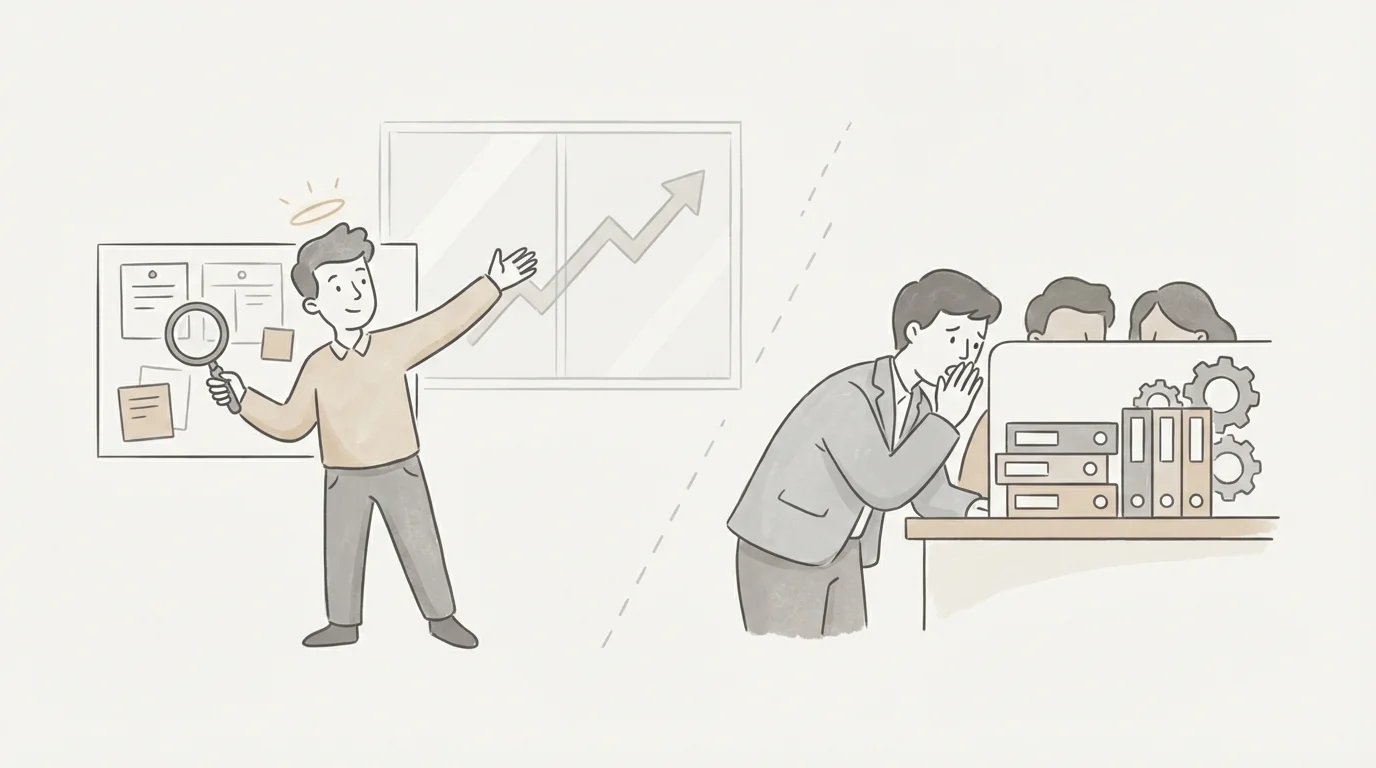
There's a specific kind of frustration that hits engineers late in the review cycle. You did the hard work. You fixed the incident nobody else could debug. You redesigned a service that's been falling over for two years. And somehow, a peer who wrote less impressive code got promoted.
When you dig into it, the difference usually isn't technical output. It's visibility. They talked about their work. You assumed people already knew.
Self-promotion at work feels uncomfortable to most engineers. It feels like bragging. So instead of sharing what they did, they keep their heads down and wait for the work to speak for itself. The work doesn't speak for itself. People do.
What bragging actually is
Bragging is when you exaggerate, omit context, or make yourself look good at the expense of accuracy or your teammates. It sounds like: "I basically carried the whole migration" when you were one of five engineers. It's ego-driven, and people can tell.
Self-promotion is different. It's factually sharing what you contributed, what it affected, and why it matters. It sounds like: "I led the database migration that brought query latency down from 800ms to 90ms." That's not a claim about being the best. It's a record of something that happened.
The line between them is honesty. Bragging distorts. Self-promotion documents.
Most engineers who avoid self-promotion aren't trying to be modest. They're trying to avoid crossing that line. The problem is they're drawing it so conservatively that they erase themselves from the record entirely.
Why this matters for your promotion
Managers can't promote work they don't know about. That sounds obvious, but most engineers operate as if their manager has a continuous mental record of everything they've done since their last review. They don't.
A manager tracking six to eight direct reports, dealing with their own deliverables, and attending a wall of recurring meetings is not sitting down each week to catalog your contributions. They remember the incidents that were escalated, the things that came up in standup, and whatever was shared directly with them.
The most common reason managers give for passing someone over isn't lack of skills. It's lack of documented impact.
When review season opens and your manager needs to build a case for your promotion, that case goes to a calibration committee full of people who have never seen your code. They're working from what you've given them. If you've given them nothing, they have nothing to argue with.
The meritocracy trap
Tech culture has a persistent belief that the best work wins. Ship good code, solve hard problems, and eventually the right people will notice. It's a clean idea. It's mostly wrong. Good work alone rarely explains the promotion gap. The engineers who move up faster are usually the ones who made their output legible, not necessarily the ones who produced the most of it.
Promotions aren't just a technical evaluation. They're a social one. Your manager has to stand in a room with other managers and argue that you deserve to move up. That argument needs specifics. "She's a really strong engineer" doesn't hold up against budget pressure. "She led the incident response that prevented $400k in revenue loss and shipped the follow-up improvements within two weeks" does.
You can write that case yourself throughout the year, or you can leave it to your manager to reconstruct from memory under time pressure. One of those options works better.
Is Your Work Invisible to Decision-Makers?
See whether the people who decide promotions actually know your name.
7 questions · about 2 minutes · free score
1 of 7
How do you feel about sharing your own accomplishments at work?
What self-promotion actually looks like
Self-promotion at work isn't a personality change. It's three habits.
Log wins when they happen
The fastest way to lose credit for your work is to do the work and then not write it down. Within a few months, you'll forget the specifics. Your manager definitely will.
A win log doesn't need to be elaborate. After something significant ships, take three minutes to write:
- What you did
- What it affected (users, latency, revenue, reliability, other teams)
- Any feedback or data that confirms it worked
Engineers on Team Blind who've been through multiple review cycles say the same thing: the self-review is brutal when you're reconstructing from memory, and painless when you've been logging all along.
Use 1:1s as a record, not just a chat
Weekly or biweekly 1:1s with your manager are the clearest channel for sharing work as it happens. Most engineers use them as a status update or a problem-solving session. Both are fine, but don't let the session end without your manager knowing what you shipped this week.
This doesn't require a formal presentation. "The retry logic I added to the payment processor cut our failed transaction rate by 40%. Wanted to make sure it's on your radar" is enough. You're not bragging. You're giving your manager the information they need to advocate for you.
Write weekly updates
A short written update, one paragraph or three bullets, every Friday, does two things. It creates a searchable record you can pull from when review season opens. And it keeps your work visible to people who might not see it otherwise: your manager's manager, adjacent teams, future interviewers reading your emails.
Some companies have a culture of written updates. If yours does, use it. If it doesn't, a brief email to your manager is still worth doing. It's a form of institutional memory that happens to benefit you.
The framing that doesn't feel gross
The version of self-promotion that feels like bragging: "I did this thing and I'm great." The version that works: "Here's the impact of what I shipped, in case it's useful for context."
Credit your team. Tie the outcome to something the company cares about. Use numbers where you have them. These aren't just politeness moves. They make the claim verifiable, which is what makes it stick in a calibration conversation.
"The alerting overhaul I led reduced mean time to detect from 22 minutes to 4 minutes. The team did the migration work; I built the detection logic and coordinated with on-call to tune the thresholds."
That's not bragging. That's a promotion case.
Who does this naturally
The engineers who get promoted consistently are usually not the loudest people in the room. But they do one thing reliably: they make their work legible to the people making decisions.
They send weekly updates. In 1:1s, they bring metrics instead of just recapping what they did. Their self-reviews read like a case file, not an apology. They figured out that the promotion system runs on evidence, and evidence doesn't appear automatically.
You don't have to change your personality. You have to change your documentation habits. If you've been doing strong work but still feel like nobody sees it, how to stop being invisible at work covers the structural reasons that gap exists and the specific moves that close it.
Start before you need to
The worst time to start self-promotion is two weeks before your review deadline. By then you're trying to reconstruct six months of memory, and the moments that mattered have gone fuzzy.
The best time to start is now, after whatever you shipped last week. Write it down. Share one thing in your next 1:1. Send one update this Friday.
Do that consistently and review season stops being a scramble. You'll have the evidence. Your manager will have the narrative. The calibration committee will have something to argue with.
CareerClimb makes win logging frictionless. After a conversation with Summit, your AI coach, wins get extracted and saved automatically, so when review season opens, your documented case is already built. Download CareerClimb to start tracking what you ship.