How to Deal with a Coworker Who Takes Credit for Your Work


 CareerClimb
Losing credit to a coworker?
Log your wins as they happen so your contributions are on the record before anyone can claim them.

Share this article
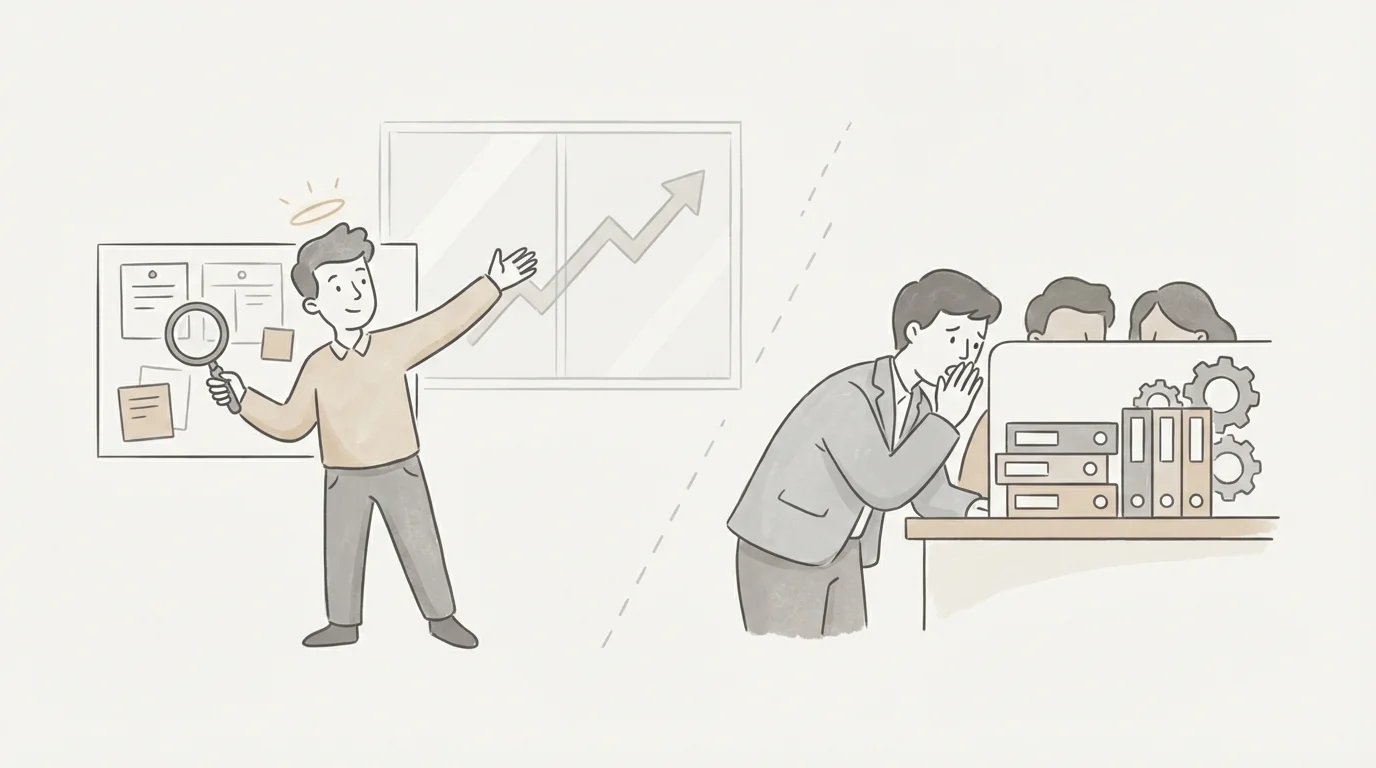
You're in a team sync. Your coworker is walking through the feature redesign, the one you spent two weeks scoping, prototyping, and pushing through technical review. They're describing it as their approach, and your manager is nodding along.
The meeting isn't the hard part. Tomorrow you sit next to this person and keep collaborating like nothing happened.
Credit theft between peers shows up constantly on Team Blind and r/cscareerquestions, and it rarely plays out the way you'd expect. Sometimes it's deliberate. Sometimes the person has no idea they did it. How you respond, and how fast, determines whether your contributions make it into your performance review or get attributed to someone else.
Why your coworker might not realize they did it
This happens more often in collaborative work than most people think, and the reason is cognitive, not moral.
Ross & Sicoly (1979) studied this across teams, married couples, and work groups. People overestimate their own contributions to shared outcomes. Every individual in their studies recalled their own inputs more vividly than their collaborators'. Group members who estimated their percentage of the total work produced numbers that summed to well over 100%.
In software engineering, the conditions for this bias are everywhere. Shared repos, pair programming, group design reviews. Your coworker might believe they contributed more than they did. They remember the Slack thread where they raised a concern about the approach. They don't remember that you'd already solved it in a design doc two days earlier.
That doesn't make it acceptable. But it should change how you respond the first time compared to the fifth.
The first time: have a private conversation
If this is a first offense, go direct. Not over Slack where tone gets lost. In person or on a call.
A script that tends to land well:
"Hey, I noticed when [project] came up in the sync, it was framed as your work. I led the design and implementation on that part. I'm not trying to create a problem. I just want to make sure we're both getting credit going forward."
This states the fact and names what you want without attacking their character. You're leaving room for them to say "I didn't mean it that way" without losing face.
Most of the time, this resolves it. People who claimed credit out of carelessness will adjust once they know you noticed. The conversation is uncomfortable for a minute and then it's done.
If they push back or deny it, don't argue. Say "OK, I wanted to flag it" and move on. The next step is your manager, not a debate.
When it becomes a pattern
Once is a mistake. Twice is a pattern that requires a different approach.
If the private conversation didn't change the behavior, stop handling it peer-to-peer.
Research from the University of Toronto surveyed over 1,500 participants and found that 91% had been a victim, perpetrator, or witness of what the researchers call "knowledge theft": claiming unjustifiable ownership of someone else's contributions. The researchers found it so pervasive that it undermines organizational knowledge sharing. People stop contributing ideas when credit keeps disappearing.
To escalate without it looking like a complaint:
-
Document each instance. Date, context, what was said, who was present. "On March 12, in the team sync, [name] presented the caching redesign as their work. I authored the design doc (linked) on March 3 and led all implementation PRs."
-
Frame it as a visibility question to your manager. "I want to make sure my contributions on [project] are visible for my review. Here's what I led, and here are the timestamps and PRs." Your manager can act on documented evidence. They cannot act on "this person always takes my ideas."
-
Ask for a process fix. "Would it help if I started sending you a weekly summary so you have my contributions on record?" You're not complaining about a coworker anymore. You're giving your manager what they need for your review.
How this damages your promotion case
In calibration, your manager needs to point to work that YOU did. Not team output. Not shared project results. Your individual contributions, tied to your name.
If a coworker has already presented your work as theirs and nobody corrected the record, your manager has less evidence for your case. They may even believe the work was collaborative, because that's the version they heard first.
The damage compounds. If a peer claims your contributions in Q1 and you stay quiet, by Q3 it has become organizational memory. "Oh, [coworker] handled the caching redesign" is what people remember. Correcting it six months later looks petty.
Address credit theft early. Not because you need to win every attribution battle, but because the record your manager carries into review season should reflect what you actually did.
Protecting yourself in shared projects
Making your contributions traceable before anyone else can claim them beats recovering credit after the fact.
Write up your proposals before meetings. A Slack message or doc saying "I'm proposing this approach for [feature]" timestamps your thinking. If the idea gets discussed in a meeting the next day, the written record already exists with your name on it.
Use specific commit messages and PR descriptions. Not fix stuff. Something like redesign auth flow to eliminate N+1 queries, reducing latency by 40% (closes #1234). Your name is on every commit. Make the description worth reading.
Send your manager a brief weekly update. Three bullets: what you shipped, what you're working on, what you decided. If a coworker tries to claim something you shipped, your manager already has your email from the day it happened. Building allies at work who know your contributions firsthand is another layer of protection that makes credit theft harder to sustain.
Establish ownership splits early in shared projects. "I'll own the backend API, you take the frontend integration," said in a kickoff or documented in a project plan, makes it much harder for lines to blur later.
For a deeper playbook on responding in the moment, the guide to handling credit theft at work covers the full response toolkit. If your manager is the one taking credit rather than a peer, that's a different dynamic with different risks.