The Difference Between Visibility and Politics (And Why You Need Both)

 CareerClimb
Visibility or politics?
Learn the line — and how to stay on the right side of it.

Share this article
"I don't play politics." Every engineer has said this at some point. Usually right around the time they watched someone with weaker technical skills get promoted ahead of them.
The statement feels principled. It's actually expensive. Because what most engineers mean by "I don't play politics" is something closer to: I don't send weekly updates, I don't build relationships with leadership, I don't talk about my work in meetings, and I don't think about who has influence over my career. They've taken two different things and rejected both.
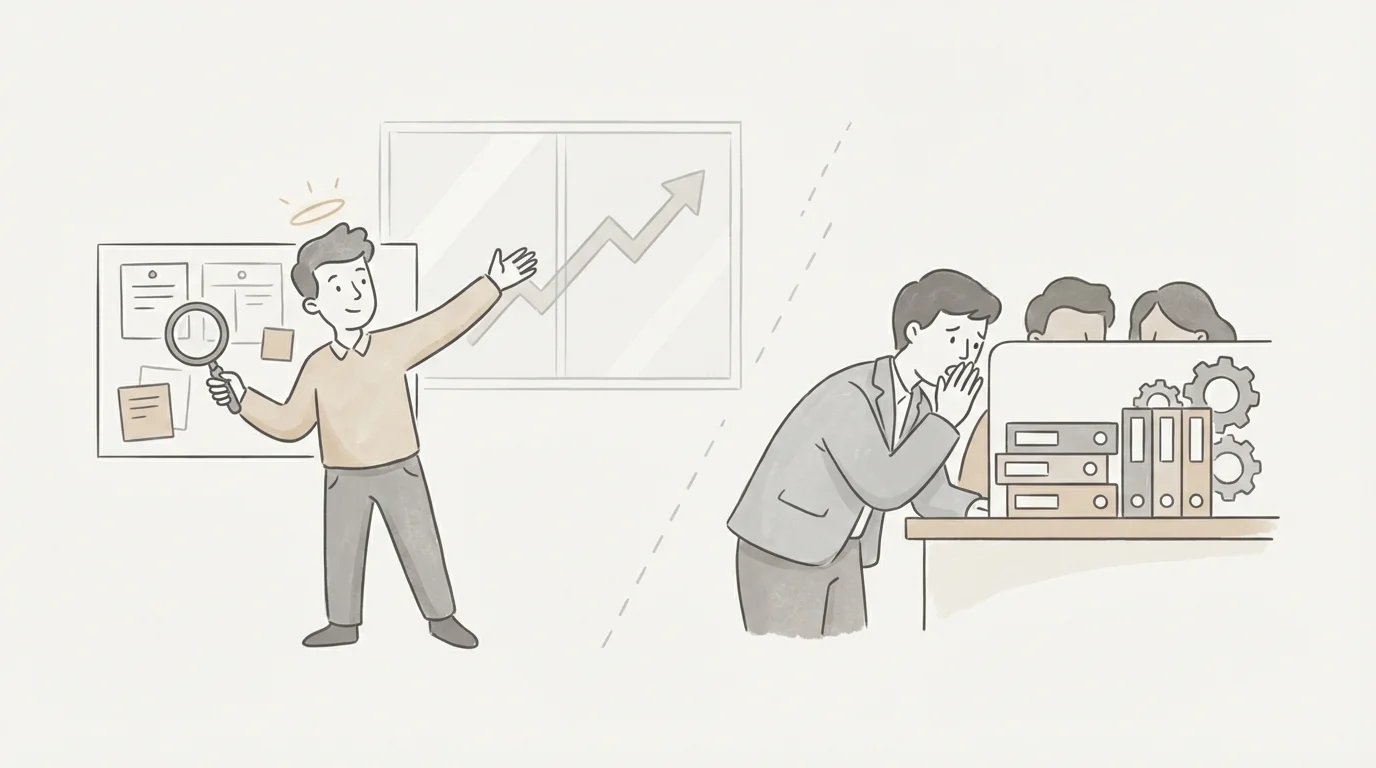
Visibility and politics are not the same activity. They serve different purposes, require different skills, and apply in different situations. Most engineers need visibility. Some also need politics. Avoiding both because one feels uncomfortable is how strong performers stay stuck for years.
What visibility actually is
Visibility is making sure the people who decide promotions know what you've accomplished. That's it. No relationship maneuvering. No reading the room. No alliances. Just clear, repeated communication of your actual work to the people who need that information.
Visibility is a solo discipline. You can improve it without needing anyone else's cooperation. It looks like this:
-
Weekly impact updates. A three-sentence note to your manager: what you worked on, what the outcome was, what's next. A record of results that counteracts the forgetting curve that erases your contributions from your manager's memory within days.
-
Using 1:1s for career conversations. Most engineers use 1:1s as ticket reviews. The ones who get promoted use them to say: "I want to move to the next level. What am I still missing?" That question, asked early enough to act on the answer, changes the dynamic.
-
Writing up your results. A short Slack post after a major ship. A comment in the ticket explaining why that refactor matters. Two minutes of writing that makes months of work findable by anyone who wasn't in the room.
-
Presenting your work. A five-minute demo at the org all-hands. A brief walkthrough in a design review. Anything that puts your output in front of people beyond your immediate team.
None of this is political. It's documentation. You're giving your manager what they need to represent you accurately in the calibration room where you won't be present. Engineers who feel like nobody sees their work almost always have a visibility problem, not a politics problem.
A verified engineer on Team Blind put it plainly: "No matter how good you are at your job, if leadership can't see it, your hard work means nothing."
What politics actually is
Politics is navigating relationships, alliances, and power dynamics to influence outcomes. It's a multiplayer game. It requires reading other people's incentives, understanding who has influence, and positioning yourself relative to all of that.
Politics looks like this:
-
Building alliances with people who have organizational power. Not everyone's opinion carries the same weight in a calibration room. Knowing whose does and building a genuine working relationship with them changes what happens when your name comes up.
-
Reading the room. Understanding that your director cares about reliability metrics more than feature velocity and framing your work accordingly. Not fabricating results. Presenting real results in language that lands with the person who matters.
-
Managing perception during conflict. When two teams disagree on an approach, understanding who to talk to and how to present a counter-argument without creating enemies. That's political skill.
-
Understanding your manager's position. If your manager is politically weak, their advocacy for you in calibration carries less weight. Recognizing this and building relationships with other influential people (skip-levels, adjacent managers) is a political move.
Sylvia Ann Hewlett's research at the Center for Talent Innovation found that employees with sponsors (senior leaders who actively advocate for them) are 23% more likely to advance than those without. Finding a sponsor is a political act. It requires identifying who has the influence and building a relationship where they're willing to spend their own capital on your behalf.
When visibility is enough
For many engineers, visibility alone solves the problem. If your manager is competent, politically connected, and willing to advocate for you, then making sure they have clear evidence of your work is the whole game.
You need visibility (and only visibility) when:
- Your manager is strong and well-connected. They know how to argue for you in calibration. They just need the raw material.
- Your work is already at the right scope. You're operating at the next level. The gap is awareness, not performance.
- There's no competition for limited slots. Your promotion doesn't require beating out a peer with a stronger political position.
- The promotion process is relatively straightforward. Committee reviews documented evidence. Manager presents the case. Decision gets made on merit, or close to it.
In these situations, the fix is mechanical: send updates, use 1:1s for career conversations, write up results, present your work. The article on self-promotion without bragging covers the exact framing that makes this feel natural instead of performative.
When you also need politics
Sometimes visibility isn't enough. The work is documented, the manager knows about it, and the promotion still doesn't happen. That's a political problem.
You need politics when:
- Your manager is politically weak. They're advocating for you, but their voice doesn't carry weight. Other managers in calibration override them or stay silent when your name comes up.
- There are limited promotion slots. Two or three people on your team are ready. Only one gets through. The decision isn't purely about evidence. It's about whose case has the most support in the room.
- A reorg changed the power structure. New leadership, new priorities, new relationships to build. The people who used to know your work are gone.
- Someone is actively working against you. A peer is taking credit. A manager on another team challenges your contributions. You need people in the room who can counter that narrative.
- You need a sponsor, not just a manager. A sponsor is a senior leader who puts their own reputation on the line for your career. Building that kind of ally requires relationship investment beyond documenting your work.
A Team Blind user in a Capital One promotion thread described the dynamic directly: "If one of the managers in the cross-calibration session doesn't like you, they'll just say 'not enough influence' or some other BS. If your current manager is weak, they won't stick their neck out for you."
That's a political problem. No amount of weekly updates fixes it.
How to do both without becoming someone you're not
The reason engineers avoid this stuff is that it feels fake. Here's the test for whether it is: Is what you're communicating true?
If you shipped something that cut latency by 40% and you write that in an update, that's not fake. That's a fact. If you ask a senior engineer on another team for feedback on your design because you genuinely want their perspective, that's not manipulation. That's being a thoughtful engineer.
For visibility, the reframe is simple: you're not bragging. You're giving your manager ammunition. Every update you send is one less thing they have to reconstruct from memory during review season.
For politics, the reframe is harder but still real: decisions are made by people, and people are influenced by relationships. Understanding who has influence over your career and building genuine working relationships with those people isn't manipulative. It's how organizations work.
In practice:
- Send the weekly update. Three sentences. Takes five minutes. Covers 80% of the visibility gap.
- Have the promotion conversation early. Tell your manager you want to move up. Ask what's missing. Do this six months before review season, not two weeks before.
- Build one skip-level relationship. Ask your manager's manager for feedback on a project. Have a 15-minute conversation about their priorities. Now they know your name and your work.
- Help someone on another team. When they remember you in calibration, that's an organic ally. Not manufactured. Not fake. Just a consequence of being useful.
- Pay attention to who matters. Know whose opinion carries weight in promotion decisions. Make sure they've seen your work. That's not scheming. That's awareness.
The cost of avoiding both
The engineer who avoids visibility and politics out of principle pays for it in years. Strong work. Positive reviews. No promotion. More frustration. Harder work. Still nothing.
The engineers who get promoted aren't better performers, necessarily. They're better at making their performance visible and building the relationships that turn visibility into advocacy. You don't have to become a different person. You have to stop pretending that the quality of your work is the only variable that matters.
Visibility and politics aren't things that "just happen" to people who are naturally good at them. They're skills you build, and CareerClimb's AI coach, Summit, helps you figure out exactly which moves matter most for your specific situation, whether that's documenting wins, building the right relationships, or both. Download CareerClimb and stop leaving your promotion to one voice in the room.