Navigating Office Politics: The Honest Guide for People Who Hate Playing Games


 CareerClimb
Good at your job but invisible?
CareerClimb helps you build visibility without playing games you hate.

Share this article
Let me guess: you are good at your job. You ship code, you solve hard problems, you help your teammates. And you believe, sincerely, that your work should speak for itself.
It does not. It never has. And every year that you opt out of "playing politics," someone less talented but more visible gets the promotion, the raise, or the high-impact project that should have been yours.
This is not a guide about how to manipulate people. If that is what you think office politics is, this article is specifically for you. Because the belief that politics equals manipulation is the exact thing keeping you stuck.
The lie you have been telling yourself
Here is the story many engineers tell themselves: "I do not play politics. I just do good work. The people who play politics are fake, manipulative, and less capable. If the system were fair, my work alone would be enough."
This story feels righteous. It also has a convenient feature: it lets you avoid doing anything uncomfortable while feeling morally superior about it.
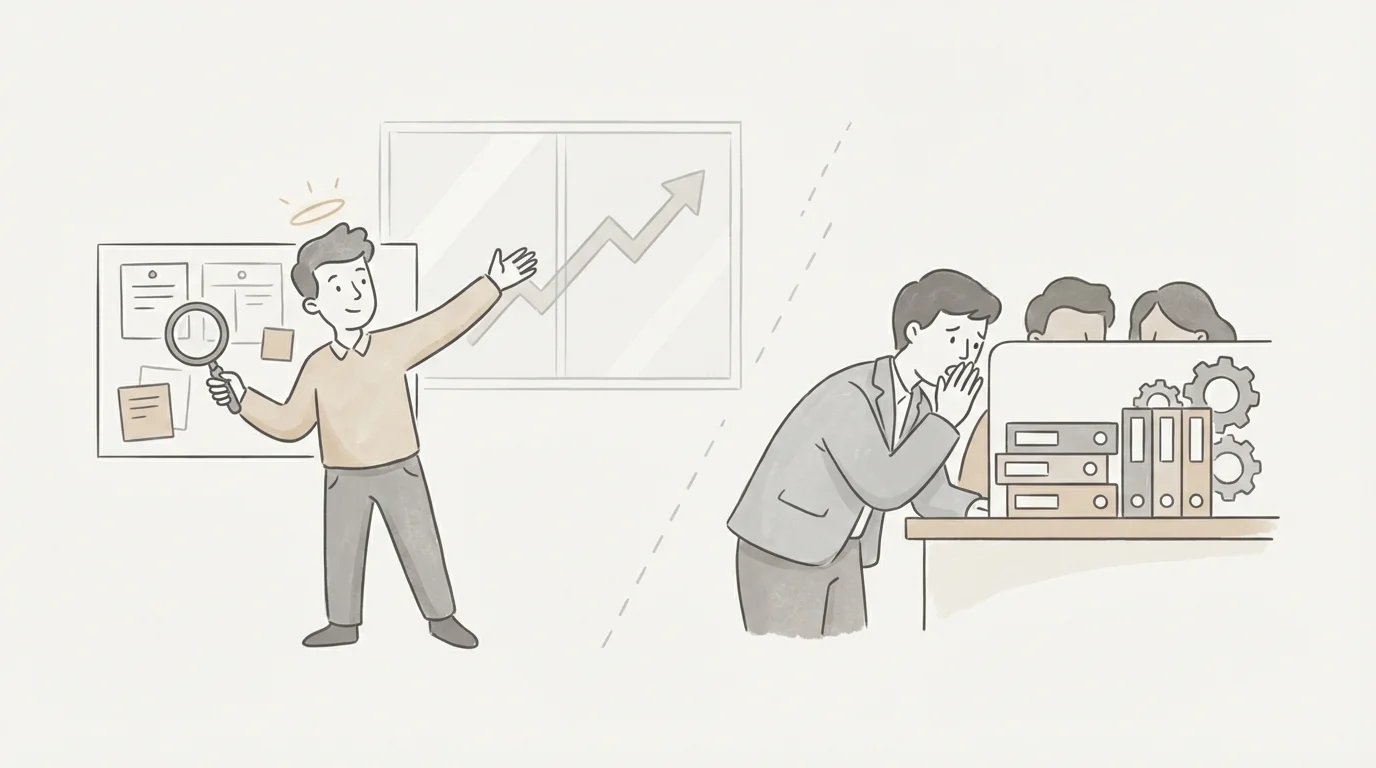
But here is the problem. The "system" is not an algorithm. It is people. People who have limited attention, competing priorities, and imperfect information about what you are doing. When you refuse to make your work visible, you are not taking the moral high ground. You are making yourself invisible to the people who decide your career trajectory.
A Gallup study found that managers who regularly communicate with leadership about their team's work have reports who are 3x more likely to be recognized for their contributions. Visibility is not a character flaw. It is infrastructure.
What "office politics" actually is
When engineers say they "hate politics," they usually mean one or more of these things:
- They hate people who take credit for others' work
- They hate people who manipulate information for personal gain
- They hate sucking up to people in power
- They hate the feeling that effort is not directly correlated with reward
All of those are reasonable things to dislike. None of them are what office politics actually is in most functional workplaces.
In most cases, "office politics" is:
- Knowing who makes decisions and how. This is just organizational awareness.
- Building relationships with people beyond your immediate team. This is networking, not manipulation.
- Making your work visible to people who need to see it. This is communication, not bragging.
- Understanding what your organization values and aligning your work with it. This is strategic thinking, not selling out.
For a structural overview of how workplace politics operates, read Office Politics: The Honest Guide to Navigating Workplace Dynamics. This article focuses on the mindset piece: how to stop resisting and start engaging on your own terms.
Five mindset shifts that change everything
1. You are already playing politics (badly)
The decision to "not play politics" is itself a political choice. When you stay quiet in meetings, you are signaling that you do not have strong opinions. When you skip the team happy hour, you are signaling that you do not value relationships. When you never share your wins, you are signaling that your work was not important.
You are not opting out. You are playing the game with a strategy of silence, and that strategy has a track record. It loses.
2. Visibility is not bragging
This is the one that trips engineers up the most. There is a deep belief in engineering culture that talking about your work is arrogant, that truly great work gets recognized on its own.
Ask yourself: how many of your teammates' accomplishments do you know about? Probably only the ones they told you about, shared in standup, or mentioned in their weekly update. The same is true in reverse. Your manager, your skip-level, and the people in calibration only know what they have been told.
Making your work visible is not bragging. It is doing your job. For more on this, read self-promotion at work is not bragging.
3. Relationships are not favors owed
Many engineers treat workplace relationships as purely transactional. They avoid building relationships because they do not want to "owe" anyone anything. But relationships in functional workplaces are not about favors. They are about trust, context, and mutual support.
The colleague who knows your work and respects your judgment is more likely to support you in calibration, recommend you for high-impact projects, and warn you about organizational changes. That is not manipulation. That is how human organizations work.
For practical advice on building those relationships, read how to build allies at work without feeling fake.
4. Understanding power dynamics is not the same as exploiting them
Knowing that your skip-level cares about cost reduction is not manipulation. It is awareness. Using that knowledge to frame your work in terms they care about is not sucking up. It is effective communication.
You can understand how power works, who influences decisions, and what your organization values without compromising your integrity. In fact, understanding these things makes you more effective at getting good ideas implemented and protecting your team from bad decisions.
5. Opting out punishes you more than the system
Here is the hardest truth: the system does not suffer when you refuse to engage. You do.
The engineer who ships great code but never tells anyone about it does not change the promotion system by staying invisible. They just do not get promoted. The system continues rewarding people who communicate their value, whether those people deserve it or not.
You can hate that this is how it works. You can wish it were different. But refusing to participate does not change the system. It just removes you from it.
What "ethical politics" looks like in practice
If you have made it this far, you might be thinking: "Fine, I get it. But how do I do this without becoming someone I do not respect?"
Here is what ethical engagement looks like. These are not manipulative tactics. They are professional behaviors that any person with integrity can practice.
Share your work regularly. Send weekly updates to your manager with 3-5 bullets about what you shipped, decided, or unblocked. This is not bragging. It is giving your manager the information they need to advocate for you. Read how to write weekly updates that get you promoted for a template.
Build genuine relationships with 2-3 people outside your team. Grab coffee, offer help on a problem they are facing, ask about their work. These relationships will eventually become your support network. They do not have to be transactional.
Learn what your organization values. Every company has things it rewards. At some companies, that is shipping fast. At others, it is cross-team collaboration. At others, it is thought leadership. Know what your company values and make sure at least some of your work aligns with it.
Get to know your skip-level. Request a 1:1. Share what you are working on and why it matters. Ask them what they care about. This is not sucking up. It is building a relationship with someone who has significant influence over your career.
Speak up in meetings. You do not need to be the loudest person. But if you have an insight, a concern, or a recommendation, share it. People who stay silent in meetings are often perceived as having nothing to contribute, regardless of the work they do outside the room.
Be strategically generous. Help others in visible ways. Give credit publicly. Thank people in channels where leadership can see it. This is not manipulation. It is building a reputation as someone who lifts others up, which is one of the most powerful political assets you can have.
The line between engagement and manipulation
There is a real line. Here is how to know which side you are on:
Engagement means making your real contributions visible, building real relationships, and communicating honestly about your work and your goals.
Manipulation means fabricating contributions, undermining others, withholding information for advantage, or building relationships solely to exploit them.
If what you are doing is true and you are willing to say it to anyone involved, you are engaging. If you would be embarrassed or caught off-guard if the other person heard what you said, you are manipulating.
Most engineers are nowhere near the manipulation line. Their problem is the opposite: they are so far from it that they have made themselves invisible.
What changes when you start engaging
Engineers who shift from "I refuse to play politics" to "I am going to make my work visible and build real relationships" typically notice several things within 3-6 months:
- Their manager brings up promotion conversations proactively. Because the manager now has evidence to work with.
- They get invited to higher-visibility projects. Because people outside their team now know they exist and what they are capable of.
- They feel less frustrated. Because the gap between effort and recognition starts to close.
- They do not feel fake. Because nothing they are doing requires dishonesty.
The engineers who get promoted are not the ones who play the most politics. They are the ones who do great work and make sure the right people know about it. That is not a game. That is just how organizations work.
If your workplace is genuinely toxic
Everything in this article assumes a reasonably functional workplace. If your organization genuinely rewards manipulation over merit, if people who lie and backstab consistently advance while ethical contributors are punished, that is a different problem.
In a truly toxic environment, the right move may be to leave rather than to adapt.
But be honest with yourself about which situation you are in. Most workplaces are not toxic. They are just full of humans who have limited attention and need to be told what is going on. That is not a moral failing of the system. It is a design constraint of human organizations.
CareerClimb helps you build visibility and track your contributions so the right people know what you do, without requiring you to become someone you are not. Try it free.