My Manager Takes Credit for My Work


 CareerClimb
Boss taking your credit?
Get coaching on how to make your impact visible to others.

Share this article
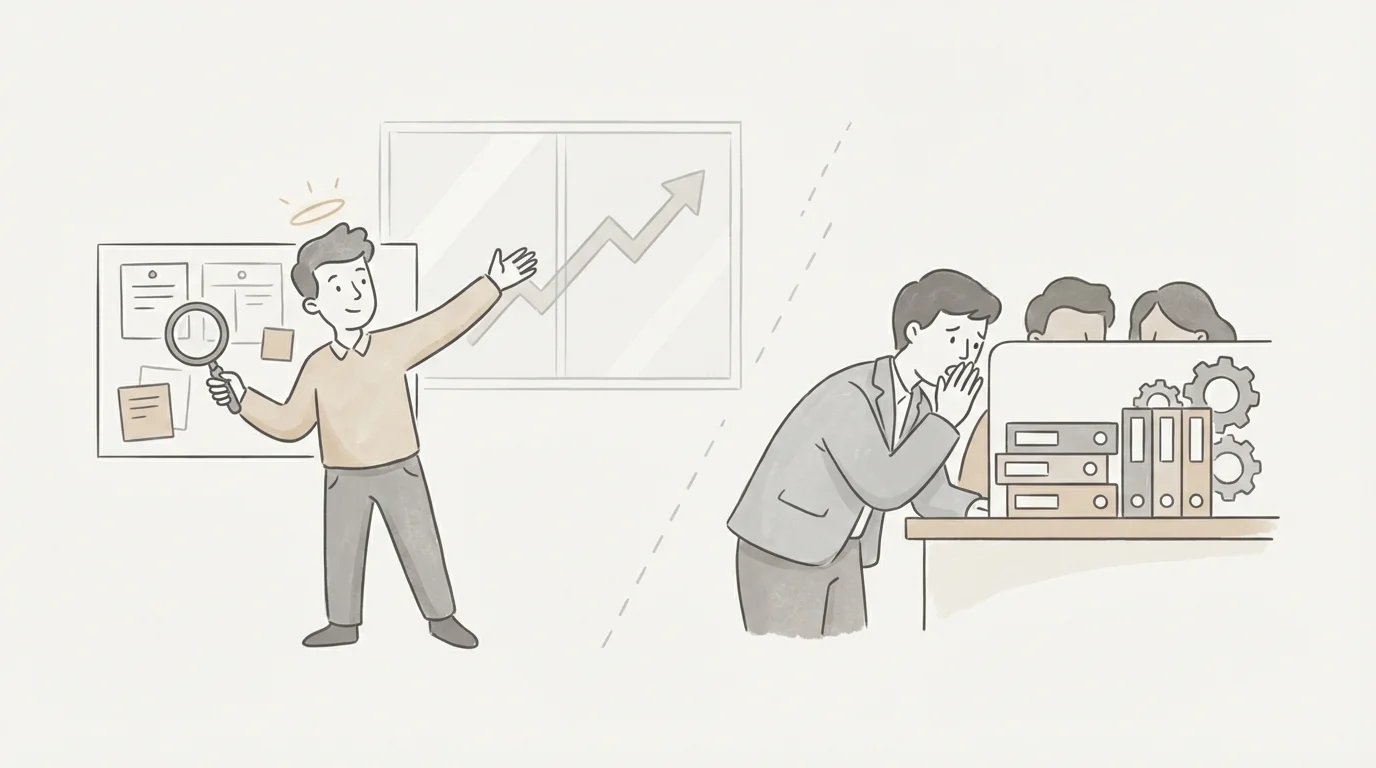
Your manager just walked into a leadership meeting and described the system you spent six weeks designing as something they "put together." You weren't in the room. You found out later from a colleague who was.
Now you're sitting with a specific kind of anger. Not the clean kind you'd feel if a peer did it. This is muddier, because the person who took your work is also the person who writes your review, decides your projects, and represents you in calibration. You can't just call it out. The power dynamic changes everything.
When a peer takes credit for your work, you can address it directly, bring evidence to your manager, and let them handle it. When your manager is the one doing it, the usual playbook breaks down. There's no neutral third party to escalate to without risking real damage to the relationship you depend on most.
That doesn't mean you're stuck. But the response has to be different.
First, figure out which version you're dealing with
Not every instance of your manager presenting your work is a problem. There are two very different things happening under the same surface behavior, and you need to know which one you're looking at before you respond.
Version one: your manager is doing their job. Managers present their team's output to leadership. That's how organizations work. When your manager walks into a director meeting and says "my team shipped a new caching layer that cut latency by 40%," they're not stealing your work. They're representing the team. When they say "I led the effort to overhaul the alerting pipeline," they're describing their role as the person who staffed, scoped, and unblocked the project. Even if you wrote most of the code.
This feels wrong when you're the one who did the technical work. But roll it up one level: your skip-level doesn't need to know who wrote which function. They need to know the team delivered. Your manager narrating that delivery is normal. It doesn't erase your contribution. It's the mechanism by which your team's output gets communicated upward.
Version two: your manager is claiming your individual work as their own. This is different. Your manager tells their skip-level "I designed the new data model" when you designed it. They present your architecture proposal in a planning meeting as their own thinking. They write up the project summary for a leadership review and their name is the only one on it. Your specific decisions, your specific technical contributions, rebranded as theirs.
The difference is whether they're summarizing the team's output (their job) or erasing your individual contribution (a problem). If your manager is telling leadership about the results of the team they lead, that's fine. If they're telling leadership that they personally did the thing you personally did, that's the version that hurts your career.
Why this is harder than peer credit theft
When a colleague takes credit, you have a clear path: talk to them directly, and if that fails, bring documentation to your manager. Your manager is the arbiter.
When your manager is the one doing it, there's no clean arbiter. Going to your skip-level feels like going over your manager's head. Going to HR feels like a formal escalation for something that's hard to prove. And confronting your manager directly carries real risk because they control your performance rating, your project assignments, and how your name gets used in calibration.
A BambooHR survey found that 63% of employees said taking credit for someone else's work is the worst thing a boss can do. It ranked above micromanaging, above not caring about work-life balance, above failing to give feedback. The reason it lands so hard is the power asymmetry. You can't fight it the way you'd fight a peer doing the same thing.
So the response has to be indirect. You have to build visibility that doesn't depend on your manager giving you credit.
Build a paper trail that can't be renarrated
The best defense against a manager who takes credit is making your contributions visible before they have a chance to claim them.
Timestamp your thinking in writing. When you design something, post it. A Slack message, a design doc, a proposal in your team's wiki. The format matters less than the timestamp and your name on it. "Proposing [approach] to solve [problem]. Here's my design: [link]" creates a public record that predates any meeting where someone else might present it.
Send weekly updates. A short email or message to your manager (and optionally your skip-level) summarizing what you shipped, what you decided, and what's next. Three sentences is enough. This creates a running log of your contributions in someone else's inbox, timestamped and searchable. If your manager later presents your work without attribution, the record already exists. The habit of writing updates that actually get read is one of the most effective visibility tools you have.
Use commit messages and PR descriptions that tell a story. Not "fix bug" but "redesign auth flow to eliminate session race condition (reduces login errors by 60%)." Your name is on every commit. Make the commits worth reading.
Share pre-reads before meetings. If you're presenting a design or a project update, send a written summary beforehand with your name on it and your manager CC'd. Now there's a document in multiple inboxes that attributes the work before anyone walks into the room.
Create visibility that bypasses your manager
If your manager isn't crediting you, the fix isn't to make them credit you. It's to build direct visibility with the people who matter.
Present in broader forums. Volunteer for tech talks, demo days, or all-hands updates. When you stand in front of your skip-level's org and walk through the system you built, your name gets attached to the work in their memory. Your manager can't unattach it.
Build a relationship with your skip-level. This isn't political. It's making sure the person above your manager has accurate information about your contributions. If your company does skip-level 1:1s, use them. If it doesn't, find other ways to get on your skip-level's radar. A skip-level who knows your work directly is the single strongest counter to a manager who doesn't credit you properly.
Contribute to cross-team work. When you work across teams, engineers and managers outside your org see your contributions firsthand. Multiple people who can say your name in a calibration room is worth more than your manager saying it alone.
Whether (and how) to have the conversation
At some point, you may need to say something directly. This is the highest-risk move, so the framing matters.
Don't accuse. Never say "you took credit for my work." Even if that's exactly what happened, it puts your manager on the defensive and turns a conversation into a confrontation.
Frame it around your promotion case. Something like: "I've been thinking about visibility for my review. When [project] came up in the leadership review, I wanted to make sure my role is clear in the narrative. I designed the data model and led the implementation. How do you think we can make sure that's reflected when calibration comes around?"
This does several things. It names the specific project without accusing anyone. It connects the issue to something your manager cares about (supporting your promotion case). And it asks them to collaborate on a solution rather than defending their behavior.
Pick the right moment. This conversation works best in a 1:1, not right after the incident when emotions are high. Give it a few days. Bring it up in the context of career planning, not grievance.
Watch how they respond. A manager who says "good point, let me make sure you're credited going forward" is someone worth working with. A manager who gets defensive, dismisses it, or turns it around on you is giving you important information about what this relationship actually is.
When it's a deal-breaker
Not every instance of a manager taking credit means you should leave. But there's a line, and it's worth knowing where it is.
It's probably not a deal-breaker if:
- It happened once or twice and they're generally supportive
- They credit the team but don't name individuals (common, fixable)
- They responded well when you raised visibility concerns
It's probably a deal-breaker if:
- It's a pattern that happens consistently across multiple projects
- It directly affects your performance review or promotion case
- You've raised it and they dismissed or retaliated
- Other people on the team report the same experience
- Your skip-level has no idea who you are after years of solid output
Gallup's research on employee recognition found that only 22% of employees say they get the right amount of recognition. Employees who feel well-recognized are 65% less likely to be actively job-searching. When the recognition gap comes from your direct manager, and they're not just failing to recognize you but actively claiming your work, the math on staying changes fast.
If you've documented the pattern, raised it directly, and nothing changed, the honest calculus is simple: staying means building someone else's case at the expense of your own. A new manager, whether at your company or a new one, resets the dynamic entirely.
Your contributions are yours. CareerClimb helps you log your wins as they happen, build a traceable record of your impact, and make sure your work is documented before anyone else can claim it. Download CareerClimb and start building the case that's actually yours.