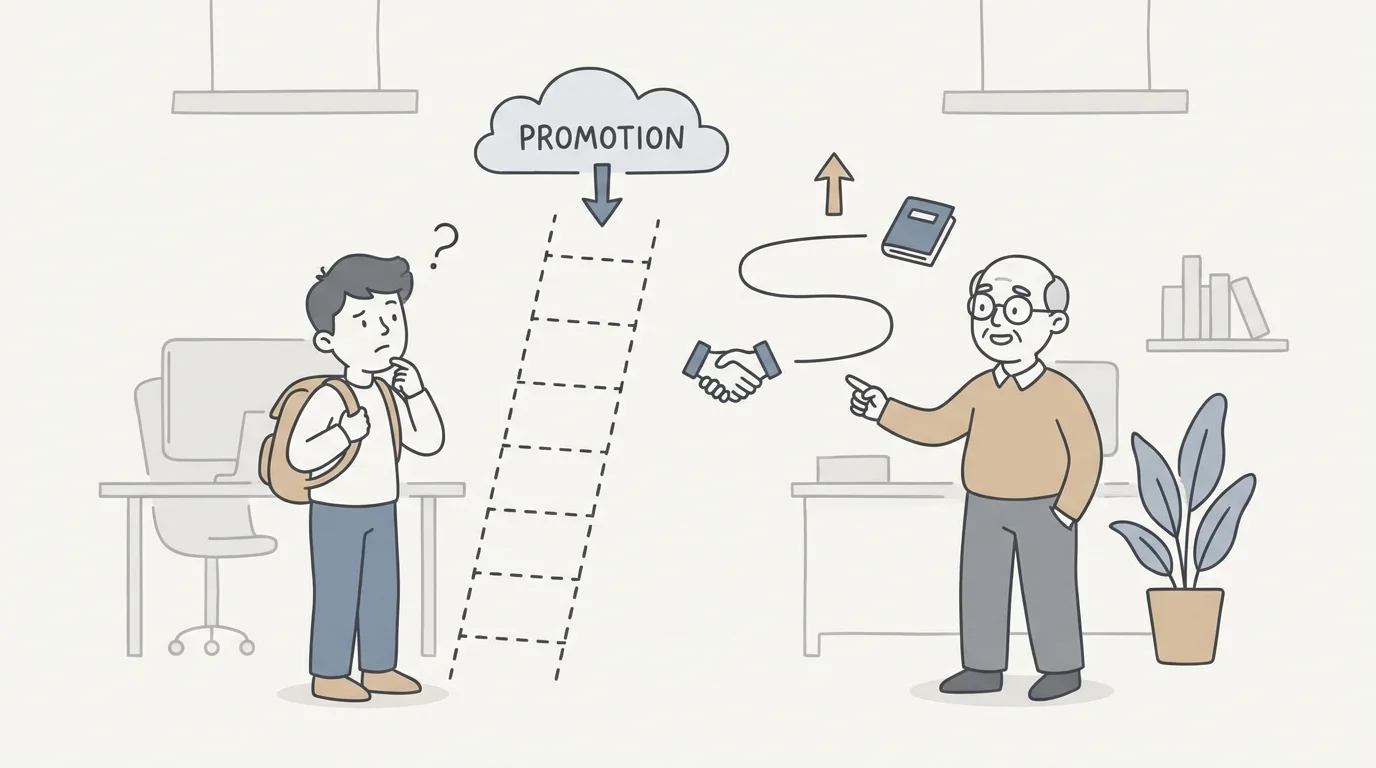
Passed Over for Promotion Again? Here's What to Actually Do


 CareerClimb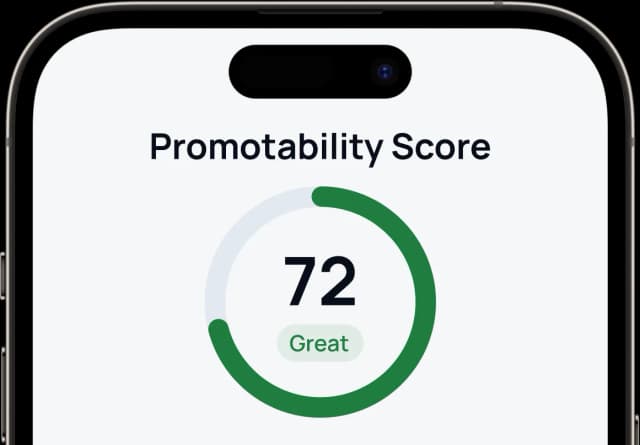
Passed over again?
Get a plan to make it impossible to ignore you next time.

Share this article
You did everything you were supposed to do. The feedback was good. And somehow, you got passed over for promotion. Again.
Maybe the person who joined after you just made senior. Maybe you got vague non-answers about what "ready" actually means. Maybe this is the second or third time, and you're starting to wonder if it's ever going to happen.
That anger is legitimate. But before we get to what to do next, it's worth being honest about what actually happened. It's probably not what you think.
Why this feels wrong (and usually is)
Most engineers who get passed over are told something like "you're not quite ready" or "we need to see more leadership." That's the official version. It obscures something messier: the system that determines who gets promoted is not a clean meritocracy. It's a human process with bias, politics, and incomplete information.
A 2023 survey by INTOO and Workplace Intelligence found that 46% of employees say their manager doesn't know how to help them with career development. Gallup found that only 30% of employees strongly agree their manager involves them in setting their career goals. These numbers aren't outliers. They describe the average experience.
Your manager may be well-intentioned. But in most cases, they're working with a partial picture of your contributions. And when they sit in a calibration meeting arguing for your promotion, they need to tell a convincing story. If the story is thin, the default outcome is the median rating.
What actually happened in that room
You weren't evaluated just by your manager. You were evaluated by a committee that heard about you secondhand, for roughly 10 minutes, while deciding the fate of dozens of people.
Harvard Business Review (HBR) research on calibration meetings found that whoever advocates loudly and early in the room tends to anchor the outcome for everyone else. The committee isn't pulling up your PR history or your ticket count. They're listening to your manager tell a story: "This person reduces risk. This person increases team velocity. Losing them would hurt." If that story isn't compelling, or if your manager is conflict-averse in a room full of stronger advocates, the outcome gravitates toward the center. What your manager actually says about you in that 90-second window often has less to do with your performance than with what material you gave them to work with.
This is not a performance problem. It's an information problem.
The Ebbinghaus forgetting curve shows that humans forget roughly 70% of new information within 24 hours and up to 90% within a month without reinforcement. By the time review season arrives, most of what you shipped in Q1 is gone. Not just from your manager's memory, but from yours too. The self-review you put together reflects maybe 30% of what you actually did. The manager's promotion packet reflects even less.
Research from the Center for Creative Leadership found that 81% of people who received promotions had a career-facilitating relationship with a higher-level advocate who made their work visible to decision-makers. The advocate isn't the person who decided. They're the person who told the story.
The part that's uncomfortable
A lot of what determines whether you get promoted is within your control. Not all of it. Budget freezes, headcount caps, and manager politics are real. But more than most people assume.
The difference between engineers who get passed over and engineers who get promoted is rarely raw performance. More often it's whether the system had the information it needed to make the right call. That's fixable, and there's a full playbook for how to build that case intentionally.
How Promotion-Ready Are You?
Get a personalized score and find out what's holding you back.
8 questions · about 2 minutes · free score
1 of 8
Be honest: when someone on your team gets promoted, what's your first thought?
What to do when you get passed over
Ask your manager the specific question
Don't leave your next 1:1 with anything vague. Ask directly: "What would need to be true for me to be promoted in the next cycle? What's the one thing I'm not demonstrating that would move the needle?"
Write down what they say. Send a follow-up email summarizing it. This isn't about catching them in something. It's about creating shared accountability. If the answer shifts next cycle, you'll be able to name the shift.
Engineers on Team Blind who eventually got promoted after being passed over describe this moment as a turning point. One put it this way:
"I stopped waiting to be told what to do and started asking: 'What's missing from my case?' Most managers, it turns out, are relieved when someone finally treats promotion like a joint project instead of a secret lottery."
Start logging wins this week, not at review time
The brag document isn't bragging. It's a memory prosthetic for a system that forgets.
Every week, capture one to two things you did that had measurable impact. Not "worked on the payments API." Something like: "Reduced checkout latency by 200ms, which brought the payment error rate from 4% to under 1%." Specific, quantified, connected to a business outcome. If your work doesn't come with obvious metrics, frameworks for quantifying engineering impact without numbers can help you find the right angle.
This document serves two people: you, for your self-review, and your manager, for the calibration room. When they sit down to argue your case to four other managers, they need specific ammunition. You're the only one who can give it to them. How you build and deliver that material matters as much as having good wins to begin with.
Make your work visible beyond your team
On Team Blind, one pattern comes up repeatedly from engineers stuck at the same level for years: they were doing high-impact work that nobody outside their immediate team knew about. The infrastructure engineer whose service enabled three product teams. The backend engineer who removed a bottleneck that saved senior engineers two days a week. The psychology behind why managers don't recognize your work even when it's strong explains why this is a structural problem, not a judgment about quality.
If no one at the decision-making level knows your name, the calibration room won't be lobbying for you.
This doesn't mean becoming a self-promoter. Write an internal doc about what you built and why it matters. Present it at a team sync one level up. Ask the teams who benefited to mention the impact when they discuss their results. You're not promoting yourself. You're connecting your work to people who can vouch for it.
Find out if the block is structural
Sometimes the honest answer is that the block has nothing to do with your performance. Budget constraints, headcount limits, or the fact that you're too valuable in your current role to be moved up: these are real and documented.
If you've been told "not this cycle" twice with vague or shifting feedback, ask your manager directly: "Is this a performance issue or a structural one?" If they can't give you a clear answer, that's an answer. Engineers on Blind describe this pattern often:
"There really wasn't a difference between 'can't' and 'won't.'"
If the block is structural, the fastest path to the next level is often external. Engineers who move companies at the right moment routinely gain one to two levels faster than peers who wait out a blocked internal path. That's not giving up. That's reading the situation correctly. And if your company is already cutting headcount aggressively, reading the situation means acting before the decision is made for you.
What engineers in the same position actually did
The engineers who eventually got promoted after being passed over share some consistent patterns.
-
Had explicit, documented conversations about "ready." They stopped waiting for their manager to figure it out. They asked what "ready" actually looked like and got the answers in writing.
-
Maintained a running win log. Updated weekly, not reconstructed the night before self-review was due.
-
Made themselves visible outside their team. Internal docs, cross-team presentations, or written acknowledgment from teams they'd helped.
-
Moved externally when the path was genuinely blocked. The engineers who switched companies when internal promotion was structurally stalled advanced faster than those who stayed and waited.
The ones who didn't get promoted followed a different pattern: they worked harder on the same invisible track, trusted verbal promises from managers who later left, and treated "not this cycle" as a queue that would eventually move.
Keep building your case
Being passed over doesn't mean you weren't good enough. It usually means the room making the decision didn't have what it needed. Your job now is to make sure that never happens again.
If you made a formal promotion bid, submitted a packet, had the explicit conversation, and actively campaigned for this cycle, and it was denied, how to recover from a failed promotion attempt covers the specific diagnosis and what to change before the next attempt.