Signs Your Company Does Not Promote from Within (And What to Do)


 CareerClimb
Company won't promote you?
Get clarity on whether to stay or start looking.

Share this article
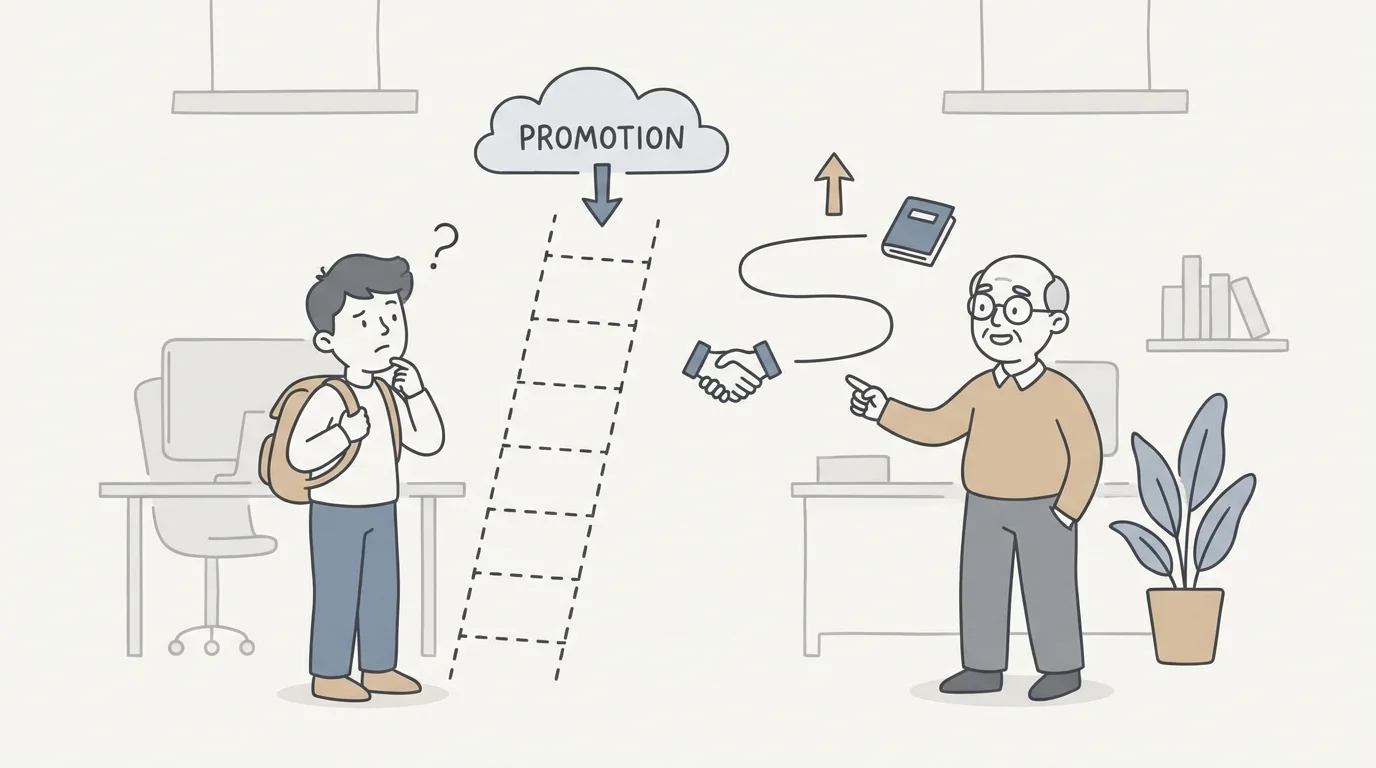
You've done everything right. Hit the goals. Got the positive feedback. And then the senior role opened up and went to someone from the outside. Again.
Maybe you told yourself it was a one-time thing. But now you're noticing a pattern. The new director came from another company. The staff engineer who just started has the title you've been working toward for two years. Your manager keeps saying "soon" but can't tell you what "soon" looks like.
At some point, the question shifts. It's no longer "What am I doing wrong?" It's "Does this company actually promote from within at all?"
That's a different question. And it deserves an honest answer.
Why some companies structurally don't promote internally
Not every company that skips you for promotion is structurally broken. Sometimes the timing is bad, the budget is tight, or you genuinely have a gap to close. But some companies have a persistent pattern of hiring senior people from the outside instead of developing the talent they already have.
This isn't accidental. It's a structural choice, even if nobody in leadership would describe it that way.
Building people into the next role is expensive and slow. It requires clear leveling frameworks, manager training, development budgets, and organizational patience. Hiring someone who already holds the title is faster. A Wharton study by Matthew Bidwell found that external hires get paid roughly 18-20% more than internal promotes into comparable roles, yet they receive lower performance evaluations for their first two years and are 61% more likely to be fired. Companies know this, and many still default to external hiring because it feels like less risk in the moment.
Budget structures can reinforce the pattern. At some companies, the hiring budget and the promotion budget are separate line items. The hiring budget is often larger and more flexible. So a manager who can't get approval for a promotion can sometimes get approval to hire someone externally at the same level. The incentives point outward.
Organizational anchoring works against you. Once you're seen as a strong performer at your current level, it takes deliberate effort for the people around you to re-see you as someone ready for the next one. External candidates arrive without that anchoring. They show up with a title and a fresh narrative.
None of this makes it fair. But understanding why it happens helps you figure out whether the pattern at your company is fixable or permanent.
The signs to watch for
One missed promotion doesn't mean your company is broken. A pattern of three or four of the following, across multiple cycles, does.
Leadership roles consistently go to external hires. Look at the directors, VPs, and senior staff engineers at your company. How many grew up inside the organization? If the answer is very few, the company has decided, deliberately or not, that leadership comes from the outside.
Promotion criteria keep shifting. You were told you needed more scope. You got it. Then it became more visibility. You got that too. Now it's "not this cycle." When the bar moves every time you clear it, the bar isn't the real problem. Engineers on Team Blind describe this as the clearest signal: "I can't/won't do what I said I'd do for you."
"Not enough budget" is the reason every cycle. Promotion budgets are real constraints. But if every single cycle, for every single person, the answer is budget, the company is choosing not to allocate. That's a priority decision, not a resource problem.
There's no written rubric or leveling framework. If the company can't show you, in writing, what the next level requires, they haven't built the infrastructure to promote internally. You're trying to hit a target that doesn't exist on paper.
New hires come in above you at your experience level. Someone joins your team with roughly your years of experience and your skill set, but they have the title you've been working toward. The company was willing to grant that level to a stranger but not to you.
Your peers who advanced did it by leaving. This is the most reliable signal. When the engineers you came up with are all getting promoted, but only at their next company, the system is telling you something. It's not that your peer group suddenly got better when they left. It's that a different company was willing to do what yours wouldn't.
How to confirm the pattern
Before you make a decision, do the homework. Frustration is valid, but you want data, not just a feeling.
Ask your manager directly. "Who was the last person promoted internally at my level on this team? When did it happen?" If they can't answer, or the answer is years ago, that's information. If they get defensive, that's information too.
Map the org chart backward. Pick five people in senior roles above you. For each one, find out whether they were promoted internally or hired from outside. If four out of five came from outside, the company has a sourcing preference whether they admit it or not.
Talk to people who left. Former colleagues who moved on can tell you things current colleagues won't. Ask them: did you feel like promotion was realistic here? What changed when you left? The answers will usually confirm what you already suspect.
Check Glassdoor and Blind. Search your company name plus "promotion" or "internal mobility." If the pattern is structural, other people have noticed and written about it.
What to do once you've confirmed it
Knowing your company doesn't promote from within is actually useful information. It narrows your options to two, and both are rational.
Option 1: Stay with your eyes open
Staying can make sense if the learning is strong, the compensation is competitive, and you're building skills or relationships that will pay off later. But stay because you've made a deliberate choice, not because you're hoping the pattern will change for you.
If you stay, stop optimizing for promotion at this company. Optimize for skill acquisition, resume lines, and external market value. Treat the role as a platform for your next move, not a stepping stone within this organization.
The danger of staying without adjusting your expectations is real. Every year at the same level has a compounding cost that goes beyond frustration. The financial gap between your current comp and what you'd earn at the next level widens every cycle you wait.
Option 2: Leave
If you've been stuck at the same level for too long and the block is structural rather than personal, the most efficient path to the next level is often external.
The Bidwell data actually works in your favor here. External hires are paid 18-20% more than internal promotes into similar roles. Your next company will likely offer you the level you couldn't get internally, at higher pay.
LinkedIn data shows that employees who are promoted within three years of being hired have a 70% retention rate, nearly double that of employees who aren't. Companies know this. The ones that invest in internal mobility keep their people. The ones that don't lose them to companies that will.
Before you leave, make sure you can tell a clear story about what you accomplished. Document your wins now, while the details are fresh. The work you did at a company that wouldn't promote you is still your work, and it's the raw material for your next negotiation.
The trap to avoid
The most common mistake is staying too long because the feedback is good. Positive reviews, strong peer feedback, and a manager who says you're valued can make it feel like the promotion is just around the corner. But if the pattern shows that the company fills senior roles externally, your good feedback isn't building toward anything. It's just keeping you productive at your current level.
Engineers who've been passed over for promotion describe a specific inflection point: the moment they stopped asking "What do I need to do to get promoted here?" and started asking "Has anyone actually been promoted here?" That second question is the one that changes things.
The answer doesn't have to be painful. Some companies are honest about it. They pay well, they offer interesting work, and they don't pretend internal promotion is the plan. That can be a perfectly good deal if you accept it on those terms.
The deal gets bad when you're waiting for something the company was never going to give you.
CareerClimb helps you build and document your promotion case so that wherever you go next, you have the evidence ready. Download CareerClimb