How to Make Your Manager Fight for Your Promotion


 CareerClimb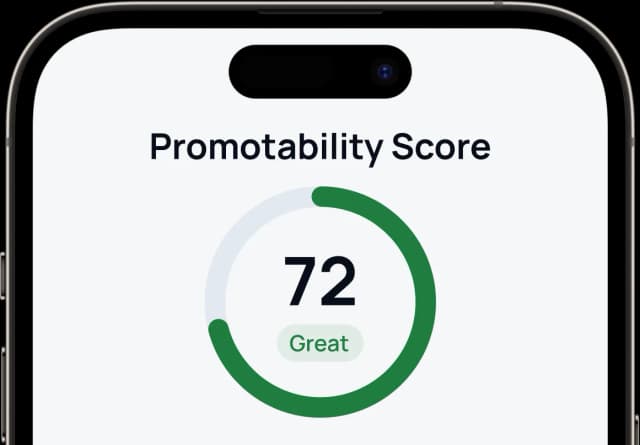
Need your manager's backing?
Get coaching on how to earn real advocacy.

Share this article
The calibration meeting is happening right now. Your manager is in a room with seven or eight other managers. Each of them is fighting for their people. Your name comes up. And your manager says something vague about your technical contributions and moves on.
That is the moment your promotion gets decided. Not the code you shipped. Not the on-call incidents you handled. Not the positive feedback in your last review. A 60-second pitch in a room you're not in, by someone who may not be equipped to make your case land.
Most engineers have no idea this is the actual mechanism. They assume doing good work is enough to get their manager to fight for them. It isn't. Once you understand why, you can fix it.
Why this feels wrong
After 18 months of solid work, the contract feels clear: perform well, get promoted. Your feedback has been positive. Your tech lead says good things. You've been patient.
The reason it hurts when this doesn't work is that the performance requirement is real. It just isn't the whole game. Getting promoted also requires your manager to walk into calibration prepared to make your case to people who don't know you. That is a separate thing from doing good work. And most engineers never think about it until they've already been passed over.
The numbers back this up. According to Gallup's State of the Global Workplace report, only 31% of employees strongly agree that someone at work encourages their development. For the other 69%, no one at work is actively invested in where they're going, which includes, in many cases, their direct manager.
That's not a personal failure on your part. It's a structural reality of how most organizations work. Your manager has their own deliverables, their own performance pressures, and a finite amount of political capital to spend. Understanding that is the starting point for understanding why your manager doesn't always recognize your work the way you expect.
What's actually happening in the calibration room
Calibration is where promotion decisions get made, finalized, and sometimes killed. Understanding how calibration actually works is step one; knowing how to prepare your manager for it is step two.
In that room, your manager is not pulling up your pull request history or your oncall log. They're arguing from memory and from the narrative they've been building with you over the past several months, or haven't. As a widely-read piece on dev.to put it:
"Your manager walks into a room you're not in and advocates for you. They are not pulling up your PR history."
The other managers in that room push back. "Haven't seen senior-level scope." "Not enough cross-team impact." "I don't know this person's work." Your manager needs to answer those objections with specific examples, quantified outcomes, and a clear case for why now. If they're improvising because you never built the story together, they default to vague praise: "Strong technical contributor." "Great teammate." Things that land flat in a room full of managers saying the same about their own people.
On Team Blind, engineers describe this pattern constantly. One verified engineer wrote about their promotion being stalled: "Manager just gives some BS reasons... didn't do a good job of selling my profile." Another: "If your current manager is weak, they won't stick their neck out for you."
This isn't malice. Calibration is politically demanding work, and underprepared managers fold under the first serious pushback. The engineer pays the price.
Is Your Manager Helping or Blocking Your Career?
Find out if your manager is fighting for you — or if you're on your own.
7 questions · about 2 minutes · free score
1 of 7
Does your manager actively put you in front of opportunities that stretch your scope — or do you find them yourself?
The part you can actually control
Some of what blocks your promotion is outside your hands: budget, timing, org politics, headcount constraints. But what your manager knows about your work, how they frame it, and whether they have the specific evidence to defend your case? That part is fixable.
You have to build it for them.
What to actually do
Have the explicit conversation before review season
Most engineers never say the words out loud: "I want to get to [next level] this cycle. Are you in a position to support that, and what do I need to show you first?"
They assume the goal is understood. A Capital One manager on Team Blind captured the problem precisely: "If this is the first time your manager ever hears you're interested in a promotion, it's likely not going to happen soon."
Not the first time they see your impact. The first time you say you want the promotion.
This conversation needs to happen at least one full review cycle before you're targeting the promotion. Not two weeks before the calibration window. Early enough for both of you to act on the answer. When you have it, ask two specific follow-up questions: what does "ready" look like at your level, and what would your manager need to see to feel confident nominating you? Get the answers in writing if possible.
Brief your manager on how to talk about your work
In your 1:1s, stop just reporting on what you did. Start giving your manager the language for calibration.
"I finished the latency work on the payments service. Response time dropped from 420ms to 80ms, which should cut escalations for the checkout team by about half. I want to make sure you have that framing if it comes up."
Short, specific, business-framed. You're not bragging. You're making their job easier by giving them material that actually lands in a calibration conversation. Technical descriptions of what you built do not survive contact with a room full of skeptical managers. Business outcomes do.
Do this after each significant win, not in bulk before review season. By the time calibration rolls around, your manager should have 4-6 specific, crisp impact statements ready to use.
Hand them a one-pager before review season
Three to four weeks before your company's review window opens, send your manager a short document. Your three to five most significant wins from the cycle, each framed as an outcome: scope, quantification, and why it matters at the level you're targeting.
This is not your self-review. It's their preparation material. You're making sure the version of your work that enters calibration is the version you actually want them to use, not whatever they reconstruct from memory the morning of the meeting.
Include cross-team impact if you have it. At most companies, moving from mid-level to senior requires impact that goes beyond your immediate team. If you have it, make sure your manager has examples specific enough to defend against pushback.
Assess whether your manager will actually fight
Not every manager will go hard to bat for you, even with good material. Some are conflict-averse. Some have limited standing in the org. Some, candidly, have incentives to keep a strong engineer exactly where they are.
The signal: does your manager give you direct, honest feedback on what's missing? Or do you hear vague positives and "maybe next cycle" every time? A manager who can be straight with you one-on-one is more likely to be direct in the room where it matters.
If you're not sure, ask directly: "What would need to be true for you to bring my promotion case to calibration this cycle with high confidence?"
A strong manager answers with specifics. A weak one hedges. If the answer stays vague across multiple conversations, even after you've done everything above, you may have a manager-fit problem that documentation alone can't fix.
What people who got promoted actually did
The engineers who finally got promoted after being passed over didn't always become dramatically stronger performers in the next cycle. What changed was the working relationship with their manager.
They had explicit conversations about the goal and the timeline. They stopped waiting for recognition and started making it easy to recognize: impact updates, specific framing, a shared picture of what "ready" looked like. Their managers walked into calibration prepared to answer objections.
The dev.to piece captures it plainly: "Promotion is a social process layered on top of technical work. The rulebook isn't secret. It's just unspoken."
Most engineers figure this out after watching the wrong person get promoted. You don't have to wait that long. And in the current environment, where profitable companies are cutting engineering headcount and citing AI, a manager who knows your case and is willing to fight for you isn't just a promotion asset. It's job security.
CareerClimb logs your wins throughout the year and helps you frame them in business terms, so when review season arrives, handing your manager a one-pager takes minutes, not hours. Your Artificial Intelligence (AI) coach Summit helps you build the promotion narrative and prepares you for the conversation before it counts. Download CareerClimb