Atlassian Just Cut 1,600 People. Here's How to Tell If You're Next and What to Do About It.


 CareerClimb
Worried about your job?
Get a plan to protect your career — starting today.

Share this article
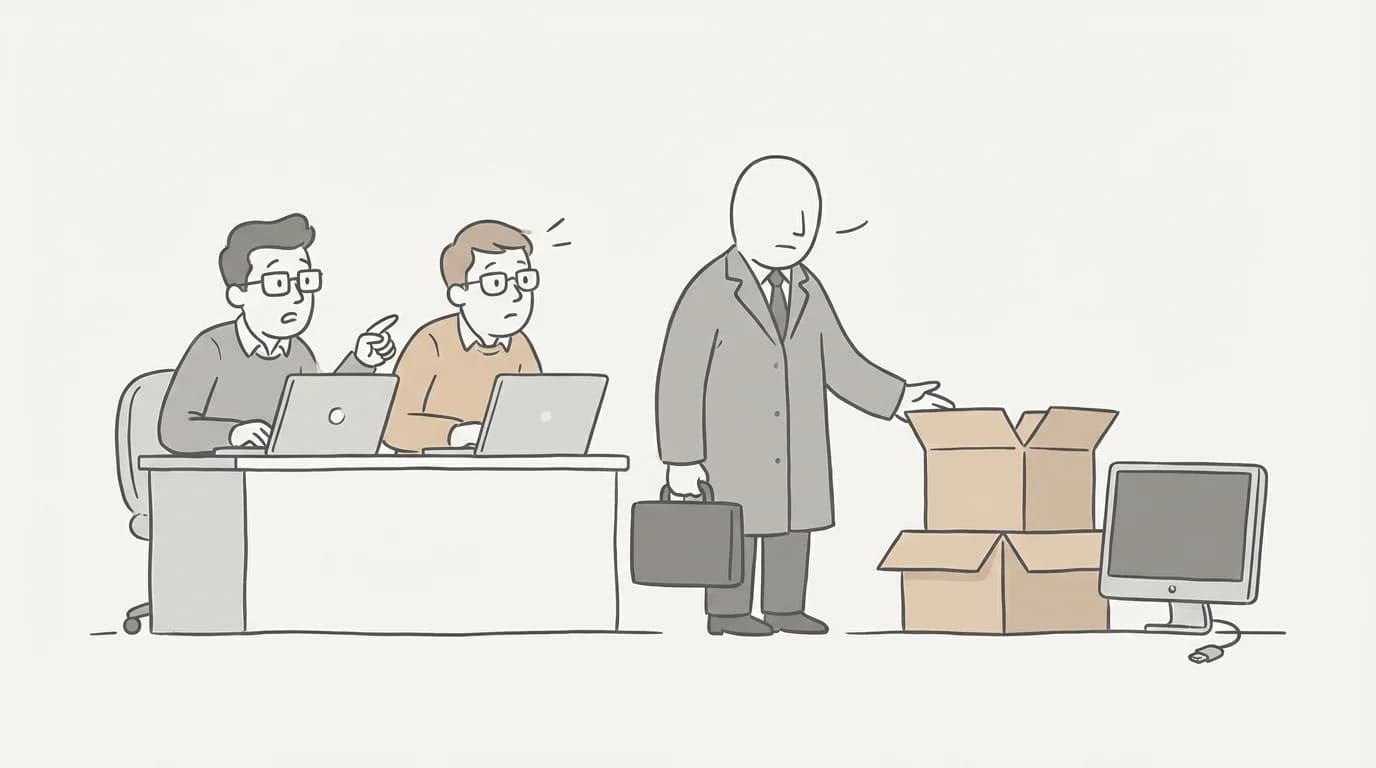
On March 11, Atlassian announced it was cutting 1,600 employees, roughly 10% of the company. CEO Mike Cannon-Brookes framed it as an AI pivot: "We are doing this to self-fund further investment in AI and enterprise sales."
The stock rose a few percent after hours. Revenue had hit $1.586 billion the previous quarter, up 23% year over year. Cloud revenue crossed $1 billion for the first time. The company had just beaten earnings estimates.
None of that saved the 1,600 people who lost their jobs. And here's the number that should get every engineer's attention: over 900 of those 1,600 positions were in software research and development. More than half the cuts hit the people who build the product.
That same day, CTO Rajeev Rajan, four years in the role and previously VP Engineering at Meta, stepped down. His replacement: two people described as "next generation AI talent." On Blind, employees didn't read it as a voluntary departure. The top post was titled "Atlassian CTO fired."
This is a different story from Block cutting 40% across all functions. At Atlassian, engineering was the primary target. The advice that applies here is specific to what happens when the R&D org itself is being restructured.
When engineering is the target, generic layoff advice fails
Most layoff survival advice assumes engineering teams are relatively protected, that the cuts fall on sales, marketing, and support while product and engineering ride it out. That assumption held for years. Atlassian broke it.
Over 900 R&D roles eliminated. The CTO replaced with AI-focused leadership. Cannon-Brookes wrote: "It would be disingenuous to pretend AI doesn't change the mix of skills we need or the number of roles required in certain areas." Then, contradictorily: "Our approach is not 'AI replaces people.'"
The market context makes this sharper. Atlassian's stock had fallen 76% from its highs and dropped 36% in February alone, driven by investor fears that AI tools like Claude and Copilot would eat into demand for traditional software platforms like Jira and Confluence. The layoffs read less like a company confidently pivoting and more like a company responding to existential pressure from investors who think AI might make its core products obsolete.
For engineers, that's a risk that generic "build your visibility" advice doesn't address. The risk isn't that you're invisible. It's that your entire engineering organization is being reshaped around a strategic bet you had no say in.
Read the R&D-specific warning signs
Atlassian employees on Blind described seeing the signals before the announcement: canceled travel, frozen hiring, quiet office closures. A principal engineer wrote that the company "started to lose its soul" after repeated restructuring cycles. The 2023 round cut 500 employees (5%). This round tripled that.
If you're at a company where engineering might be the next target, these are the signals to watch:
Your CTO or VP Eng is replaced or "steps down." Rajan's departure was announced the same day as the layoffs. When engineering leadership changes during a restructuring, it means the company wants a different kind of engineering org: different skills, different structure, different headcount. The new leaders come in with a mandate to build a smaller, differently shaped team. If you're part of the old shape, you're at risk regardless of your performance.
The company starts talking about "skill mix." This was Cannon-Brookes's exact phrase. Not "headcount reduction" but "reshaping our skill mix." When leadership frames cuts this way, they're saying certain engineering specialties are less valuable going forward. The question to ask yourself: does leadership consider my specialty part of the future skill mix, or part of the old one?
R&D headcount is framed as an investment, not a cost center. This sounds positive until you realize the implication: investments get reallocated. When your CEO says they're cutting R&D to "self-fund further investment in AI," they're telling you engineering headcount is a budget line they're willing to move. At Atlassian, 40% of the cuts landed in North America, 30% in Australia, 16% in India. The reallocation was geographic as well as functional.
Your company's core product faces an AI disruption narrative. Atlassian's stock didn't crash because the company was performing poorly. It crashed because investors started asking whether AI-powered alternatives could replace Jira, Confluence, and the project management layer altogether. If your company's product is in a category where AI incumbents are emerging, the pressure to "become an AI company" will eventually translate into R&D restructuring. It's a matter of when, not if.
Position yourself for the engineering org your company is building, not the one you're in
The engineers who survived at Atlassian weren't necessarily the best performers in the old structure. They were the ones whose skills mapped to the structure the company wants to build next. That's a different thing.
Figure out what the "future skill mix" actually means at your company. At Atlassian, the new CTO hires were described as "AI talent." The company is embedding AI across Jira, Confluence, and service workflows. If you're an engineer at a similar company, the question isn't abstract. It's specific: which teams are getting investment, and can you move toward them?
This doesn't mean everyone needs to become an ML engineer. It means understanding where your company is placing bets and making sure your work connects to those bets. The engineer maintaining a legacy feature that isn't on the AI roadmap is at far more risk than the engineer integrating AI into the flagship product, even if they're at the same level with the same performance rating.
Have the positioning conversation now, not during the restructuring. Ask your manager directly: "Given the company's direction, what skills and projects will be most valued on this team in six months?" Most engineers avoid this because it feels premature. At Atlassian, the engineers who asked this question after the CTO change was announced were already too late. The restructuring plan was built before it was shared.
The engineers who survive restructurings are the ones who had these conversations early enough that their manager could actually do something about it. Restructurings also tend to freeze or reset promotion timelines. If you've been building toward a promotion and a reorg lands in the middle of that cycle, what to do when you've been passed over for promotion is relevant regardless of whether the delay was due to layoffs or a calibration decision.
Decide whether the restructured company is worth staying at
This is the part most layoff advice skips. Surviving a cut isn't always a win.
Atlassian has now gone through two rounds of layoffs in three years. The stock is down 76%. The CTO was replaced. The company is pivoting its entire engineering culture toward AI while its core products face existential questions from investors. For the 14,000+ employees who remain, the question isn't just "will I survive the next round." It's "do I want to be here for what comes next?"
On Blind, one engineer described the environment as the same as before previous layoffs, with the same warning signs repeating. At some point, a restructuring cycle stops being a one-time event and becomes the company's operating mode. If you've been through two rounds and the stock keeps falling, the honest question about whether to stay deserves a real answer.
Severance matters for this calculation. Atlassian offered 16 weeks minimum plus one week per year of service, prorated bonuses, six months of healthcare, and $1,000 for returning your laptop. That's generous by current standards. If your company's next round happens and the package is similar, the math might favor taking it and leaving on your terms rather than surviving into an environment where morale is declining and the strategic direction is unclear.
Know your financial runway before you need it. If you can cover six months without income, you have options. If you can't, build that buffer now. The worst time to calculate your runway is the morning your CTO "steps down." The broader checklist for protecting yourself before a layoff hits covers what to document, who to reconnect with, and what to have ready before a restructuring is announced.
The pattern engineers should be watching
Block cut 40% across all functions and framed it as an AI-ideology bet. Atlassian cut 10% with more than half landing on R&D, an engineering-specific restructuring. Pinterest cut 15% and fired engineers who questioned the process. Three different companies, three different stories, but one common thread: engineering headcount is no longer sacred.
The engineers who come through this won't be the ones who assumed their technical skills would protect them. They'll be the ones who read the organizational signals, positioned their work toward where the company was heading, and decided whether the restructured company was somewhere they wanted to stay, before that decision was made for them.
CareerClimb helps engineers document wins, build their promotion case, and stay ready for whatever comes next: layoffs, reorgs, or review season. Download the app and start building your case today.