Block Just Cut 40% of Its Workforce. Here's What Engineers Should Do Right Now.

 CareerClimb
Worried about your job?
Get a plan to protect your career — starting today.

Share this article
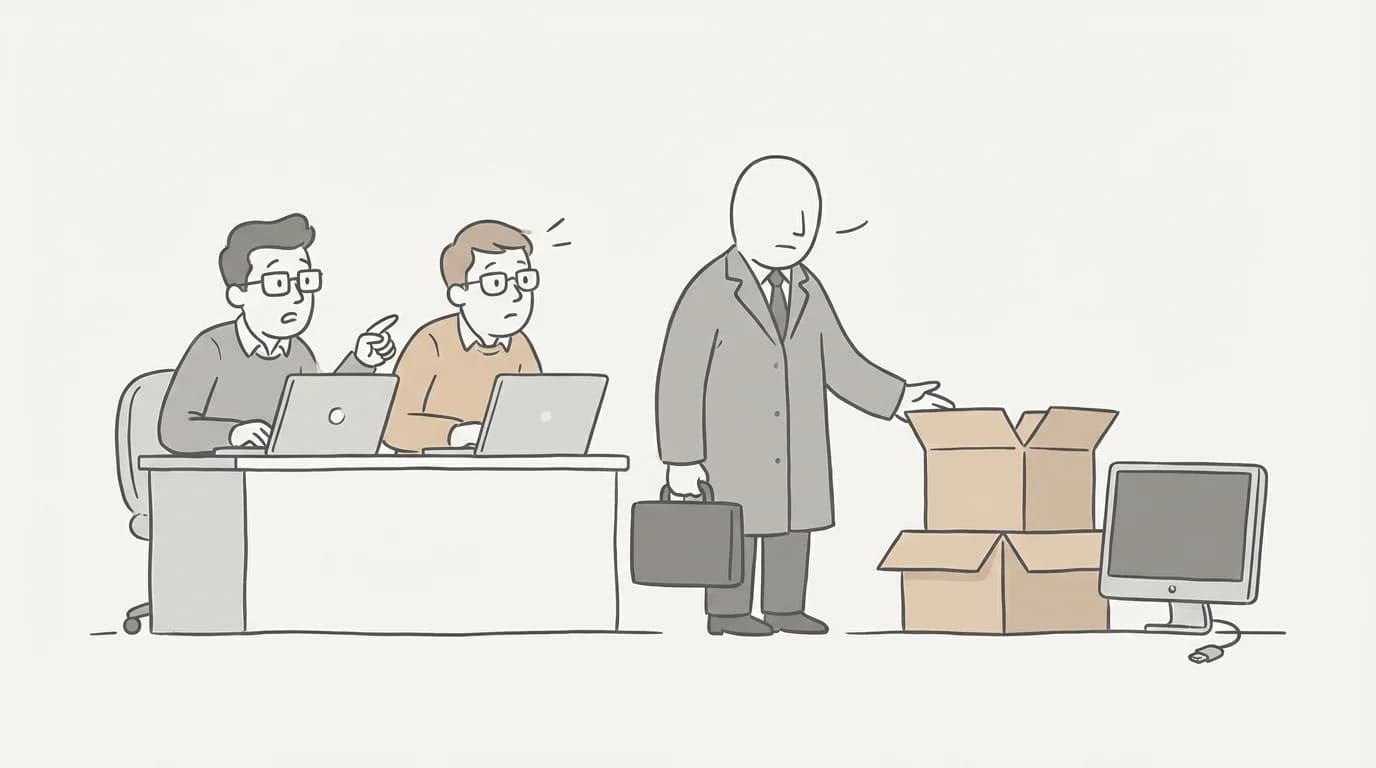
On February 26, Block announced it was cutting more than 4,000 employees, roughly 40% of the company behind Square, Cash App, and Afterpay. It is believed to be the largest layoff by percentage in S&P 500 history.
CEO Jack Dorsey framed it not as a cost-cutting move but as a structural belief about what companies will look like going forward. "Intelligence tools have changed what it means to build and run a company," he wrote in his shareholder letter. "A significantly smaller team, using the tools we're building, can do more and do it better."
His formula: "100 people + AI = 1,000 people."
The stock jumped 17% the same day. Q4 gross profit was up 24% year over year. Cash App profit was up 33%. The company was not struggling. It was profitable, accelerating, and buying back $790 million in shares that quarter.
This was not a company in trouble trimming to survive. It was a profitable company deciding entire categories of work no longer require humans. That distinction changes what kind of advice actually helps.
This is not a normal layoff
Most layoff advice assumes the core threat is "my company is struggling and might cut my role." Block's situation is different. The company is thriving. The threat Dorsey is naming, whether you believe him or not, is that certain types of work are becoming automatable, and companies that recognize this first will be rewarded by the market.
Block's CFO cited a greater than 40% increase in production code shipped per engineer since September, driven by their internal agentic coding tool called Goose. Dorsey referenced a capability shift in December 2025 when "the models just got an order of magnitude more capable."
On Team Blind, engineers pushed back hard on the AI framing. One verified Block employee wrote: "Shrouding classic COVID over-hiring correction layoffs as 'AI replacement.' They still have more employees after the 40% reduction than they did in early 2020." Bloomberg ran a piece titled "Jack Dorsey's 4,000 Job Cuts Arouse Suspicions of AI-Washing." Sam Altman acknowledged the phenomenon: "There's some AI washing where people are blaming AI for layoffs that they would otherwise do."
Whether AI is the real driver or a convenient narrative doesn't change what you should do next. What matters is the outcome: Wall Street rewarded the cut. Other CEOs are watching. Dorsey predicted "within the next year, the majority of companies will reach the same conclusion and make similar structural changes." Two weeks later, Atlassian proved him right by cutting 1,600 employees with nearly identical reasoning.
The playbook is set. The question for you is whether your work is the kind of work that ends up on the wrong side of it.
Ask the question nobody wants to ask: is my work the kind AI replaces?
This is the question Block forces you to confront. Not "am I performing well," but "is the category of work I do becoming automatable?"
Block's heaviest cuts fell on customer support, sales operations, back-office functions, and marketing. Cash App's customer service is transitioning to AI-powered chatbots. Entire engineering teams were reportedly shrunk from eight people to one. The roles that survived weren't the ones staffed by the hardest workers. They were the ones doing work that AI tools couldn't yet replicate.
Run this audit on your own role:
-
Could an AI tool do 80% of what I do today with a human reviewing the output? If you're writing boilerplate code, triaging tickets, generating reports, or handling routine customer interactions, the answer might be yes. That doesn't mean you'll be cut tomorrow. It means your role is in the category that CFOs are now quantifying.
-
Does my work require judgment that can't be templated? The engineers who are hardest to replace are the ones making decisions AI can't: architectural tradeoffs with ambiguous requirements, debugging production systems where the failure mode is novel, navigating cross-team dependencies where the blocker is organizational rather than technical.
-
Am I the person who knows why, or the person who executes what? Block kept the people who hold context: the engineer who understands why the legacy payments system works the way it does, the one who built the data pipeline and knows which edge cases will break it. Execution without context is exactly what AI tools are getting good at.
One Block employee who survived the cuts wrote on Blind that they were "actively building with AI and know that many of my impacted colleagues were doing the same." Using AI tools did not protect them. The distinction wasn't who used AI. It was whose work still required a human even after AI got better.
Reposition your work around what AI cannot do
If the audit makes you uncomfortable, the response isn't panic. It's repositioning. Dorsey's bet may be premature or partly AI-washing, but the market incentive is real. Other companies will follow.
Judgment under ambiguity. AI can generate code. It cannot decide what to build when the requirements are vague, the stakeholders disagree, and the technical tradeoffs are unclear. If you're the person who takes an ambiguous problem and turns it into a clear technical direction, that's the work to lean into. Make that visible. Write the decision doc, present the tradeoffs to leadership, own the outcome.
End-to-end ownership. The engineer who identifies a problem before anyone asks, scopes the solution, ships it, and measures the result is doing something AI cannot do. Block's layoffs hit hardest in roles that executed discrete tasks. The people who owned outcomes from problem identification through production monitoring were harder to cut.
Cross-team navigation. Negotiating priorities with another team, unblocking a dependency through a relationship, understanding why an org-level decision was made and adjusting your team's approach. AI doesn't do any of this. If you're doing this work, make sure the people making headcount decisions know about it. If you're not, start.
Prepare for the version of this that hits your company
Dorsey was blunt: "I'd rather get there honestly and on our own terms than be forced into it reactively." He framed one deep cut as better than repeated rounds. But most companies won't be that decisive or that transparent.
At your company, the same dynamic will play out more slowly and less visibly:
-
Watch for productivity metrics being applied to your team. Block's CFO cited a 40% increase in code shipped per engineer. When your leadership starts measuring output-per-head and comparing it to AI-augmented benchmarks, that's the precursor to headcount decisions.
-
Pay attention to which teams are growing vs. shrinking. Block's engineering and product teams took fewer relative cuts than support and operations. But "fewer relative cuts" still means cuts. If your company is hiring AI/ML engineers while freezing backfills on your team, the direction is clear.
-
Know your financial runway. Block's severance was generous: 20 weeks salary plus one additional week per year of tenure, six months of healthcare, and a $5,000 transition stipend. Your company's package might not be. If you don't know how many months you can cover without income, figure that out now. The worst time to calculate your runway is the morning your Slack goes dark. The pre-layoff preparation checklist covers the financial, professional, and documentation steps to take while you're still employed. If your recent performance review has been below expectations, which increases layoff risk independently of AI restructuring, what to do after a bad performance review covers the immediate steps.
A data scientist at Block who survived the cuts refused a 90% pay bump and quit, saying she'd rather see her peers keep their jobs. That's how severe the culture shift was. Even if you aren't cut, the environment that remains after a 40% reduction may not be one worth staying in.
The Block layoffs aren't an anomaly. They're a template.
Within two weeks of Block's announcement, Atlassian cut 1,600 employees (over 900 of them in R&D) using almost identical AI-restructuring language. Pinterest cut 15% of its workforce and fired two engineers who tried to track who was laid off. Every CEO used the same framing. Some stocks went up. Some went down. The employees didn't get to vote.
The people who come out of this in good shape won't be the ones who worked harder or kept their heads down. They'll be the ones who looked honestly at the kind of work they do, asked whether it survives an AI restructuring, and made changes while they still had the leverage to choose.
You can't control whether your CEO decides that 100 people plus AI equals 1,000. But you can control whether you're doing the kind of work that stays on the human side of that equation.
CareerClimb is an AI career coach that helps engineers document wins, build their case, and stay ready for whatever comes next. Download the app and start building your case today.