How Remote Software Engineers Get Overlooked for Promotions (And How to Fix It)

 CareerClimb
Feeling invisible at work?
Get a personalized plan to make your remote work visible to the people who decide your promotion.

Share this article
You shipped the same quality work as your in-office colleague. Your code reviews were thorough. Your on-call shifts were clean. Your project landed on time and under budget.
They got promoted. You did not.
Nobody said it was because you were remote. They said something about "scope" or "visibility" or "cross-team impact." But the in-office engineer had the same scope. The difference is that people saw them doing it.
This is how remote engineers get overlooked. Not through malice. Through mechanics.
The five ways remote engineers lose ground
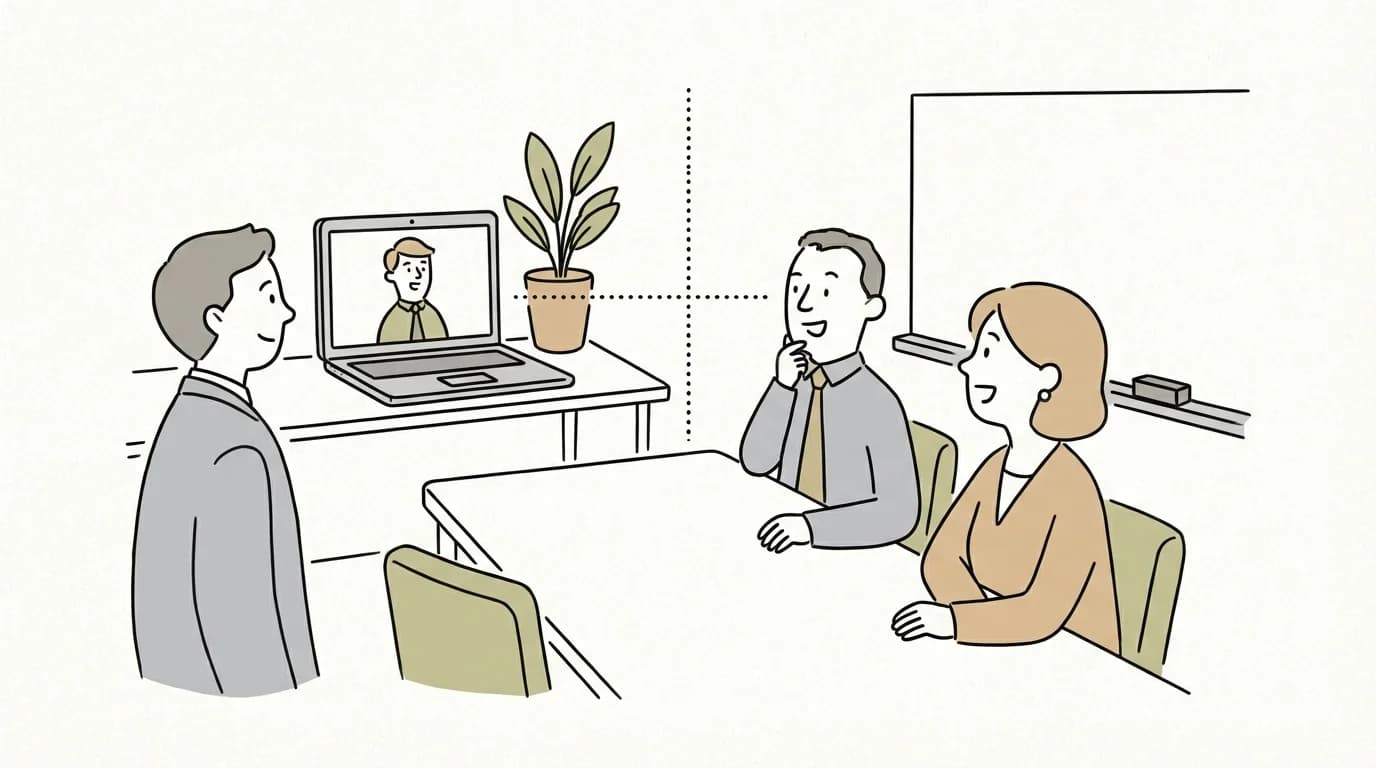
1. You miss the pre-meeting conversations. Before every important meeting, there is a five-minute conversation in the hallway or at the conference table. This is where opinions form, where projects get mentioned, where someone says "we should get [name] involved in this." If you are dialing in, you arrive when the meeting starts. The conversation already happened without you.
2. Your work disappears between check-ins. In an office, your manager absorbs information about you passively. They see you in the zone. They notice when you stay late to fix something. They overhear you helping a teammate. Remote, your work exists only in your PRs and your Slack messages. Between those moments, you are invisible.
3. You do not get pulled into stretch opportunities. When a high-visibility project needs an owner, the person who gets it is often the person who was physically nearby when the discussion happened. Not the most qualified person. The most available person. Remote engineers miss these opportunities because they are never "nearby."
4. Your peer reviewers struggle to write about you. When review season arrives, your peers need to write about your impact. If they have only interacted with you through code reviews and Slack threads, their feedback will be thin. Compare that to the colleague they eat lunch with, whiteboard with, and debrief with after incidents. The peer review gap is real, and it directly weakens your promotion case.
5. You under-communicate without realizing it. Most remote engineers think they communicate enough. They do not. In-office presence is constant, low-effort communication. Every time your manager sees you at your desk, that is a signal: "this person is working, engaged, and present." Remote engineers get none of those signals, and they rarely replace them with enough deliberate communication.
How to spot the gap before promotion time
The worst time to discover you have a visibility problem is when your manager tells you the promotion did not go through. Here are the early warning signs:
- Your manager seems surprised by your accomplishments in reviews. If they say "oh, I did not know you did that," your communication is too infrequent.
- You are not on the list for new projects. If interesting work keeps going to in-office engineers and you only hear about it after the fact, you have a proximity problem.
- Your peer feedback is generic. If peers say things like "good teammate" or "solid engineer" without specific examples, they do not have enough data about your work.
- Your skip-level does not know your name. If you have never had a direct conversation with your manager's manager, that is a problem regardless of location, but remote makes it worse.
How to fix it
Fix 1: Flood the information channel. Your manager should never be surprised by what you accomplished. Send weekly updates. Post project summaries. Flag wins in team channels. The volume of communication that feels excessive to you is probably the minimum required for remote visibility. Your in-office coworker generates this volume of information just by existing in the same building.
Fix 2: Create artifacts that travel. A Slack message disappears in the feed. A design doc lives forever. For every meaningful project, write something that persists: a design doc, a wiki page, a post-mortem, a tech talk recording. These artifacts can be referenced in your promotion case, shared with people who were not in the room, and used by your manager as evidence.
Fix 3: Manufacture the pre-meeting conversations. Before important meetings, send a short message to your manager or the meeting organizer with your perspective. "I was thinking about the migration timeline and I have some concerns about the dependency on team X. Happy to discuss in the meeting." This puts your name and your thinking in front of them before the meeting starts, which is the remote equivalent of the hallway chat.
Fix 4: Build peer relationships with intent. Schedule occasional 1:1s with engineers you collaborate with. Not to "network." To actually talk about work, share context, and build the kind of relationship that produces strong peer reviews. A 20-minute video call every few weeks with two or three key colleagues pays off enormously at review time.
Fix 5: Own the promotion conversation. Do not wait for your manager to bring up your career. Start the conversation in your first month and revisit it every quarter. Ask: "What would make my promotion case undeniable?" Write down the answer. Report back on your progress. The more explicitly you drive this conversation, the less proximity matters. For the full remote promotion playbook, how to get promoted as a remote software engineer covers the month-by-month approach from infrastructure to case compilation.
The structural advantage you already have
There is one thing remote engineers do better than in-office engineers, often without realizing it: written documentation. If you have been writing design docs, project summaries, and weekly updates, you have a paper trail that most in-office engineers do not.
In-office engineers rely on memory and informal reputation. You have receipts.
When promotion time comes, the engineer with a brag sheet full of documented wins, links to design docs, and quantified outcomes has a stronger case than the engineer who was "in the room for everything" but cannot point to specific evidence. Your disadvantage in visibility can become an advantage in documentation, but only if you have been building that documentation all along. If the core problem is that your work goes unnoticed regardless of location, how to stop being invisible at work covers the visibility systems that apply to every engineer.
The fix for being overlooked as a remote engineer is not working harder. It is being harder to overlook.