How to Get Promoted from L4 to L5 as a Data Scientist at Google
 CareerClimb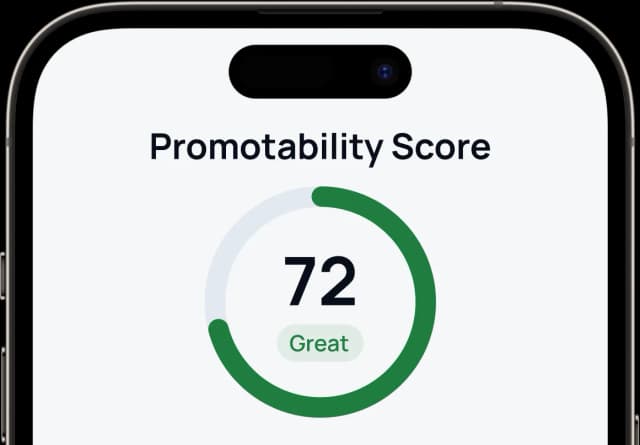
Building your promotion case?
Get AI coaching on what to document and how to present it.

Share this article
Your analyses ship on time. Product teams trust your dashboards. Your manager's feedback is positive every cycle. And yet two promotion windows have passed without a nomination. You keep hearing some version of "not quite L5 scope yet," and nobody can tell you what that actually means in concrete terms.
The L4-to-L5 jump is where most data scientists at Google get stuck. L4 is a terminal level, meaning Google is perfectly happy keeping you there forever. Unlike the L3-to-L4 transition, where the company expects you to move up, reaching L5 requires you to force the issue.
How Google Data Scientist Promotions Work at the L4-to-L5 Level
Google promotes data scientists through Googler Reviews and Development (GRAD), the same system used for software engineers. Cycles run twice a year, with March as the primary window and September as secondary. Your manager writes the promotion packet, and a committee reviews it cold. They do not know you or your work. The packet is the only thing that matters.
At the L4-to-L5 level, two things make this harder than the previous jump. First, L4 is terminal. There is no organizational pressure to promote you. Your manager needs a strong reason to invest the political capital. Second, the committee is looking for a qualitative shift in how you work. Better execution of the same type of projects will not clear the bar. They want evidence that you operated as a senior data scientist for roughly six months before nomination.
The bar comes down to one question: did this person shape the analytical direction for their product area, or did they execute analyses that someone else scoped? If the answer is the latter, the packet will not clear.
What L5 Data Scientists Do Differently
The gap between L4 and L5 is not about technical skill. Most L4s already have the statistical chops and SQL fluency of an L5. The difference is in how you define your own work and influence the people around you.
| Dimension | L4 (Data Scientist III) | L5 (Senior Data Scientist) |
|---|---|---|
| Scope | Owns individual analyses and projects end-to-end | Owns a measurement domain or analytical roadmap for a product area |
| Impact | Analysis informs a single team's decisions | Work shapes product strategy across multiple workstreams |
| Problem framing | Picks up well-defined analytical questions | Identifies what the team should be measuring before anyone asks |
| Stakeholder influence | Presents findings to PMs and eng leads | Pushes back on product direction using data; changes how stakeholders think about problems |
| Technical contribution | Builds solid models and pipelines for own projects | Creates methodologies or frameworks that other data scientists adopt |
| Growing others | Mentors L3s when asked | Actively develops L3-L4 data scientists; shapes how the DS team operates |
The clearest signal of L5 readiness: stakeholders come to you to frame questions, not to get answers.
The Promotion Criteria That Actually Matter
Four things carry the most weight in an L4-to-L5 data scientist promotion packet at Google.
Owning the analytical roadmap. The committee wants to see that you decided what your product area should be measuring, built the measurement plan, and executed it over multiple quarters. Completing a series of important analyses is not the same thing. The distinction: "I ran five high-impact analyses" versus "I defined the metrics framework for this product area and drove adoption across three teams."
"Designed the experimentation framework for Payments onboarding, defining primary and guardrail metrics for all A/B tests in the flow. Framework was adopted by two adjacent product teams and reduced metric disagreements in launch decisions by eliminating post-hoc metric selection."
Cross-functional influence that changes decisions. At L4, you present data to stakeholders and they decide what to do with it. At L5, your analysis changes the direction of what gets built. The committee looks for examples where a PM or engineering lead altered their roadmap because your framing of the data shifted how they understood the problem.
"Cohort analysis showed that our highest-LTV users came through a referral flow we were planning to deprecate. Presented findings to the product VP, who reversed the deprecation decision and allocated a team to improve the flow instead. Referral-sourced users grew 34% in the following two quarters."
Technical leadership in methodology. L4 data scientists pick the right tool for each project. L5 data scientists create tools or approaches that raise the bar for the whole team. A reusable experimentation library counts. So does establishing new statistical standards for how the team runs A/B tests.
Growing junior data scientists. The committee checks peer reviews for signals that you are developing others. Answering questions when someone asks does not count. Structuring onboarding for new L3s, reviewing their analysis plans before execution, helping them develop the judgment that turns good analysts into independent contributors: that counts.
Building Your Promotion Case Step by Step
Step 1: Claim a Measurement Domain
Stop thinking about your work as a list of projects. Identify an area where your product team lacks a coherent analytical approach. Maybe nobody has defined what success looks like for a feature area. Maybe the team runs experiments without consistent methodology. That gap is yours. Write a brief document laying out what needs to be measured, how, and why. Share it with your manager and the relevant PM.
Step 2: Deliver Cross-Team Impact from That Domain
Once you own the domain, your work should produce insights that affect decisions beyond your immediate team. If your metrics framework only serves one PM, the scope is L4. Push the boundaries. Present your approach at a DS team meeting. Offer to consult on measurement for adjacent teams. The committee wants peer feedback from people outside your direct team.
Step 3: Build Something Other Data Scientists Use
Create a methodology, library, or framework that other data scientists on your team adopt. This is the technical leadership component. It does not need to be a major infrastructure project. A well-documented approach to a common analytical problem that two other people start using counts.
Step 4: Invest in Growing a Junior DS
Pick an L3 data scientist and invest in their development. Review their work before it ships. Help them frame their own analytical problems rather than giving them answers. When they succeed, the peer review trail creates evidence for your packet.
Step 5: Get Explicit Manager Alignment
Have a direct conversation: "I want to be nominated for L5 next cycle. What specific evidence do I need?" Write down the answer. Check in monthly. If the answer keeps shifting or stays vague, that is a signal your manager either does not support the promotion or does not have the political capital to push it through. Both are problems you need to address before the cycle opens.
Common Mistakes That Stall L4-to-L5 Promotions
Running excellent analyses without owning the analytical direction. This is the most common L4 trap. You deliver five strong projects in a cycle, all of them high impact, all of them praised by stakeholders. But each one was scoped by your PM or your manager. Volume of great L4 work does not compound into L5 evidence. The committee cares about who decided what questions to answer, not who answered them well.
Confusing visibility with influence. Presenting at team meetings and sending polished readouts is visibility. Influence means a stakeholder changed their plan because of your data. One concrete example of redirected product strategy carries more weight than ten well-attended presentations.
Neglecting the peer review trail. Your manager writes the packet, but peer reviews are what the committee trusts. If the only people who can speak to your work are your manager and one PM, the committee has limited evidence. Build working relationships with data scientists on adjacent teams, engineering leads who consume your analyses, and cross-functional partners. Request peer reviews from them.
Staying on a team without L5-scope work. Some teams treat data science as a support function: answering ad hoc questions, maintaining dashboards, producing weekly reports. These teams rarely generate the kind of work that clears L5 committee. If you have been operating this way for a year, you need either a project change or a team change. Talk to your manager about restructuring your role before concluding that the team itself is the problem.
Timeline and Realistic Expectations
| Scenario | Typical Timeline | Key Factor |
|---|---|---|
| Strong performer, high-scope team | 1.5-2 years | Owned a measurement domain early; clear cross-team influence |
| Solid performer, standard trajectory | 2.5-3 years | Took time to find L5-scope work; strong second year of evidence |
| Limited scope or weak manager support | 4+ years or indefinite | Team lacks L5-scope DS work; promotion budget constraints |
According to Levels.fyi data, the median total compensation jump from L4 to L5 moves from roughly $265K to $371K. That is a ~40% increase.
Two factors make L4-to-L5 harder for data scientists than for software engineers. First, DS impact is harder to quantify. Shipped code has clear launch dates and usage metrics. An analysis that changed a product decision requires narrative evidence connecting your work to the outcome. Second, the DS organization is smaller, so promotion budgets are tighter. Engineers on Team Blind report multiple cycles of strong ratings followed by "not enough slots this round."
If you have been at L4 for more than three years with strong ratings and no promotion, the situation is unlikely to change without a structural shift. That might mean a new manager, a new team, or a direct conversation with your skip-level about what is blocking the packet.
Frequently Asked Questions
How long does it typically take to get promoted from L4 to L5 as a data scientist at Google?
Most data scientists spend 2 to 3 years at L4 before reaching L5. Strong performers on teams with clear DS ownership can reach it in 18 months to 2 years. Some L4s wait 4 or more years, particularly on teams where data science functions as a support role with limited project scope. L4 is a terminal level at Google, meaning there is no automatic expectation of promotion.
What is the biggest difference between L4 and L5 for data scientists specifically?
The core shift is from executing individual analyses to owning the analytical direction for a product area. An L4 data scientist picks up important questions and answers them well. An L5 data scientist defines what questions the team should be asking, builds the measurement approach, and influences product decisions with data. The committee looks for evidence that you shaped what got measured, not just how well you measured it.
Can project cancellation hurt my L4-to-L5 promotion case?
Yes, and this risk is higher for data scientists than engineers. Research-oriented DS projects, exploratory models, and experimental analyses get cancelled or produce inconclusive results more often than engineering features get cut. If your primary promotion project gets shelved, you lose months of evidence. Protect yourself by maintaining a secondary workstream with incremental, visible impact so a single cancellation does not wipe out your entire case.
Should I switch teams to get promoted to L5?
Not necessarily, but evaluate honestly whether your current team offers L5-scope data science work. If the DS role on your team is primarily reactive, answering ad hoc queries and maintaining dashboards without strategic ownership, reaching L5 will be extremely difficult regardless of your talent. An internal transfer to a team where data scientists own measurement domains and influence product direction can cut years off your timeline.
CareerClimb helps you log wins, map them to promotion criteria, and build your case week by week. When your manager writes the packet, the evidence is already organized. Download CareerClimb
Are You Ready to Make This Jump?
Get a personalized score and find out what's holding you back.
8 questions · about 2 minutes · free score
1 of 8