How to Get Promoted from L3 to L4 as a Data Scientist at Google
 CareerClimb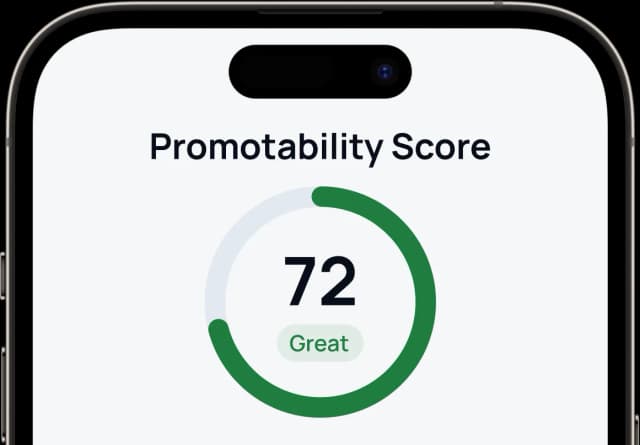
Building your promotion case?
Get AI coaching on what to document and how to present it.

Share this article
How to Get Promoted from L3 to L4 as a Data Scientist at Google
You joined Google as an L3 Data Scientist, and after a year of solid work your analyses are clean and your team relies on your dashboards. But when you ask your manager about promotion, the answer is some version of "you need more ownership." What does that actually mean when your job is answering other people's questions?
The L3-to-L4 promotion is the fastest jump on the data scientist ladder at Google. Most people clear it within 18 months. But "fast" and "automatic" are not the same thing. This guide covers what the committee looks for and how to build the evidence they need.
How Google data scientist promotions work
Google promotes data scientists through Googler Reviews and Development (GRAD), the same system that covers software engineers and product managers. Promotion cycles run twice a year: March is the primary window, September is secondary. Your manager writes the promotion packet and presents it to a committee that reviews your case cold. They do not know you. Every piece of evidence has to stand on its own.
The system runs on a lagging model. You need to show L4-level work for roughly six months before your manager can nominate you. The clock does not start when you decide you want L4. It starts when you begin operating at that scope on a regular basis.
For L3 to L4, most managers are supportive because L3 is an entry-level rung. The expectation is that competent hires reach L4. The bar is not whether you can do it, but whether you have already demonstrated it.
One thing worth knowing: Google runs two data science tracks. The analytics track focuses on statistical analysis, experimentation, and business insights. The engineering track leans toward ML implementation and production systems. The L3-to-L4 expectations apply across both tracks, but the evidence looks slightly different. Analytics-track data scientists show impact through decisions influenced. Engineering-track data scientists show impact through models deployed and systems built. Either way, the committee wants to see ownership and measurable results.
What L4 data scientists actually do differently
Better SQL and prettier dashboards will not get you from L3 to L4. The shift is from executing assigned work to identifying and owning analytical problems from start to finish.
| Dimension | L3 (Data Scientist II) | L4 (Data Scientist III) |
|---|---|---|
| Scope | Completes well-defined analysis tasks assigned by manager or senior DS | Identifies analytical questions independently and scopes own projects |
| Ownership | Supports pieces of larger analyses led by others | Owns an analysis or measurement area end-to-end, from question framing through recommendation |
| Impact | Work contributes to team deliverables | Work directly informs a product or business decision |
| Stakeholder communication | Shares results when asked; reports up through manager | Presents findings directly to PMs and eng leads; translates data into actions |
| Technical depth | Uses established tools and pipelines | Proposes methodological improvements; builds reusable frameworks or pipelines |
| Mentoring | Learns from senior DS; asks good questions | Helps onboard new L3s; explains analytical approaches to non-DS stakeholders |
The single biggest shift: at L3, someone else decides what questions are worth answering. At L4, you figure that out yourself.
What the promotion committee evaluates
Google evaluates data scientists on the same dimensions as engineers, but the evidence looks different for DS work. Four criteria carry the most weight in an L3-to-L4 packet.
End-to-end ownership of an analytical problem. The committee wants to see that you took a messy business question, framed it as an analytical problem, chose the right methodology, executed the analysis, and delivered a recommendation that someone acted on. If your manager framed the question and you ran the numbers, that is L3 work regardless of how well you executed it.
"Identified that our onboarding funnel had a 23% drop-off at step 3 that no one was tracking. Designed and ran an A/B test on two alternative flows, presented results to the product lead, and the winning variant shipped in Q3, reducing drop-off to 14%."
Measurable impact tied to decisions. Data science at Google is only as valuable as the decisions it informs. The committee looks for cases where your analysis changed what the team built or prioritized. An analysis that confirmed what people already believed is weak evidence. An analysis that nobody acted on is weaker.
"Cohort analysis revealed that users acquired through paid channels had 40% lower 90-day retention than organic users. The growth team shifted $2M in quarterly spend from paid acquisition to product-led growth initiatives based on this finding."
Stakeholder communication. L3 data scientists funnel their work through their manager or a senior DS who presents to stakeholders on their behalf. L4 data scientists present their own findings to product managers and engineering leads. The committee looks for peer feedback confirming you communicate clearly with non-DS audiences.
Technical judgment beyond execution. At L3, using the right tool for the job is sufficient. At L4, you need evidence that you chose the methodology and can defend why it was the right choice over alternatives. A reusable pipeline, framework, or analysis template that other data scientists adopt is strong L4 evidence. The committee reads this as you improving the team's capabilities, not just completing your own work.
Building your promotion case, step by step
Step 1: Find a problem nobody assigned you
The most common reason L3 data scientists stall is waiting for assignments. L4 means you notice the gap before anyone asks about it. Look at your team's product metrics. Find something declining, unexplained, or unmeasured. Write a one-page proposal for investigating it. Run it by your manager before you start, but the initiative should come from you.
If you're on the analytics track, this might be a retention pattern no one is watching. If you're on the engineering track, this might be a model performance gap that's quietly costing the product.
Step 2: Own it from question to recommendation
Once you have your project, resist the instinct to check in at every step. Frame the question. Choose the methodology. Run the analysis. Prepare the recommendation. Your manager should be reviewing completed work, not co-authoring it in progress. The committee wants to see that you can operate independently on an analytical problem from start to finish.
Step 3: Tie every analysis to a specific decision
Before starting any analysis, ask: "What will the team do differently depending on the answer?" If you cannot name a concrete decision this work informs, the analysis will not count toward your promotion. Pair every deliverable with a clear recommendation, not a set of numbers. The difference between "here are the retention curves" and "here's why we should change the onboarding flow based on retention curves" is the difference between L3 and L4 evidence.
Step 4: Present your own work to stakeholders
Stop sending results through your manager. Set up a 30-minute review with the PM or eng lead. Prepare a short deck: what you found and what you recommend the team do about it. This builds the peer feedback trail the committee needs. At least two non-DS stakeholders should be able to confirm that you frame problems well and drive decisions from data.
Step 5: Document wins as they happen
Promotion packets at Google are retrospective. Your manager builds them from what they can remember and find. Log your wins in real time: the analysis you ran, the decision it changed, the metric that moved. Include who was in the room and what they did with your findings. When packet season arrives, assembling the evidence takes an hour instead of a week.
Common mistakes that stall L3-to-L4 promotions
Doing excellent L3 work and expecting it to add up. Executing five perfectly clean analyses that your manager scoped is not L4 work, no matter how fast or accurate the output. Volume of L3 work does not compound into L4 evidence. The committee wants to see you operating at the next level, not running your current level more efficiently.
Producing analyses nobody acts on. If your dashboard exists but no one checks it, or your analysis was "interesting" but changed nothing, the committee sees dead weight. Before starting a project, confirm that a stakeholder will use the result. If nobody is waiting for the answer, the work is not worth your time from a promotion standpoint.
Waiting for the right project to appear. Some L3s spend months hoping a high-visibility project drops into their lap. It almost never works that way. The strongest L4 cases come from data scientists who found overlooked problems on their existing team. Scope matters less than ownership and demonstrated impact.
Having only your manager as a reference point. If the one person who can speak to your work is your manager, the committee has a single data point. Build working relationships with PMs and eng leads early. When peer feedback arrives, you want at least two non-DS stakeholders who can speak to how you frame problems and drive decisions.
Over-relying on mentors for problem framing. L3s are expected to learn from senior data scientists. That's appropriate. But if you're still bringing half-formed questions to your mentor and letting them shape the analytical direction, you're showing L3 behavior. The moment you can frame the question yourself, present a proposed approach, and ask for feedback on your plan rather than asking what to do, you're demonstrating L4 readiness.
Timeline and realistic expectations
| Scenario | Typical timeline | Key factor |
|---|---|---|
| Strong performer, high-impact team | ~1 year | Secured end-to-end ownership early; clear measurable impact on a product decision |
| Solid performer, standard ramp | 1.5 years | Took two quarters to find the right project; strong second-half evidence |
| Slow ramp or limited scope | 2 to 3 years | Constrained by team structure, limited DS ownership opportunities, or manager not supporting promotion |
The median total compensation jump from L3 ($174K) to L4 ($265K) is roughly 52%, according to Levels.fyi. That makes it one of the largest percentage increases on the data scientist ladder.
If you have been at L3 for more than two years without a clear promotion timeline, something structural needs to change. It might be your project portfolio, your relationship with your manager, or the team itself. Have a direct conversation. Ask: "What specific evidence would you need to write a strong L4 packet next cycle?"
One risk that hits data scientists harder than engineers: project cancellation. DS projects involving experimental models or research-oriented work get shelved more often than engineering features. If your primary promotion project gets cancelled, you lose months of evidence. Protect yourself by maintaining a secondary workstream that delivers incremental impact even if the larger project dies. A reusable analysis framework or a metric improvement that ships regardless of the big bet gives you a floor of L4 evidence.
Frequently asked questions
How is the L3-to-L4 promotion different for data scientists compared to software engineers?
The mechanics are identical: same GRAD system, same committee structure, same twice-yearly cycle. The difference is in what counts as evidence. Engineers point to shipped features and reviewed code. Data scientists need analyses that informed specific decisions with measurable outcomes. DS impact is harder to quantify because there's no clean "launch" moment the way a feature has a launch date. Your packet must be more explicit about connecting your work to business results. A shipped model or a dashboard nobody uses does not clear the bar the way a launched feature does for SWEs.
Can I reach L4 in my first year at Google?
Yes. L3 is an entry-level position, and Google expects competent hires to move up. The fastest path: secure end-to-end project ownership within your first quarter, deliver measurable impact by the second promotion cycle after your start date, and build peer feedback from non-DS stakeholders. One year is realistic for strong performers who land on teams with clear DS ownership opportunities.
What if my team does not have L4-scope projects for data scientists?
More common than you'd expect, especially on teams where the DS role is support-oriented: answering ad hoc questions, maintaining dashboards, running queries other people request. If after six months you cannot find a path to end-to-end ownership, talk to your manager about project scoping. If the team genuinely lacks L4-scope DS work, an internal transfer to a team with stronger DS ownership may be faster than waiting.
Does my GRAD rating affect my promotion?
Not directly. Google disconnects performance ratings from promotions on purpose. You could receive a Significant Impact (SI) rating, which roughly 70% of Googlers receive, and still get promoted in the same cycle. Ratings measure how well you performed at your current level. Promotion measures whether you've demonstrated next-level behavior. They run on separate tracks.
Does my manager need to nominate me, or can I self-nominate?
Your manager writes and submits the promotion packet. For L3-to-L5 promotions, the process is manager-driven. This makes your manager's support non-negotiable. If they do not believe you are operating at L4, strong evidence alone will not get you into the cycle. Have explicit promotion conversations early and often.
CareerClimb helps you log wins, map them to your promotion criteria, and build your case week by week. When your manager writes the packet, the evidence is already organized. Download CareerClimb
Are You Ready to Make This Jump?
Get a personalized score and find out what's holding you back.
8 questions · about 2 minutes · free score
1 of 8