How to Get Promoted from SDE3 to Principal Engineer at Amazon
 CareerClimb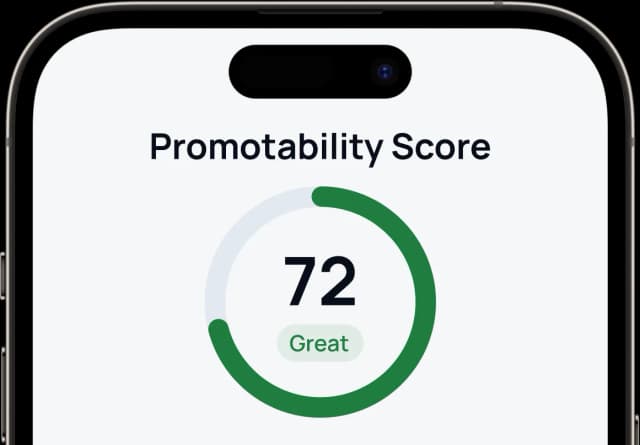
Building your promotion case?
Get AI coaching on what to document and how to present it.

Share this article
You've been SDE3 for four years. You lead cross-team design reviews, your Forte ratings are strong, and your manager nods when you mention L7. Then another review cycle passes with no promo doc.
The SDE3-to-Principal jump at Amazon is one of the hardest transitions in big tech. Principal Engineers make up a tiny fraction of Amazon's engineering population, and internal promotions to L7 face a higher bar than external hires at the same level. The shift isn't about deeper technical skill. It's about organizational influence, strategic vision, and a political reality most SDE3s underestimate.
How the L7 promotion actually works
The process is the same promo doc system you went through for SDE3, but the scrutiny is significantly heavier. Your manager writes the promotion document using your input, gathers endorsements from L7+ stakeholders, and presents it to a promotion panel. The panel reviews adversarially, looking for reasons to reject. The decision then goes through OLR calibration, where senior leaders stack-rank performance across the organization.
Here's what changes at L7:
- The promo doc bar is higher. L6 docs demonstrate team-level impact. L7 docs need to show org-level or multi-org impact sustained across multiple review cycles.
- Endorsements come from L7+ people. You need Principal Engineers, Senior SDMs, and Directors who can vouch for your L7-level contributions. Not L6 peers — L7+ stakeholders who've witnessed your work firsthand.
- Your manager's political capital matters more. Your manager and their manager need enough organizational influence to push the doc through a highly scrutinized review. A manager without L8+ relationships will struggle to get your case heard.
- You're competing against external hires. Amazon frequently fills L7 roles through external hiring, and those candidates face a lower bar than internal promotions. Engineers on Team Blind consistently report that "getting hired at L7 is easier than getting promoted to L7 by an order of magnitude."
The OLR rating bar is brutal. To be promotion-eligible at this level, you need to be performing better than roughly 90% of all L6s in the company. That's a narrow slice of an already senior population.
What Principal Engineer actually looks like at Amazon
The core shift from SDE3 to Principal isn't harder technical problems. It's moving from team-level technical leadership to organization-wide strategic influence.
| Dimension | SDE3 (L6) | Principal (L7) |
|---|---|---|
| Scope | Subsystems and cross-team technical decisions | Org-wide or multi-org technical strategy |
| Autonomy | Drives ambiguous problems within a domain | Identifies and frames problems that span the organization |
| Influence | Shapes technical direction for your team and adjacent teams | Sets technical direction for an entire product area or business unit |
| Mentorship | Coaches SDE1/SDE2 engineers, reviews designs | Develops SDE3s and raises the senior engineering bar across teams |
| Impact | Team-level and cross-team outcomes | Business-unit-level outcomes with measurable organizational influence |
| Decisions | Architectural decisions within a service or product area | Technical strategy decisions that affect multiple product areas |
| Leadership | Technical lead of a team or initiative | Part of the technical leadership team, guiding engineering standards for the organization |
A useful framing: SDE3s solve cross-team problems. Principals identify which problems the organization should solve, define the approach, and influence multiple teams to execute. The work shifts from "I built this" to "I shaped how this organization builds things."
The promotion criteria that separate L6 from L7
Three dimensions matter most at this level:
Organizational scope and strategic influence is where most SDE3s fall short. Your promo doc can't just show cross-team projects. It needs evidence that you changed how multiple teams operate, that you defined technical strategy that shaped roadmaps beyond your immediate domain, and that Directors and VPs relied on your judgment for organizational decisions.
Creating scope, not just filling it. At SDE3, you're expected to handle ambiguous problems. At Principal, you're expected to find problems that nobody has named yet, convince the organization they matter, and build alignment around solving them. If every project in your promo doc was assigned to you or scoped by someone else, the panel won't see L7 evidence.
Developing the senior engineering org. L7 means raising the bar for the entire engineering organization. This goes beyond mentoring individual engineers. It means influencing hiring standards, defining best practices that get adopted across teams, and growing SDE3s into stronger technical leaders. The Leadership Principles Hire and Develop the Best and Insist on the Highest Standards carry particular weight at this level.
"At L7, you are expected to influence the direction of entire business units, solve problems with ambiguous scope that span multiple teams, and demonstrate impact comparable to a Director at many other companies."
Building your Principal Engineer case at Amazon
Step 1: Align with your manager and skip-level on L7 readiness
This conversation is more critical than at any previous level. Your manager needs to believe in the case strongly enough to spend significant political capital on it, and their manager needs to agree. Ask directly: "Do you see an L7 path for me on this team? What specific gaps would need to close?" If the answer is vague or noncommittal, that's information worth acting on.
Step 2: Build L7-scope evidence across multiple review cycles
A single quarter of org-level impact won't build a Principal case. You need sustained evidence across multiple Forte cycles showing that you consistently operate at L7 scope. The panel wants to see a pattern, not a peak.
Look for work that hits these markers:
- Technical strategy that shaped multiple teams' roadmaps
- Architecture decisions that influenced an entire product area
- Standards or practices you defined that were adopted beyond your org
- Problems you identified that nobody had framed before
Step 3: Build relationships with L7+ endorsers
Your manager needs endorsements from Principal Engineers, Senior SDMs, and Directors. These aren't people you introduce yourself to at promo time. They're leaders who've seen your L7-level contributions through cross-org initiatives, technical strategy reviews, or architectural decisions that affected their teams.
The relationship-building timeline for L7 endorsements is measured in years, not months. If you don't have working relationships with 4-6 L7+ people today, that's the first gap to close.
Step 4: Document organizational influence, not just technical outcomes
At SDE3, your win log tracks design docs, launch metrics, and operational improvements. At Principal, you need a different layer: evidence of how you shaped the organization. Track which teams adopted your standards, which roadmaps shifted because of your technical strategy, which architectural patterns you established that became the default approach.
Step 5: Evaluate whether L7 scope exists on your team
Some teams and orgs don't have Principal-level scope. If your manager leads a single team and reports to an L7 SDM with a small org, there may not be room for a Principal Engineer. This isn't a reflection of your ability — it's an organizational constraint. The honest assessment might be that L7 requires a team change, an org change, or an external move.
Common mistakes that stall SDE3-to-Principal promotions at Amazon
Doing excellent SDE3 work and expecting it to accumulate into an L7 case. Five years of strong L6 execution doesn't add up to a Principal case. The panel evaluates scope and organizational influence, not tenure. If your impact narrative stays within your team's boundary, even exceptional work won't demonstrate L7 evidence.
Underestimating the political dimension. L7 promotions are as much about organizational politics as they are about technical impact. Your manager's manager needs to champion your case at OLR. Directors and VPs need to know who you are and what you've done. Engineers who focus exclusively on technical contributions without building executive visibility are consistently surprised when their promo doc goes nowhere.
Waiting for L7-scope work to appear. At SDE3, your manager might line up cross-team projects for you. At Principal, nobody hands you org-level scope. You need to find organizational problems, build conviction that they matter, and drive alignment. If you're waiting for someone to give you L7-scope work, you're still operating at L6.
Neglecting the "develop the org" dimension. Principals are evaluated on whether they raise the bar for the entire engineering organization. Engineers who focus only on their own technical contributions without evidence of growing other senior engineers, defining standards, or influencing hiring practices will miss this dimension in calibration.
Staying in a scope-limited org. If your Director's org has 30 engineers and one Principal already, a second L7 slot may not exist. Moving to a larger org with clear L7 scope is sometimes the only realistic path. Engineers on Team Blind consistently cite team or org changes as the unlock for L7.
Timeline and realistic expectations for SDE3 to Principal at Amazon
| Timeline | What it looks like | How common |
|---|---|---|
| ~3 years | Exceptional org-level scope from day one, TT ratings, strong manager with L8+ relationships | Rare |
| 4-5 years | Standard successful path with multiple cycles of L7-scope evidence and growing endorser network | Most common for those who make it |
| 5-7+ years | Includes a failed attempt, org change, or scope expansion that took time | Common |
| Indefinitely | SDE3 is a terminal level; many engineers stay permanently | Very common |
SDE3 is a terminal level at Amazon. There's zero organizational pressure to promote to Principal, and the majority of senior engineers stay at L6 for their entire Amazon career. The back-loaded RSU vesting schedule (5/15/40/40%) means a promotion-driven stock refresher at L7 can be worth $200K+ per year in additional equity, which creates strong financial motivation for those who do pursue it.
The external market offers an alternative path. If you're operating at L7 scope internally but the promotion isn't materializing, interviewing externally for L7 roles may face a lower bar than the internal promotion process. Some engineers report successfully negotiating L7 offers externally and using them as leverage, though this strategy carries risk.
Frequently asked questions
How long does it take to get promoted from SDE3 to Principal at Amazon?
Most engineers who make Principal spend 4-5 years at SDE3, though 3 years is possible with exceptional scope and strong management support. Many SDE3s never make the jump. L6 is a terminal level at Amazon, and the Principal population is a small fraction of all senior engineers. The promotion requires sustained L7-scope evidence across multiple Forte cycles, L7+ endorsements, and significant managerial advocacy.
What OLR rating do I need for Principal at Amazon?
You need a Top Tier (TT) rating consistently, placing you in the top ~5% of the forced distribution. Being promoted to Principal typically requires performing better than roughly 90% of all L6 engineers in the company. A single strong cycle isn't enough — the panel wants sustained evidence.
Is it easier to get hired as L7 externally than promoted internally?
Engineers on Team Blind consistently report that external L7 hiring faces a lower bar than internal L7 promotions. Internal promotion requires your manager and skip-level to spend significant political capital, sustained multi-cycle evidence, and adversarial panel review. External hiring evaluates you through interview loops that, while rigorous, don't require the same organizational history. This is a widely discussed dynamic at Amazon.
What Leadership Principles matter most for the L7 promo doc?
At Principal level, Think Big, Ownership, Hire and Develop the Best, and Insist on the Highest Standards are most heavily weighted. The panel wants evidence that you shape organizational direction (Think Big), take responsibility beyond your assigned scope (Ownership), grow the senior engineering talent pool (Hire and Develop), and raise technical standards across teams (Highest Standards).
CareerClimb helps you track your wins and map them to Amazon's Leadership Principles and L7 promotion criteria week by week, so when your manager writes that promo doc, they're working from documented evidence of organizational impact. Download CareerClimb
Are You Ready to Make This Jump?
Get a personalized score and find out what's holding you back.
8 questions · about 2 minutes · free score
1 of 8