How to Get Promoted from ICT3 to ICT4 Software Engineer at Apple
 CareerClimb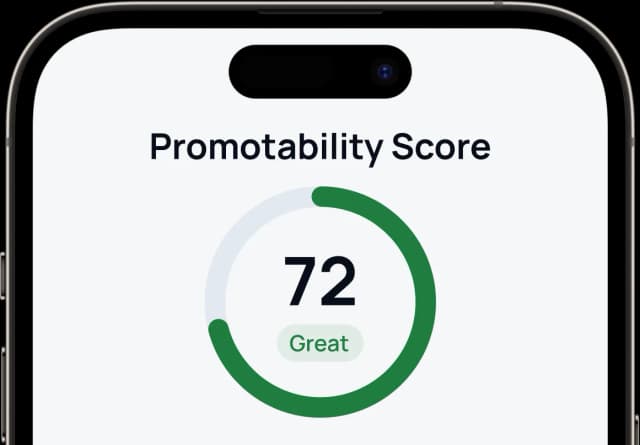
Building your promotion case?
Get AI coaching on what to document and how to present it.

Share this article
You're a solid ICT3 at Apple. You own features, your pull requests land without drama, and your manager has nothing negative to say in reviews. But nobody has pulled you aside to talk about ICT4. No one is going to. ICT3 is Apple's first terminal level — the company is perfectly comfortable with you staying here forever. If you want Senior, the initiative is entirely yours.
The ICT3 to ICT4 promotion is the mid-level to Senior Software Engineer jump at Apple. It maps roughly to Google L5 or Meta E5. The compensation difference is significant: median total comp moves from about $260K at ICT3 to $380K at ICT4, according to Levels.fyi. That's a $120K gap that compounds every year you wait. But Apple runs a single annual promotion cycle, your manager decides whether your name even enters the conversation, and there is no published rubric defining what "Senior" means. Here's how to close that gap anyway.
What Changes from ICT3 to ICT4
ICT3 engineers are strong independent contributors. ICT4 engineers are technical leaders within their team. The distinction isn't about writing better code — it's about operating at a wider aperture.
| Dimension | ICT3 (Mid-Level) | ICT4 (Senior) |
|---|---|---|
| Scope | Owns features within a defined area | Leads efforts that span multiple features or components |
| Technical judgment | Contributes to design discussions | Authors design approaches and drives architectural decisions |
| Ambiguity | Solves well-scoped problems independently | Takes ambiguous problems, defines the approach, and delivers |
| Mentorship | Focused on personal output | Actively raises the quality and velocity of junior engineers |
| Cross-team work | Stays within team boundaries | Coordinates across teams when projects demand it |
| Quality standard | Meets Apple's quality bar | Sets the quality bar through reviews, tooling, and example |
The simplest test: when your manager gets an ambiguous, multi-week problem, do they hand it to you and walk away confident? At ICT3, they'd scope it first. At ICT4, you are the person who does the scoping — and pulls others along to execute.
How Promotions Work at Apple
Apple promotions are manager-driven. There is no written packet like Google's, no formal promo doc like Amazon's, and no committee of strangers evaluating your artifacts. Your manager is the advocate, the evaluator, and the bottleneck.
The annual cycle works like this:
- Your manager decides you're performing at ICT4 — not working toward it, but already demonstrating it consistently
- Your manager makes the case during calibration sessions with peer managers and their director
- The calibration group ranks and aligns on promotions across the org
- Results land during the fall review cycle — the review period typically runs May through June, with outcomes in October
Apple evaluates performance on three axes during its annual review process:
- Teamwork — collaboration, enabling others, improving team processes
- Results — delivery quality, execution, measurable outcomes
- Innovation — creative problem-solving, identifying new approaches or opportunities
Each axis is rated 1 through 3. A composite score of 8 or 9 signals readiness, but the score alone does not trigger promotion. Your manager still has to champion your case verbally in calibration, and they're competing against peer managers doing the same for their reports.
Your self-review is capped at 2,500 characters. That is not a lot. Every sentence has to earn its place.
How Long ICT3 to ICT4 Should Take
| Pace | Timeline | What it typically looks like |
|---|---|---|
| Fast | 2-3 years | Took on ICT4-scope work early, strong manager advocacy, project fit |
| Standard | 3-5 years | Steady growth, 2-3 review cycles of sustained senior-level evidence |
| Slow (worth investigating) | 5+ years | Structural blocker — wrong project, passive manager, limited headcount |
Apple moves slower than peers on this transition. The average sits around four years, compared to two to three years for the equivalent jump at Google (L4 to L5) or Meta (E4 to E5). Apple's culture emphasizes tenure and sustained impact over "high potential" fast-tracking. That's not necessarily a problem — but it means you can't passively assume the system is working on your timeline.
ICT3 is terminal. There is no clock ticking, no PIP threat for staying put. Engineers spend ten-plus years at ICT4 without anyone raising a flag. But the median comp gap between ICT3 and ICT4 is $120K per year. Waiting three extra years isn't free.
What Actually Gets You Promoted
Own the technical approach, not just the implementation
The clearest signal separating ICT3 from ICT4 is who defines the "how." ICT3 engineers execute well on problems that someone else scoped. ICT4 engineers take an ambiguous need — performance is degrading, a migration needs to happen, a new integration is required — and own the entire arc: investigation, design, breakdown, coordination, and delivery.
Look for problems on your team that nobody has claimed. A flaky test suite, a subsystem that generates oncall noise, a manual process that could be automated. Write up the approach. Propose it. Drive it. The problem doesn't need to be glamorous. It needs to show you operating at the scope where you identify, shape, and deliver — not just build.
Mentor in ways that leave evidence
ICT4 engineers raise the team's output, not just their own. But "mentoring" at Apple can be invisible if you aren't deliberate about it. Focus on activities that generate observable signal:
- Code reviews that teach. Don't just approve or request changes — explain the reasoning. Leave comments that help ICT2 and ICT3 engineers internalize Apple's quality standards.
- Pair debugging on hard problems. When a junior engineer is stuck, work through it together instead of just solving it yourself. Your manager notices when someone else's velocity improves because of you.
- Documentation that prevents repeated pain. Write the runbook, the architecture overview, the onboarding guide that saves the next person a week of context-gathering.
Your manager will reference these contributions during calibration. If they don't have concrete examples, your mentorship story is invisible to the people making decisions.
Make your manager's job easy
At Apple, your manager IS the promotion process. They need to walk into a room of peer managers and a director and say, confidently, "This person is performing at ICT4 and has been for multiple quarters." If they hesitate, it doesn't happen.
You build that confidence systematically:
- Surface your impact in 1:1s. Don't assume your manager tracks every technical decision you drove. Bring specifics: "I identified the cache invalidation bug causing 12% of our oncall pages and shipped the fix — pages dropped by 40% this month."
- Ask for explicit gaps. The question is: "What specific evidence would make you confident bringing my name up for ICT4 in the next cycle?" A good manager will name concrete gaps. If they can't, that tells you something too.
- Handle ambiguity without escalating. When something is unclear, investigate, form a recommendation, present it, and execute. The moment your manager stops worrying about your work is the moment they start seeing you as Senior.
"Promotions at Apple come down to your manager going to bat for you in calibration. If they don't bring your name up, your code doesn't matter."
Write a self-review that argues, not reports
You have 2,500 characters. That's roughly 400 words. Treat it as a promotion brief, not a task log.
For each contribution, follow this structure:
- Problem — what was broken, missing, or at risk
- Your role — what you specifically did (designed, drove, coordinated, shipped)
- Result — measurable outcome (latency reduction, bug rate, team velocity, customer impact)
Skip context your manager already knows. Don't describe the project — describe your contribution and its impact. Your manager also solicits peer feedback from your immediate team, and you can request up to five additional reviewers outside your team. Choose people who saw your strongest ICT4-scope work.
Mistakes That Keep Engineers at ICT3
Doing excellent ICT3 work, faster. You've gotten very efficient at your current scope. But completing more well-defined tasks at higher velocity does not build an ICT4 case. Your manager is looking for a shift in the type of work you do — ambiguous problems, broader coordination, technical judgment calls — not speed at the type of work you already do well.
Letting someone else own every design decision. If the tech lead or a senior engineer scopes every project and you implement, your track record reads as strong execution, not technical leadership. ICT4 requires that you've authored the approach on at least some meaningful work. If you've never written a design doc or driven an architectural choice, that gap is visible in calibration.
Treating 1:1s as status updates. Apple's process lives and dies with your manager. Engineers who use 1:1s to report progress instead of surfacing impact and discussing growth are missing the single most important lever in their promotion. Your manager can't advocate for what they don't know about. And they can't coach you toward ICT4 if you never make that goal explicit.
Assuming the right project will appear. You don't need a flagship feature to make ICT4. A well-executed infrastructure cleanup, a testing framework overhaul, or a developer tooling improvement all demonstrate Senior-level thinking — but only if you identified the problem, defined the approach, and drove it to completion. Nobody is going to assign you a "promo project." ICT4 engineers find them.
Missing the annual window. Apple runs one promotion cycle per year. Google gives you two. Amazon effectively runs continuous promotions for this level. If you're not building your case six months before Apple's review period starts in May, you've already missed this year's window. Plan backward from the cycle.
Frequently Asked Questions
How long does it take to get promoted from ICT3 to ICT4 at Apple?
Most engineers who make the jump spend three to five years at ICT3, with four years being a common benchmark. Strong performers with the right project scope and an actively engaged manager can do it in two to three years. Apple moves slower than Google or Meta for this transition — the culture rewards tenure and sustained demonstration over rapid advancement. If you've been actively pursuing ICT4 for more than five years with no traction, something structural is likely blocking you: wrong team, passive manager, or limited ICT4 headcount in your org.
What's the pay difference between ICT3 and ICT4?
Based on Levels.fyi, median total compensation is roughly $260K at ICT3 and $380K at ICT4 — about a $120K increase. A significant portion of that comes from larger RSU grants. Apple RSUs vest in equal annual increments over four years. The gap widens further at the 75th percentile: $310K versus $460K.
Is the ICT3 to ICT4 bar harder at Apple than at other companies?
The technical bar is comparable to the mid-to-senior jump elsewhere. What's different is the mechanism. At Google, a committee reviews written artifacts — your case lives on paper. At Meta, the manager and skip-level align with structured calibration. At Apple, your case lives almost entirely in your manager's verbal advocacy during calibration. There's no formal rubric, no published criteria, and no promotion packet to polish. That makes the manager relationship more important at Apple than at any other major tech company. The single annual cycle compounds the difficulty — you get half as many attempts as at Google.
Should I switch teams to get promoted?
Only if the blocker is structural and you've exhausted internal options. If your team genuinely lacks ICT4-scope work, or your manager isn't engaged in your growth after direct conversations, a move can help. But team switches at Apple are costly. The secrecy culture and siloed org structure mean your reputation doesn't transfer. You'll spend months rebuilding context and trust with a new manager. Try first: talk to your manager about creating broader scope on your current team, or look for cross-team projects that let you demonstrate ICT4 behavior without leaving.
Does ICT4 map to Senior at other companies?
Yes. Apple ICT4 maps roughly to Google L5, Meta E5, Amazon SDE3, and Microsoft L63. These are all "Senior Software Engineer" titles representing the same career milestone: the transition from strong individual contributor to technical leader on a team. If you're considering external offers as leverage or as a fallback, these are the equivalent levels to target.
CareerClimb maps your weekly wins to what Apple managers actually bring up in calibration. When review season hits, your self-review writes itself and your manager has the evidence they need. No rubric required — the app builds your case from the work you're already doing. Download CareerClimb
Are You Ready to Make This Jump?
Get a personalized score and find out what's holding you back.
8 questions · about 2 minutes · free score
1 of 8