Will AI Replace Software Engineers Before You Get Promoted?

 CareerClimb
Worried about your future?
Get AI coaching on building the skills and promotion case that make you irreplaceable.

Share this article
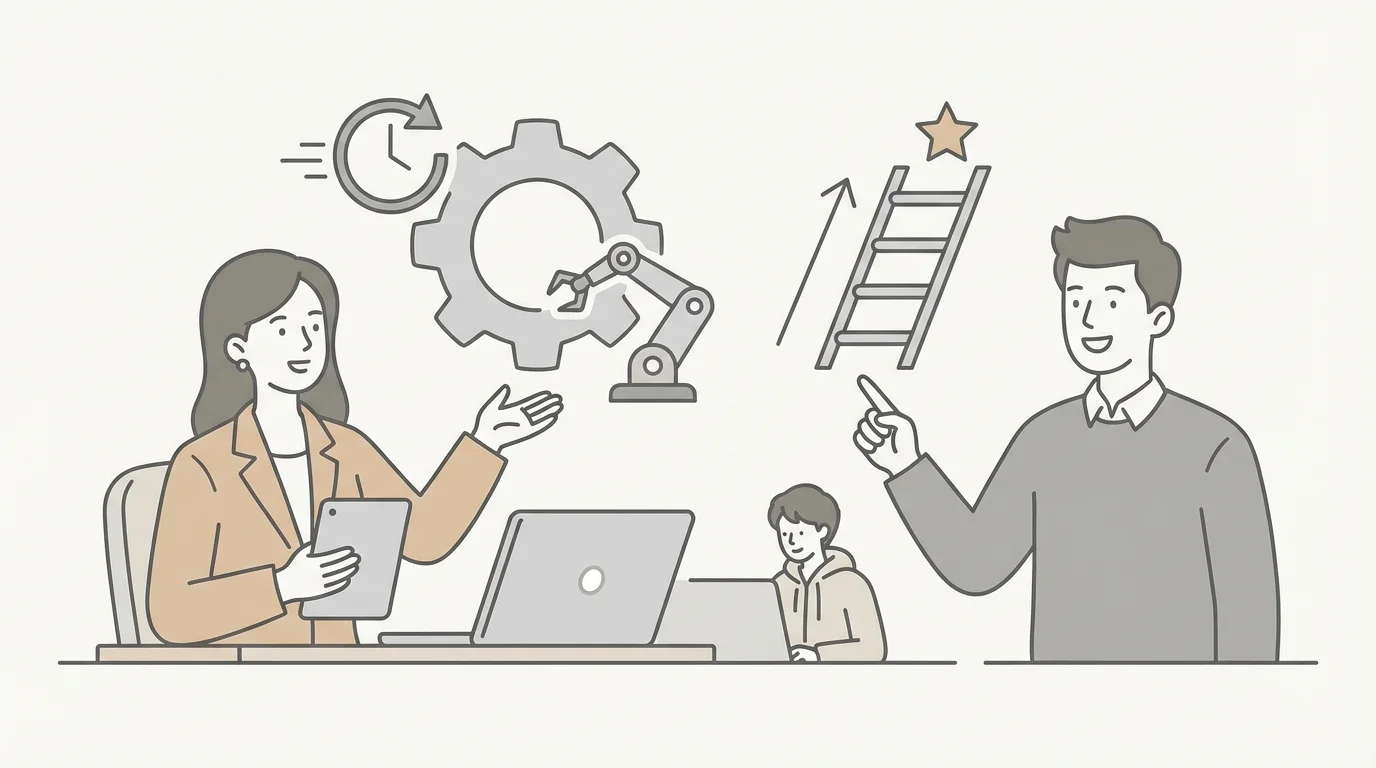
You are trying to get promoted. You are also reading headlines about AI writing code, AI replacing developers, and AI making software engineers obsolete. It is hard to build a two-year promotion plan when you are not sure the job will exist in five years.
Here is what the data actually says, stripped of the hype and the fear.
The numbers tell two different stories
The U.S. Bureau of Labor Statistics projects nearly 18% growth for software developer roles through 2033. That is faster than average. Meanwhile, organizations with high AI adoption are hiring more engineers, not fewer. The demand for AI-specialized engineers is projected to grow at over 20% per year, reaching nearly 12 million positions by 2030.
At the same time, employment for software engineers aged 22 to 25 has declined 6% in recent years, while employment for engineers aged 35 to 49 has grown 9%. 70% of hiring managers say they believe AI can perform intern-level work. 37% of employers say they would prefer to "hire" an AI tool over a recent graduate for routine tasks.
These numbers do not contradict each other. They tell the same story: the profession is growing, but the entry point is shifting. Routine coding work is being automated. Complex, judgment-heavy work is becoming more valuable. The engineers in the middle are being sorted by whether they adapt or resist.
What AI can actually do right now
AI coding tools in 2026 are good at a specific set of tasks: generating boilerplate code, writing tests from specifications, refactoring existing code to follow patterns, producing documentation from codebases, and suggesting fixes for common bugs.
These are real capabilities. They are also the tasks that junior engineers spend most of their time on. If your entire job description is "write functions that match this spec and fix bugs in this module," AI is a direct competitor.
What AI cannot do: understand the business context behind a feature request, navigate organizational politics to get a project prioritized, design a system that accounts for how users actually behave (not how they are supposed to behave), make tradeoff decisions that balance technical debt against delivery timelines, or debug a production issue that involves three services, two teams, and a data migration that happened eight months ago.
Those tasks require context, judgment, and relationships. AI does not have any of those.
Who is actually at risk
Entry-level engineers doing routine work. If your job is to take well-defined tickets and implement them, AI tools are already doing that faster and cheaper. Companies are hiring fewer junior engineers for this reason. The 6% decline in employment for the 22-to-25 age group is a leading indicator, not an anomaly.
Engineers who refuse to use AI tools. The threat is not AI replacing you. It is an engineer with AI skills replacing you. When one engineer can ship in two days what used to take a week, the engineer who takes a week looks slow. Gartner projects that 80% of software engineers will need to reskill as AI assumes more programming functions.
Engineers in companies that are not growing. AI-driven efficiency gains let companies do more with fewer people. If your company is not growing, those gains translate to headcount reductions. If your company is growing, they translate to higher expectations per engineer.
Who is not at risk
Senior engineers who design systems. Architecture, system design, and technical leadership require the kind of contextual reasoning that AI cannot replicate. If your work involves deciding what to build (not just how to build it), AI makes you more productive without threatening your role.
Engineers who understand the business. The engineer who knows why a feature matters, who the users are, and how the feature connects to revenue is doing work that no AI tool can do. AI can generate code for a feature. It cannot decide whether the feature should exist.
Engineers who build and manage AI systems. The fastest-growing engineering roles are in AI infrastructure, model deployment, and AI reliability. Software engineers with traditional skills who add AI expertise are filling these roles at scale. The transition from "software engineer" to "AI-focused software engineer" is one of the clearest career moves available right now.
Engineers with strong relationships. Promotions are decided by humans. Calibration meetings are run by humans. Your skip-level is a human. The ability to build trust, communicate clearly, and advocate for your own work is not automatable. If anything, it becomes more valuable as technical output becomes cheaper.
How to think about this if you are trying to get promoted
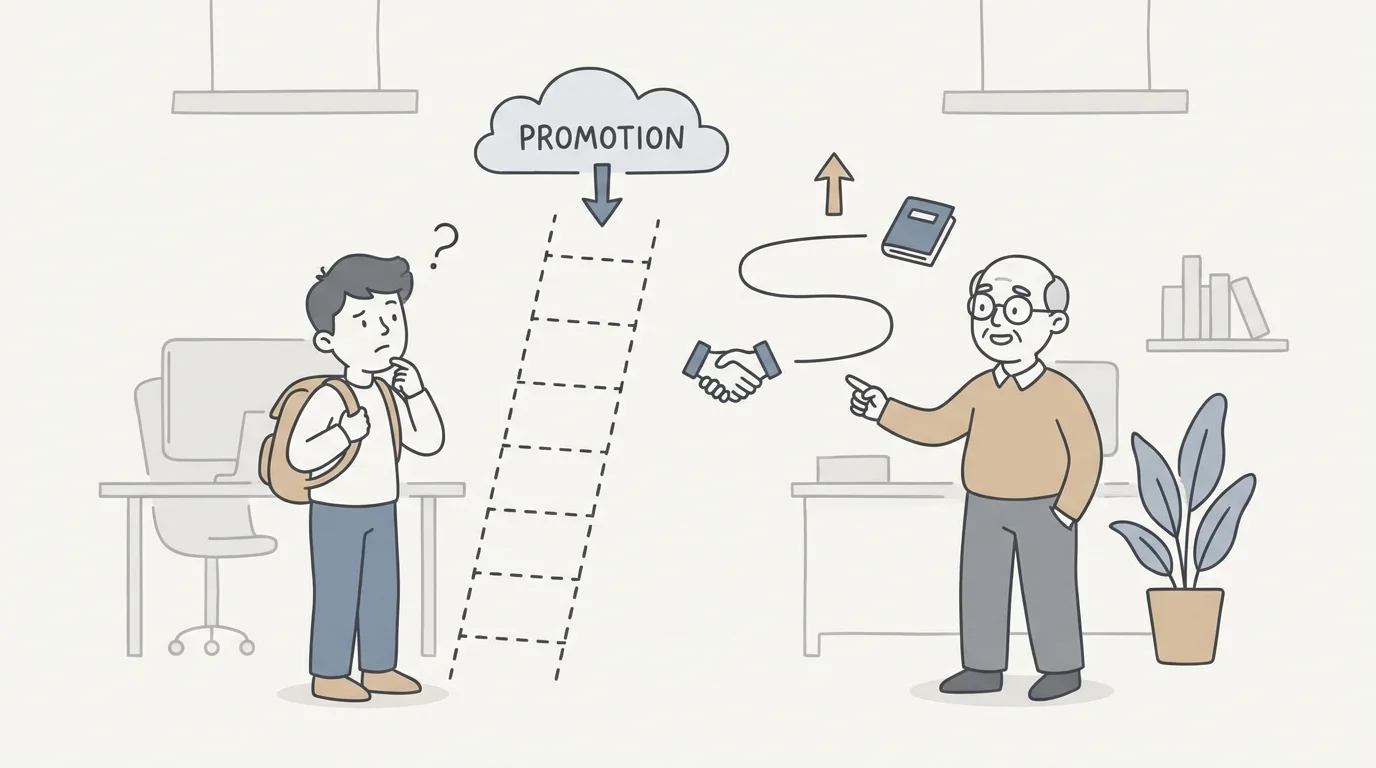
The anxiety about AI and the work of getting promoted are not separate concerns. They are the same concern. The skills that make you resistant to AI displacement are the same skills that get you promoted.
System-level thinking. Promotion committees care about scope. They want to see that you think beyond your own tickets. This is also the work that AI cannot do.
Judgment and decision-making. Promotion cases are built on decisions, not just outputs. "I chose this approach because of these tradeoffs" is stronger than "I implemented this feature." This is also the kind of reasoning AI cannot replicate.
Communication and documentation. If your work is well-documented, your promotion case writes itself. Good documentation also proves that a human understood the problem, made deliberate choices, and communicated them clearly.
AI fluency. Using AI tools effectively is becoming a promotion-relevant skill in its own right. Engineers who use AI to ship faster and focus on higher-level work are outpacing engineers who do everything by hand. For specific tactics, how to use AI tools to accelerate your promotion timeline covers the week-by-week workflow that turns AI proficiency into promotion evidence.
The honest answer to the question
Will AI replace software engineers before you get promoted?
No. Not if you are doing the kind of work that gets you promoted.
The engineers who are at risk are the ones doing the same junior-level tasks on repeat, refusing to learn new tools, and hoping that tenure alone will carry their career forward. AI is going to make that approach increasingly untenable, not just because AI can do that work, but because the engineers who use AI are going to be so much more productive that the ones who do not will fall behind.
Your promotion case and your career security are built on the same foundation: doing work that requires human judgment, making that work visible, and adapting as the tools around you change. AI does not threaten that. It reinforces it. For a deeper look at how leveling rubrics and promotion criteria are actually shifting, how AI is changing what it takes to get promoted covers what companies are deprioritizing and what they value more.
The right response to "will AI replace me" is not panic. It is the same thing you should be doing anyway: building a case so strong that no algorithm could make it for you.