How to Deal with a Micromanager at Work

 CareerClimb
Tired of being micromanaged?
Get a plan for what to say and do so your boss backs off.

Share this article
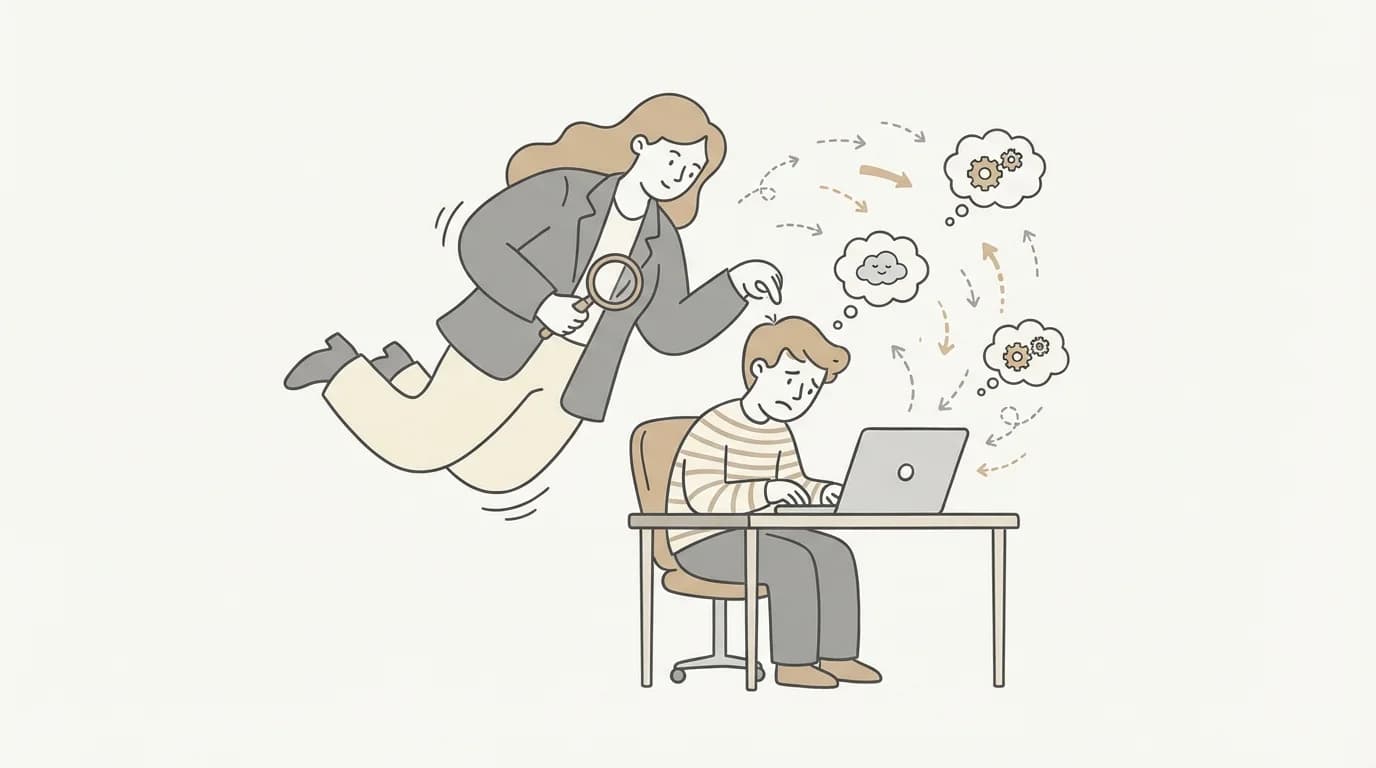
Every decision you make feels like it's being audited. You send a Slack message and your manager redirects you. You make a call that seems obvious and end up in a 30-minute conversation about your reasoning. After enough of those conversations, you stop making independent calls. It's faster to ask first.
The frustration is immediate and obvious. What's slower to notice is what happens over time: after six months of this, most engineers get more cautious, slower to act, and less confident in their own technical judgment. Independent problem-solving, ownership, and initiative, the behaviors that demonstrate senior-level performance, are exactly what this environment makes harder to practice.
Before you can address it, it helps to understand what's actually driving the behavior.
Why managers micromanage
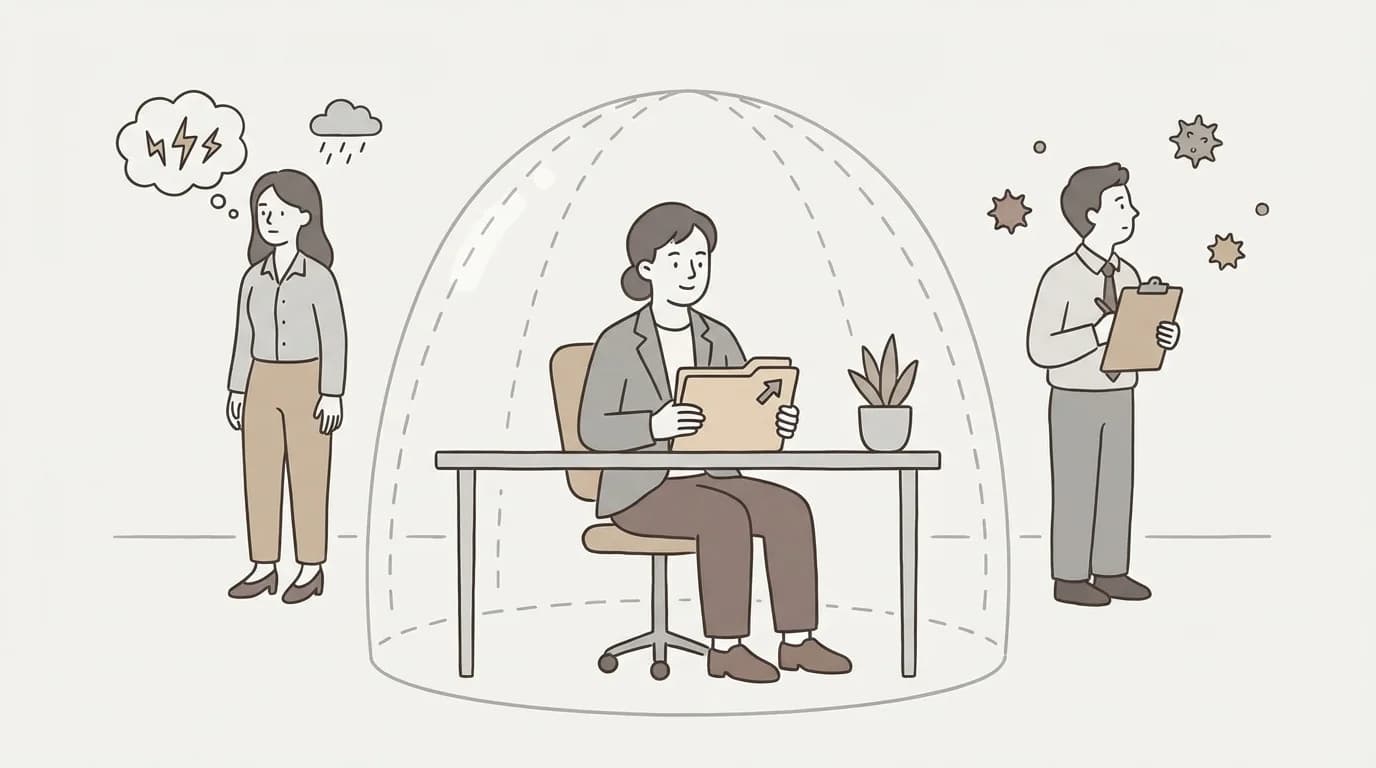
The default assumption is that micromanagement signals distrust in you. That's usually wrong.
Neuropsychologist Julia DiGangi, writing in Harvard Business Review, describes it this way: "We seek to control only what we do not trust." The critical insight is that most micromanagers don't trust themselves, not their reports. They haven't fully internalized the manager role, and excessive oversight fills that gap.
The root causes tend to fall into a few patterns:
- Engineers promoted to manager often revert to technical oversight because leading people is harder and less familiar than doing the work themselves. Gallup calls this "misapplied autonomy": well-intentioned managers micromanage because they don't trust themselves as leaders, not because they doubt you.
- When senior leadership applies intense scrutiny to your manager, that pressure flows downward. They're not checking in because they think you're failing; they're anxious about what their own skip-level thinks.
- Some managers replicate the management style they experienced earlier in their careers. High-scrutiny cultures produce defensive micromanagement because controlling every detail feels like the only way to avoid getting blamed.
Understanding the root cause matters because it changes your strategy. You're not trying to prove your competence. You're trying to reduce their anxiety.
Diagnose before you do anything
Before choosing a tactic, answer one question: is this happening to you specifically, or to everyone on your team?
If it's targeted at you, there may be a performance concern underneath worth addressing first. A recent miss, a new project type where your track record hasn't been established yet, an unclear expectation that was never resolved. These create legitimate reasons for increased oversight, even if the execution feels excessive.
If the whole team lives under the same level of scrutiny, it's a management pattern, not a performance issue. The most useful diagnostic: look at tenure. A team where people stay an average of 18 months and that's treated as normal isn't a performance problem. It's a structural one.
This distinction is the fork in the road. The strategies below can sometimes shift individual dynamics. Systemic patterns, driven by organizational culture or the manager's own skip-level, are harder to change from the bottom up.
Is Your Manager Helping or Blocking Your Career?
Find out if your manager is fighting for you — or if you're on your own.
7 questions · about 2 minutes · free score
1 of 7
What do your 1:1s with your manager mostly focus on?
The core tactic: remove the unknown
Micromanagers check in because they're anxious about what they don't know. The approach that shows up most consistently across career coaching and management research: give them what they're anxious about through channels you control, before they go looking for it.
The format that works is a short weekly update sent before being asked:
- What you completed that week, outcome-focused rather than activity-based
- What you're working on next, with a rough timeline
- Any blockers or decisions where you need input
The difference between "working on the auth refactor" and "finished the auth refactor, which unblocked three downstream tickets" takes 15 seconds to write and communicates something fundamentally different. The first tells your manager you're busy. The second tells them you delivered.
One detail that makes a consistent difference: surface your reasoning, not just your output. Don't just report what you did. Explain why you made the decision you made. "I tackled the auth service first because it was blocking three other tickets and carried the most deployment risk" tells your manager your judgment can be trusted, not just your execution.
As one engineer described the shift:
"I started sending a Friday end-of-week email without being asked. Three months later they stopped checking in daily."
This should not increase your total time spent on communication. Done well, you're replacing ad-hoc interruptions with structured, predictable ones you schedule. When your manager already knows what you're working on and why, the check-ins stop. For the full format and what makes an update actually useful, this guide on writing weekly updates covers the mechanics.
Earning back autonomy
Trust with a micromanager isn't negotiated in a single conversation. It builds in stages.
-
Establish the track record first. Before asking for anything, build the empirical record. Consistency matters more than any single impressive delivery. Over-deliver on visible, well-defined work where your manager can clearly evaluate the outcome.
-
Run the communication habit before asking for anything. Send the weekly update consistently for 6-8 weeks without requesting anything in return. Autonomy expands when the manager feels sufficiently informed; you need to show that proactive communication works before asking to be trusted with more.
-
Propose a bounded pilot. Once the track record is established, propose a test rather than a demand: "I'd like to handle this project with weekly check-ins instead of daily ones. Can we try it for two weeks?" Specific, time-limited, easy to reverse. Define what success looks like before you start.
-
Reference the track record when it's time to expand. After the pilot works, make the record visible: "The last three projects I ran with weekly check-ins all hit their deadlines. I'd like to try applying that structure more broadly." You're giving your manager the evidence they need to justify extending trust.
-
Have the direct conversation from strength. Only after the above. Frame it around your performance, not their behavior: "I've noticed I work best when I can dig into a problem independently and then present the solution. Could we try that structure going forward?" After a win, in a calm moment. Not after a conflict, not after a critique. This is also a natural opening to have a broader career conversation with your manager. Once the day-to-day dynamic is healthier, that discussion becomes much easier to have.
The language to avoid: anything that names the pattern directly. Micromanagers almost universally don't believe they're micromanaging. That word triggers defensiveness and turns a performance conversation into a confrontation.
Building this kind of credibility also lays the groundwork for the harder conversation about getting your manager to actively advocate for your promotion, which requires a different kind of trust.
What backfires
The solo "prove yourself" project. The instinct to take on a big independent project and present it as proof of competence (career coach Brendan Reid calls this the "Tadaaaa moment") consistently backfires. The manager reads it as circumventing their authority, not demonstrating capability. It addresses your frustration with the constraint while ignoring the root cause: their anxiety about visibility.
Saying the word "micromanager." Micromanagers don't believe they're micromanaging. Research consistently shows that they're often genuinely blind to the pattern. Labeling it triggers defensiveness and ends the productive conversation. Use specific behavioral descriptions instead: "I'd like to try a structure where I update you at our weekly check-in rather than throughout the day."
Two more patterns that reliably make things worse: requesting full autonomy before establishing reliability (it reads as dismissing the manager's concerns rather than addressing them), and visible frustration. Eye rolls, passive-aggressive responses, venting to colleagues: micromanagers read all of that as confirmation that oversight is necessary.
When it's not fixable
Not all micromanagement responds to the strategies above. Some situations are structural or personality-driven in ways that can't be changed from the individual level.
Signs the situation is workable:
- The behavior is recent (new manager, new project type, or following a miss you can address)
- It improves at all when you communicate proactively
- Other team members are not experiencing the same level of scrutiny
- The manager shows some willingness to try a different structure
Signs it's not:
- Senior leadership applies the same pressure to your manager, and there's no organizational support for change
- Every request for more independence is treated as insubordination, or met with increased oversight as a response
- High turnover on your team is treated as normal
- The manager takes credit for your work, shifts blame downward, or visibly sidelines high performers
Gallup distinguishes that last pattern from anxiety-driven micromanagement: it's insecurity, not anxiety, and it doesn't respond to the proactive communication approach. If you're in that situation — manager is hostile or self-serving but leaving isn't an option yet — the priority shifts to protecting your promotion case while you're still in the environment.
A Trinity Solutions survey of 200 workers found that 69% had considered leaving their jobs because of micromanagement, and 36% actually did. The same survey found 85% reported a negative impact on their morale.
The practical framework: try the proactive communication approach for 60-90 days. Have one direct conversation framed around your performance. If the behavior doesn't change and the organization reinforces it, the realistic timeline for improvement is close to zero. Most people start planning their exit later than they should.
When the situation reaches that point, deciding when it's actually time to leave is a decision worth working through carefully, not reactively.
Mental health is also diagnostic here. Dreading Mondays, double-checking work you know is correct, feeling relieved on sick days: these are signs the situation has moved past a management problem you can solve. If the pattern extends to after-hours contact (weekend messages, late-night texts), what to do when your boss texts at 11pm covers how to address that specific behavior before it compounds the broader problem.
Micromanagement tends to get worse when your manager has no visibility into what you're working on. The proactive update strategy addresses that, but it works best when you have a reliable system for capturing your wins and progress week to week.
Career Climb helps you log what you've delivered and build the kind of ongoing record that makes every update easier to write and gives your manager something concrete to work with. Download Career Climb