How to Deal with a Peer Who Undermines You in Meetings

 CareerClimb
Undermined in meetings?
Get coaching on how to shut it down — professionally.

Share this article
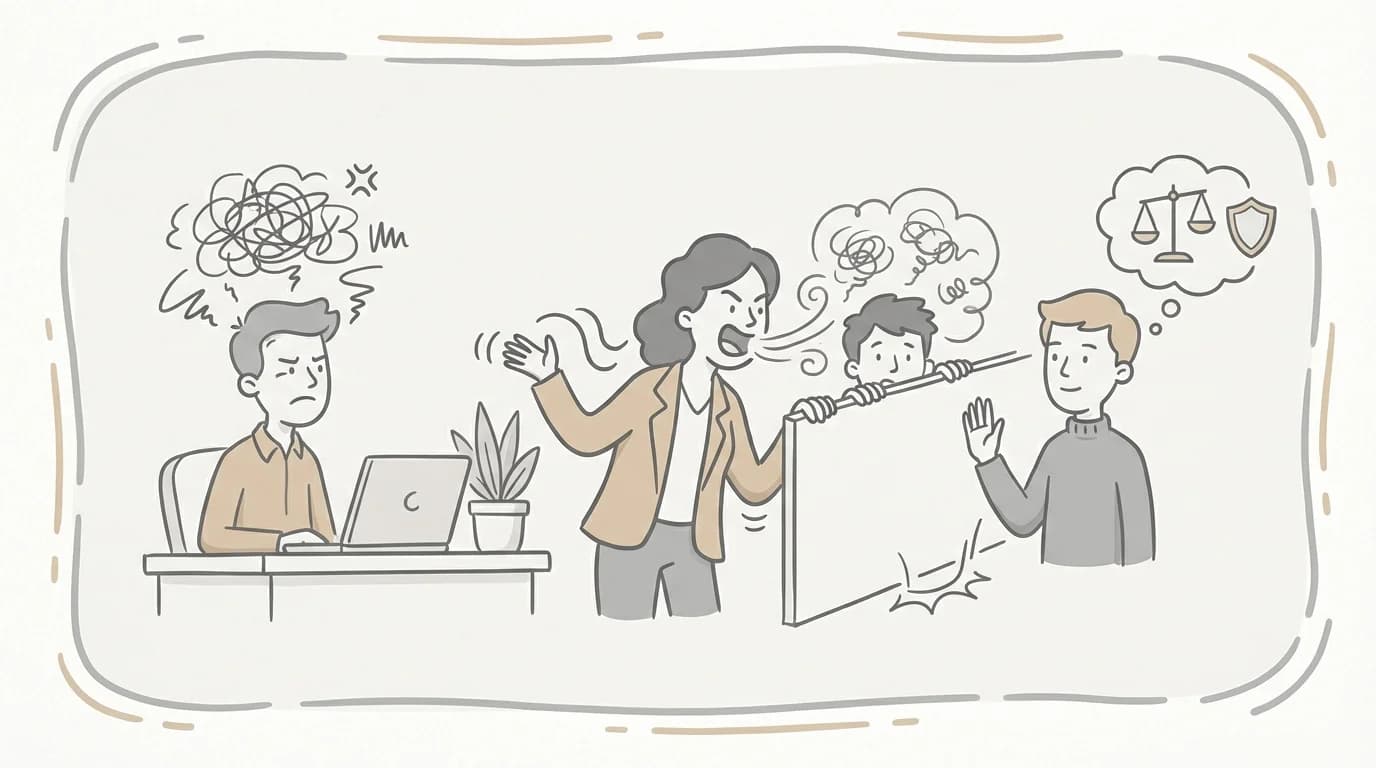
You said something in the meeting. A reasonable point, grounded in what you'd been working on. And then your peer jumped in, talked over you, and restated your idea as if they'd come up with it. Or they dismissed it outright. Or they contradicted you with a tone that made you sound like you hadn't thought it through.
And now you're sitting there wondering: do I say something? Do I let it go? Is this even a pattern?
If this has happened more than twice with the same person, it's a pattern. And the fact that it's happening in meetings, in front of other people, is what makes it different from ordinary friction. Meetings have an audience. What happens in that room shapes how leadership sees you.
How to tell if it's undermining (and not just disagreement)
Not every interruption is an attack. People talk over each other. Ideas get restated. That's normal. The line between disagreement and undermining is pattern and intent.
Genuine disagreement looks like this: they engage with your actual point, they push back on everyone (not just you), and they give you space to respond. The conversation moves forward.
Undermining looks different:
- They interrupt before you've finished. Not to build on your point, but to redirect the conversation away from you.
- They dismiss without engaging. "I don't think that's the right framing" with no follow-up. The goal is to make your contribution seem weak, not to offer a better one.
- They restate your idea as theirs. You say something, it gets no traction. Two minutes later, they say the same thing with slightly different words and suddenly leadership is nodding.
- They contradict you in front of leadership but agree with you privately. The 1:1 version of this person is reasonable. The meeting version is performing.
- It only happens to you. They're collaborative with everyone else but consistently dismissive or combative when you speak.
Duffy, Ganster, and Pagon (2002) defined social undermining in their foundational study as behavior specifically aimed at hindering a target's success, reputation, or relationships. The key distinction: it's not about being rude generally. It's about being rude to you, specifically, in ways that damage how others perceive your competence.
If you're seeing three or more of those undermining signals from the same person, consistently, that's a pattern worth addressing.
How to respond in the moment
The hardest part is the live moment. You're mid-sentence, they cut in, and now you have half a second to decide what to do. Here's what works.
When they interrupt you mid-point:
Hold your ground without escalating. Something like: "I want to finish this thought because it's relevant to the decision we're making." Then continue. Don't ask permission. Don't apologize. Just keep talking. Harvard Business Review's research on managing interruptions found that setting clear expectations early in a discussion reduces repeat interruptions significantly.
When they dismiss your idea without substance:
Name the gap. "Can you say more about what you'd change? I want to make sure we're comparing specific approaches, not just reactions." This puts the burden on them to contribute something concrete. If they can't, the room notices.
When they restate your idea as theirs:
Reclaim it immediately. "Right, that's what I was getting at a few minutes ago. Let me build on that with the implementation details." Calm, specific, not accusatory. The room heard both versions. By connecting them, you make the attribution clear without creating a scene. This is the same in-the-moment response that matters when someone takes credit for your work in any setting.
When they contradict you publicly:
Don't argue the substance in real time if the contradiction feels performative. Try: "Sounds like we see this differently. Let's take it offline and bring a recommendation back to the group." This prevents a public back-and-forth that makes you both look bad, and it forces a 1:1 where performative behavior usually disappears.
The thread running through all of these: you're responding to the behavior, not the person. You're saying "let me finish," not "stop undermining me." That distinction keeps you looking professional to everyone else in the room.
What to do after the meeting
The in-meeting response handles the immediate moment. But if this is a pattern, the meeting is only one front. Here's how to handle the rest.
Have the direct conversation first. Pull them aside or send a message: "Hey, I noticed in the last couple of syncs that I'm getting cut off before I can finish my points. I want to make sure we're both getting space to contribute. Can we talk about how to make that work better?"
This is low-confrontation, specific, and leaves room for them to have been oblivious. Some people genuinely don't realize they're doing it.
If they get defensive or the behavior continues after the conversation, you've learned something important: it's deliberate. That changes your strategy.
Document the pattern. After each incident, write a quick note to yourself: date, meeting, what happened, who was present. You're not building a legal case. You're building a factual account that you can reference later if you need to escalate. "Three times in the past month, in meetings with leadership present" is a different conversation than "I feel like they don't respect me."
Protect your contributions in writing. Share pre-reads before important meetings. Post your proposals in Slack or your team's doc space before the discussion happens. When your thinking is timestamped and attributed to you in writing, it's much harder for someone to present it as theirs in the room.
When to involve your manager
Going to your manager too early, before you've tried a direct conversation and before you have documented examples, usually lands as interpersonal drama. Managers hear "we don't get along" and file it away.
Go to your manager when:
- You've had the direct conversation and the behavior continued. This shows you tried to resolve it yourself. Managers respect that.
- You have specific examples with dates. "In the March 5th design review, I proposed the caching approach and was interrupted. In the March 12th standup, the same idea was presented by [name] without attribution. In the March 19th sync, I was contradicted on the timeline estimate I'd shared in my pre-read." That's a pattern. That's something a manager can act on.
- The behavior is affecting your work or your visibility in review. Frame it around impact: "I'm concerned that my contributions aren't landing accurately in these meetings, and I want to make sure my work is visible for this cycle."
Don't frame it as a personality complaint. Frame it as a visibility and attribution problem. Your manager can work with that.
How to protect your reputation without looking petty
This is what trips people up. You know the behavior is hurting you, but complaining about it makes you look fragile. The solution isn't to complain. It's to make your contributions so visible that the undermining can't distort the record.
Send brief follow-ups after meetings. "Documenting what we landed on: I'll own the migration plan based on the approach I outlined today. [Name] is taking the testing framework. Shipping target is March 28." This re-establishes your ownership in writing, visible to the whole group.
Build relationships with the other people in the room. The witnesses matter. You don't need to recruit them into a coalition. You need them to have an independent, positive view of your work so that when the undermining happens, it doesn't land. Building genuine allies at work is the long-term play that makes any single person's attempts to diminish you less effective.
Keep doing excellent work. If your output is strong, documented, and visible, a peer's attempts to dismiss your ideas eventually look like what they are. The person who backs up proposals with data and results wins the credibility war over time, regardless of who talks louder in meetings.
When it's more than meetings
If the undermining extends beyond meetings into 1:1 sabotage, blame-shifting, or broader reputation damage, you're dealing with a toxic coworker dynamic that requires a broader strategy. The meeting-specific tactics here still apply, but the overall approach changes when the behavior is pervasive.
Meeting dynamics shape promotion narratives more than most engineers realize. If your contributions are getting lost, dismissed, or attributed to someone else in the room, your case suffers whether you notice it or not. CareerClimb helps you track your wins, document your impact, and build the evidence trail that makes your contributions clear when it matters. Download CareerClimb and stop letting someone else write the story of your work.