How to Protect Your Promotion Case in a Toxic Environment

 CareerClimb
Toxic job but can't leave yet?
Get a plan to document and protect your case.

Share this article
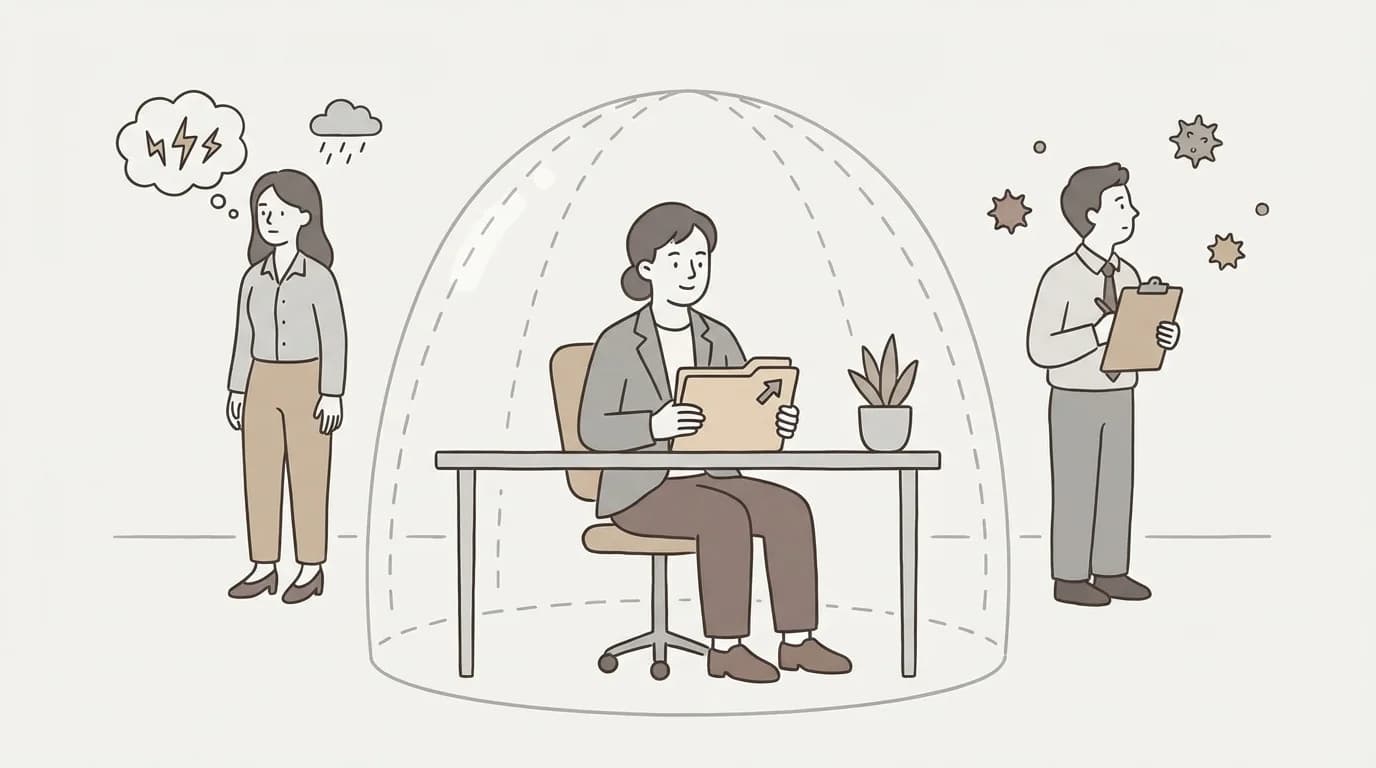
You already know the environment is bad. You've spent months noticing patterns that your friends outside the company would call alarming. The problem isn't awareness. The problem is that you can't leave.
Maybe your visa is tied to this employer and a gap in sponsorship isn't an option. Maybe you're nine months from a vesting cliff and walking away means leaving six figures on the table. Maybe the job market is dry. Maybe you have a family that depends on this paycheck landing every two weeks and the risk math doesn't work right now.
Whatever the reason, you're here. And while you're here, you still want to get promoted. Not because the company deserves your ambition, but because your career doesn't stop being yours just because the environment is broken.
This article is for the person who already knows it's bad and needs to know what to do while they're still in it.
Document everything, even when nobody asks you to
In a healthy environment, documentation is good practice. In a toxic one, it's survival. When your manager isn't your ally, the things you accomplish can quietly disappear. Credit gets absorbed. Contributions get reframed. The only counter is a written record that exists independently of anyone else's narrative.
What to document and where:
-
Your own wins, with timestamps. Every significant contribution gets a brief writeup the week it happens. Two to three sentences: what you did, the result, the date. Store this somewhere your employer can't access or delete.
-
Key decisions and agreements. After meetings where scope or ownership is discussed, send a brief follow-up. "Confirming what we aligned on: I'm owning X, deadline is Y." This creates a timestamp that protects you if the story changes.
-
Feedback you receive. When your manager or peers give you positive feedback, capture it in writing. If it was verbal, send a follow-up: "Thanks for the feedback on the migration project." Now it exists on the record.
-
Interactions that feel off. If your manager blocks a cross-team opportunity, gives contradictory feedback, or undermines your work, write down the date, what was said, and who was present. You may never need this. But if you do, specifics matter.
This isn't paranoia. Research on workplace bullying consistently finds that people who come out of toxic situations with careers intact are the ones who kept records. Those who relied on institutional memory or assumed fairness would prevail got rewritten out of the story.
Build visibility outside your immediate team
If your manager isn't going to advocate for you in calibration, you need other people in the room who know your work. That happens by intentionally building relationships and creating artifacts beyond your team's boundaries.
Volunteer for cross-team projects. Working groups, incident response efforts, org-wide initiatives. These give you face time with managers and senior engineers outside your reporting chain. The work gets discussed in rooms your manager doesn't control.
Write things down publicly. Internal engineering blog posts, design docs shared broadly, RFC comments on other teams' proposals. Written artifacts are hard to misattribute. When another manager says "I read their design doc and it was strong," that's a calibration data point your manager can't erase.
Present where you can. Tech talks, all-hands demos, cross-org readouts. If your manager blocks these, that itself is worth documenting. But many toxic managers simply neglect to create visibility rather than explicitly blocking it. Create the opportunities yourself. Sign up for the slot nobody wants.
Build a relationship with your skip-level. Request a skip-level 1:1 if your company offers them. Don't complain about your manager. Share your work, your goals, what you've been shipping. Let them form their own impression. If your manager's assessment is an outlier, the skip-level will notice. When the person blocking your promotion is your direct manager, your skip-level may be the most important relationship you have.
Protect yourself during biased calibration
Calibration is where promotions are decided, and where toxic dynamics do the most damage. Research from Harvard Business Review found that calibration meetings can introduce bias, including an asymmetric tendency to adjust higher ratings downward rather than lower ratings upward. If your manager is presenting a weak case or actively undermining you in that room, the system is tilted against you.
You can't be in the room. But you can influence what gets said.
Write your own calibration case. Don't rely on your manager to construct the pitch. Write out your top wins, mapped to the promotion rubric at your level. Quantify impact. Hand this to your manager two to three weeks before calibration. Make it so clear that presenting a weak case requires active effort, not passive neglect.
Create secondary advocates. If a peer manager from a cross-team project can vouch for your contributions, that voice matters. A second person saying "I've seen their work, it's at the next level" can shift the conversation even when the primary advocate is weak or hostile.
Request written feedback from collaborators. Before review season, ask two or three people outside your team for brief written feedback. If your company has formal mechanisms, use them. If not, a short email works. External feedback that contradicts your manager's narrative creates a discrepancy calibration reviewers notice.
When to involve HR (and what to expect)
The honest answer: HR rarely fixes toxic manager situations. It's what the research on HR responses to workplace bullying consistently shows. HR is structurally incentivized to protect the organization, not individual employees. When a manager is productive and politically connected, complaints from their reports get minimized, reframed, or turned back on the reporter.
That said, there are situations where HR involvement is worth the risk:
-
Documented discrimination or retaliation. If you can show biased treatment connected to a protected characteristic (race, gender, national origin, disability), that's legal exposure. HR takes legal exposure seriously even when they dismiss interpersonal complaints.
-
Retaliation for speaking up. If you raised a concern through proper channels and your manager's behavior worsened afterward, document the timeline and bring it to HR.
-
You're preparing to leave and want a record. Sometimes the value of an HR complaint isn't the resolution. It's the paper trail for later.
What not to expect from HR: mediation that changes your manager's behavior, a transfer on your timeline, or anyone taking your side in a he-said-she-said. If you go to HR, go with dates and documented examples. "My manager is toxic" is a feeling. "My manager rejected three cross-team presentations on my behalf, gave contradictory feedback across two cycles, and promoted a peer with a weaker case" is evidence.
Maintain your mental health while building your case
The APA's 2023 Work in America report found that workers in toxic environments are three times as likely to report mental health harm. McKinsey Health Institute research identified toxic workplace behavior as the single biggest predictor of burnout.
You're not imagining the toll. No amount of individual resilience fixes a systemic problem. But while you're still in it, protecting your health is not optional. You can't build a case, perform well, and job search simultaneously if you're running on fumes.
Separate your identity from your job title. The environment is broken. Your worth is not. The promotion committee's opinion of you is one data point from one broken system.
Set hard boundaries on work hours. Toxic environments reward performative overwork. Working late doesn't build your case. Documented, high-impact contributions do. Protect your evenings. The energy you save is energy you'll need for the exit plan.
Talk to someone outside the company. A therapist, a mentor, a friend in tech. Not for advice on the politics, but to have someone who sees you clearly when the environment is distorting how you see yourself. Isolation is the most dangerous byproduct of a toxic coworker or manager dynamic. Break it.
Pick your battles deliberately. Not every slight is worth responding to. Not every unfair moment needs documenting. The goal isn't to win every encounter. It's to exit with your career, your health, and your documentation intact.
Build your exit plan while still performing
The best outcome here is leaving on your own terms, with a strong record, at the time that makes financial and logistical sense. That means running two tracks in parallel: performing well enough to protect your current position, and building toward the next one.
Know your timeline. If the constraint is a vesting cliff, know the exact date. If it's visa-related, understand your transfer options and the 60-day grace period for H-1B holders if the worst happens. If it's financial, build a runway. Put a number on what "ready to leave" looks like so the decision becomes concrete.
Job search discreetly. Use personal devices. Don't search on company networks. Tell only people you trust completely. The last thing you need is your manager finding out you're looking before you're ready.
Transfer your documentation. The win log you've been building isn't just for calibration here. It's the foundation of your interview stories, your next self-review, and your negotiation leverage. Organize it in a format you own.
Don't coast. It's tempting to check out when you know you're leaving. Resist that. Coasting gives a toxic manager ammunition. Strong, documented performance through your final day makes it impossible for anyone to rewrite the story after you're gone.
Set a decision date. If you haven't decided whether it's time to leave, pick a date by which you will. "I'll reassess after my cliff in September" or "If nothing has changed by Q4, I'm out." A decision date prevents the most common trap: staying one more cycle, then one more, until you've lost years to a situation you identified as broken long ago.
You can't always choose your environment. But you can choose how you move through it. CareerClimb helps you log wins as they happen and build a documented case that travels with you, so when you're ready to move, the evidence is already organized. Download CareerClimb and take your career record into your own hands.