How to Get Promoted from PM to Senior PM at Palantir
 CareerClimb
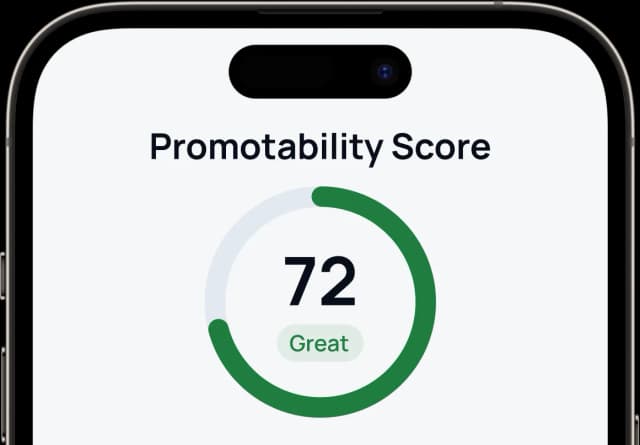
Building your promotion case?
Get AI coaching on what to document and how to present it.

Share this article
You've shipped three consecutive quarters at Palantir. Your Forward Deployed team loves working with you. You're writing specs, running customer deployments, and handling escalations that used to go to your lead.
Then you check Levels.fyi and notice someone with less experience pulling $250K total comp in a "Senior PM" role. You didn't even know that title existed at Palantir.
That confusion is the point. Palantir runs one of the most unusual career structures in tech, and if you're trying to move from PM to Senior PM, the standard playbook does not apply.
Palantir does not have a career ladder (sort of)
Ask Palantir and they'll tell you the org is flat. No rigid levels, no formal titles, no biannual promotion cycles. Growth is "individual" and driven by ownership, mentorship, and the projects you choose.
That's the official story. The reality is more complicated.
H1B filings and compensation data reveal levels that map roughly to L2 through L6+. Internal comp bands exist. People get raises, and some of those raises come with a shift in scope and pay that looks identical to a promotion at Google or Meta. Palantir just doesn't call it that.
For PMs, the relevant jump is L3 (Product Manager) to L4 (Senior Product Manager). These labels come from compensation data, not from any internal document you'll find on the wiki.
| What Palantir says | What actually happens |
|---|---|
| "We're flat, no levels" | H1B data shows L2-L6+ levels with distinct comp bands |
| "No formal promotion process" | Annual reviews in December, comp adjustments in November, paid in January |
| "Growth is individual" | A shadow hierarchy determines who gets high-visibility projects and comp bumps |
| "No rigid titles" | Levels.fyi entries, offer letters, and H1B filings all show PM and Senior PM distinctions |
This disconnect between stated culture and actual mechanics is the first thing to understand. You are pursuing a promotion that Palantir won't call a promotion. The criteria are real but unwritten. The process exists but nobody will hand you a rubric.
What changes between PM and Senior PM
The scope shift from L3 to L4 looks similar to PM promotions at other companies on paper, but the path there is different because you have to figure it out yourself.
| Dimension | PM (L3) | Senior PM (L4) |
|---|---|---|
| Problem scope | Assigned product area or customer deployment | You choose which problems to own, often spanning teams |
| Customer relationship | Execute on requirements from Forward Deployed Engineers (FDEs) or account leads | Shape product direction based on patterns across multiple customer engagements |
| Technical depth | Translate customer needs into specs | Make architecture-level judgment calls that engineers trust |
| Influence | Your immediate team | Cross-team, including engineering leads and business stakeholders who don't report to you |
| Visibility | Your lead knows your work | Senior leadership and customers associate you with outcomes |
| Ambiguity tolerance | Work within defined problem spaces | Operate in spaces where the problem itself is unclear |
"The gap isn't doing more work. It's doing work that nobody told you to do, on problems nobody fully scoped, and getting engineers to follow you there."
The criteria that matter (even though nobody wrote them down)
Technical credibility with engineers
Palantir is an engineering-dominated company. Engineers outnumber PMs, and the culture gives heavy weight to technical judgment. As a PM, you can get by with strong communication and customer empathy. At Senior, engineers need to trust your technical instincts.
This doesn't mean you need to write code. It means you need to understand Palantir's platforms (Foundry, AIP, Gotham) well enough to have opinions about architecture trade-offs. When an engineer says "that approach won't scale," you should be able to ask the right follow-up questions, not just defer.
Three or more years working in infrastructure or technical product domains shows up in Palantir's PM hiring criteria again and again. That bar applies internally too.
Ownership without permission
At companies with formal ladders, your manager assigns you stretch projects. At Palantir, you assign yourself. The PMs who move to Senior are the ones who identify a product gap, build a case for why it matters, and start working on it before anyone asks them to.
This is where Palantir's flat structure works in your favor. Nobody will stop you from taking on a bigger problem. But nobody will point you toward one either. You have to develop the instinct for spotting high-leverage gaps and the confidence to claim them.
Navigating the shadow hierarchy
Palantir employees on Team Blind and Glassdoor describe an informal power structure that operates beneath the flat surface. Certain leads and managers control project assignments, comp decisions, and visibility with senior leadership. The official line is that anyone can work on anything, but some projects carry more weight than others, and access to those projects runs through relationships.
To advance, you need to understand who influences comp decisions for your area, what projects those people consider high-impact, and how to position yourself for that work. This is awareness of how decisions get made when there's no formal process, and ignoring it costs you years.
Cross-team impact
L3 PMs own a product area or deployment. L4 PMs own outcomes that require coordination across teams. If your work only affects your immediate team, you're operating at L3 scope regardless of how well you do it.
Look for problems that sit between teams: inconsistent customer experiences across product surfaces, infrastructure gaps that multiple teams work around, or strategic bets that require aligning engineering, sales, and product. These problems are often visible but unowned because nobody's job description includes them.
Customer-to-product translation at scale
Palantir's business model means PMs often work close to customers. At L3, you translate specific customer needs into product requirements. At L4, you spot patterns across multiple customer engagements and turn those patterns into product strategy.
The difference is going from "Customer X needs this feature" to "Three of our largest government contracts share this workflow gap, and building a platform solution would reduce deployment time by 40%." That second framing drives product decisions. The first one drives a ticket.
Building your case when there's no formal process
Force the career conversation
Palantir does not have structured feedback cycles. Reviews happen annually in December, but the day-to-day guidance that helps you grow can be scarce. Your lead may not tell you where you stand or what Senior-level work looks like.
Schedule a direct conversation. Not "how am I doing?" but "what would make you confident putting me forward for a comp adjustment to the next band?" If your lead deflects with "we don't really have levels," push back: "I understand the culture, but comp bands exist and I'd like to understand what moves me into the next one."
Pick projects that prove L4 scope
Not all projects are created equal. At Palantir, your project selection is the primary lever for advancement, more than at any other company.
Choose work that is cross-team, technically complex, and tied to business outcomes. Avoid getting stuck in a comfortable single-customer deployment where you're effective but invisible. If you've been on the same Forward Deployed engagement for two years, the rotation to a product team (typically available after 18-24 months) could be the move that unlocks Senior-level scope.
Build relationships before you need them
When comp decisions happen in November, the people in the room need to know your name and associate it with impact. If you start building those relationships in October, you're too late.
Map the stakeholders who matter: your lead, adjacent team leads, engineering leaders you've worked with, and anyone in senior leadership who's seen your work. These relationships compound over time. A lead who's watched you operate for a year carries more weight in a comp discussion than a Slack message summarizing your wins.
Document your own impact
Without formal review packets or self-review templates, the evidence of your work can evaporate. Keep a running log of your impact, specifically outcomes rather than activities. What shipped, what it did for the customer or the platform, what decisions you drove, and what would not have happened without you.
When the December review comes, your lead needs to make a case for you with specific examples. Hand them the ammunition.
Mistakes that keep PMs stuck at L3
Treating "flat" as "automatic." Some PMs interpret Palantir's lack of formal process as meaning advancement happens naturally. It doesn't. The absence of structure means you need more self-direction. Nobody is tracking your readiness for you.
Staying in execution mode. You're reliable. You ship on time. You handle customer escalations well. All of that is L3 work. The jump to L4 requires you to shift time from delivery to direction. If every hour goes to sprint work, you have no bandwidth to think about strategy or pursue cross-team problems.
Avoiding the comp conversation. Palantir's culture of "we're flat, don't worry about levels" can make it feel awkward to ask about advancement. But comp bands exist, annual reviews happen, and someone is making decisions about your pay. Pretending the system doesn't exist because the company says it doesn't is a mistake.
Ignoring the shadow hierarchy. Working hard on an invisible project for a lead who doesn't influence comp decisions wastes your best years. Understand who has pull, what they value, and where the high-impact work lives. Ignoring this reality is the cynical choice, because it means hoping the system works the way the company says it does.
Lacking technical depth. At Palantir, PMs who can't hold their own in technical conversations hit a ceiling. Engineers won't follow a PM they can't respect technically, and without engineering buy-in, you can't drive the cross-team initiatives that L4 requires.
Timeline and expectations
| Path | What it looks like | How common |
|---|---|---|
| 2-3 years at L3 | Picked the right projects early, built strong relationships with influential leads, visible to senior leadership | Rare |
| 3-4 years at L3 | Standard path. One or two annual review cycles with clear cross-team impact on record. | Most common |
| 4-5 years at L3 | Includes time on a single deployment without rotation, a team change, or a period of rebuilding after reorg | Common |
| 5+ years or stays at L3 | L3 can be a terminal level. Some PMs stay here by choice, others because the shadow hierarchy kept them off high-visibility work. | Not unusual |
The compensation jump from PM ($195K median total comp) to Senior PM ($250K median total comp) is roughly 28%, with base salary moving from the $122K-$162K range to $162K-$207K. RSU grants increase at L4, and Palantir's stock performance in recent years has made equity a meaningful part of the package. Annual promotion bumps are typically 8-15% on base salary alone.
How Palantir compares to standard PM promotions
| Dimension | Palantir | Typical big tech (Google, Meta, Spotify) |
|---|---|---|
| Formal career ladder | No. Levels inferred from comp data. | Yes. Published levels, rubrics, and expectations. |
| Promotion cycle | No fixed cycle. Annual review in December is the closest thing. | Biannual or continuous, with formal nomination and calibration. |
| Promotion criteria | Unwritten. Observed from patterns in who advances. | Documented rubrics, often available internally. |
| Manager's role | Varies. Some leads are hands-on, others barely involved in your growth. | Manager writes promotion packet, advocates in calibration. |
| Self-advocacy required | Extremely high. You may need to explain that levels exist. | Moderate. The system prompts conversations even if you don't. |
| Feedback frequency | Low. No structured cadence. | Regular 1:1s, peer feedback tools, formal review cycles. |
| Project assignment | Self-directed. You pick your work. | Mix of assigned and chosen, with manager input. |
| Shadow dynamics | Dominant factor. Relationships drive access to high-impact work. | Present but moderated by formal process. |
If you've come from Google or Meta, Palantir's system will feel disorienting. The trade-off is real: more freedom to define your own path, but zero guardrails if you drift.
Frequently asked questions
How long does it take to go from PM to Senior PM at Palantir?
Most PMs who make the jump spend 3-4 years at L3. Faster paths (2-3 years) require landing on high-visibility projects early and building strong relationships with leads who influence comp decisions. There is no fixed timeline because there is no formal promotion cycle.
Does Palantir have a promotion process?
Not in the traditional sense. Annual reviews happen in December, with comp decisions finalized in November and paid in January. Your lead advocates for comp adjustments, but there's no nomination packet, no calibration committee, and no published rubric. The process is informal and relationship-dependent.
What if my lead says levels don't exist?
Comp bands exist. H1B filings show levels. Offer letters specify compensation that maps to bands. Your lead may genuinely believe in the flat culture, or they may be deflecting. Either way, you can frame the conversation around comp rather than titles: "I'd like to understand what positions me for the next comp band."
Should I rotate from a Forward Deployed team to a product team?
If you've been on the same deployment for 18+ months and your work is scoped to a single customer, rotation could open up the cross-team impact you need for L4. Palantir supports these rotations. The risk is losing customer context and relationships, but the upside is access to broader product scope.
Is Senior PM the terminal level at Palantir?
L3 (PM) can be terminal. L4 (Senior PM) opens the path toward Group PM (L5) and Director/Head of Product (L6+), though data points above L4 are scarce. Very few PMs reach L6+, and those roles tend to require 10+ years of experience.
CareerClimb helps you build your promotion case week by week, even at companies with no formal process. Track your wins, map them to what gets PMs promoted, and know where your case stands before the December review. Download CareerClimb
Are You Ready to Make This Jump?
Get a personalized score and find out what's holding you back.
8 questions · about 2 minutes · free score
1 of 8