How to Get Promoted from Associate to VP at Morgan Stanley
 CareerClimb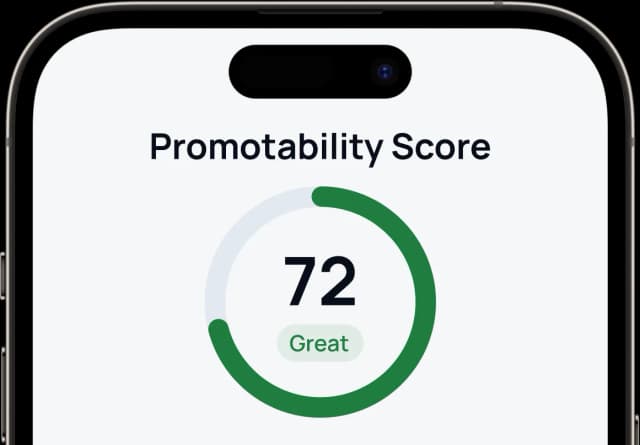
Building your promotion case?
Get AI coaching on what to document and how to present it.

Share this article
You've been an Associate at Morgan Stanley for three years. You manage Analysts well, run deal workstreams, and handle client calls without your VP stepping in. But nobody has told you whether VP is coming this cycle, and you've seen other Associates in your class either get promoted or start looking elsewhere. The 5-year Associate trap is something you've read about on Wall Street Oasis, and you're wondering if you're heading toward it.
The Associate to VP promotion at Morgan Stanley takes 3-4 years for most people who make it. The criteria go beyond execution: you need to demonstrate deal management, client relationship skills, and the ability to prioritize across multiple workstreams simultaneously. Total comp jumps from roughly $340K at Associate to $450-500K at VP, with senior VPs reaching $690K in strong years. But the promotion process at MS is described by employees as opaque, and sponsorship from senior bankers matters as much as performance.
What Changes from Associate to VP
Associate is a management and execution role. You run deal workstreams, manage Analysts, and keep transactions on track. VP is a client-facing leadership role. You manage entire deals, serve as the primary day-to-day client contact, and begin developing business relationships.
| Dimension | Associate | VP |
|---|---|---|
| Deal role | Run workstreams within a deal, manage Analyst output | Manage entire deal processes from pitch through close |
| Client contact | Execute on client requests, draft communications | Primary day-to-day client contact, lead meeting sections |
| Management | Manage 1-2 Analysts per deal | Run the full deal team: Associates and Analysts |
| Business development | Not expected | Expected to contribute to pitches and begin developing relationships |
| Internal standing | Individual contributor with management duties | Part of the coverage team's leadership |
| Judgment | Escalate to VP or ED when uncertain | Make judgment calls on deal process and client communication |
The core shift: your ED or MD gives you a deal and expects you to run it. The sequencing, client communication cadence, internal resource allocation, and quality control are your responsibility. Associates manage tasks within a deal. VPs own the deal.
How the Promotion Process Works
Morgan Stanley runs mid-year and year-end reviews. Promotion decisions happen at year-end, with announcements in January or February.
The process is committee-based with manager sponsorship:
- Mid-year reviews provide a checkpoint on your trajectory
- Year-end reviews formalize your assessment
- Your VP, ED, and group head discuss which Associates are VP-ready
- Promotion committee evaluates candidates at the group and division level
- You learn the outcome alongside your bonus number in early Q1
The critical variable is manager alignment. If your VP or ED doesn't advocate for you in committee, your promotion stalls regardless of output. Morgan Stanley's process is described by employees as less transparent than some peers. Associates report frustration with unclear expectations for what "VP-ready" means. The answer: ask directly. Don't wait for the criteria to be handed to you.
How Long It Should Take
| Pace | Timeline | What's happening |
|---|---|---|
| Fast | 3 years | Strong performer, well-sponsored, group needs VPs |
| Standard | 3.5-4 years | Solid performer, promoted with normal timing |
| Slow (flag) | 5+ years | The Associate trap: unclear feedback, limited sponsorship, or group bottleneck |
The "5-year Associate" is a known pattern in banking. At Morgan Stanley, Associates who spend 5+ years without promotion are being signaled to leave. The causes vary: some groups are overstaffed at VP, some Associates have reviews with consistent gaps, and some simply lack a senior champion willing to push their case. If you're entering year four without a clear signal, have the direct conversation.
Based on Wall Street Oasis and Levels.fyi data, VP1 total comp at Morgan Stanley runs $400-450K (base $211-275K plus bonus). VP3 reaches $550-690K according to the Prospect Rock 2024 compensation survey. Deferred compensation becomes significant at VP: 50-75% of bonus at senior VP levels is deferred equity vesting over three years.
What Gets You Promoted
Demonstrate you can run a deal end-to-end
The clearest evidence of VP readiness is a track record of deals where you managed the full process. That means handling client communication, coordinating internal teams, managing the timeline, and solving problems before they reach the ED or MD. If your senior bankers still step in regularly on your deals, you haven't crossed the line.
Build this progressively. Take ownership of smaller mandates. Lead client calls. Run the deal team meeting. Each of these adds evidence that you're already operating at VP level.
Get your VP and ED to champion you
Promotions at Morgan Stanley go through committee, and committee members don't know you. Your VP and ED present your case. If they're not enthusiastic, your case is weak. If they're competing advocates with specific examples of your VP-level work, your case is strong.
The practical implication: make sure your VP and ED have concrete evidence to cite. Surface your deal wins in 1:1s. Send them updates when a client praises your work. Don't assume they're tracking everything you do.
Build a network beyond your deal team
Your VP and ED sponsor you in committee, but other senior bankers in the room influence the outcome. If an MD from another team says "I've worked with this person and they're ready," it strengthens the case. If nobody outside your team knows your name, you're depending on a single data point.
Work with different teams when staffing allows. Volunteer for cross-group pitches. Attend group meetings and contribute, not just attend.
Show you can prioritize and manage complexity
Associates who get promoted to VP demonstrate the ability to juggle multiple deals, manage competing priorities, and deliver without dropping balls. This is listed in Morgan Stanley's promotion criteria for a reason: VP workloads are heavier and more complex than Associate workloads. Your track record of handling multiple live deals simultaneously is direct evidence.
Mistakes That Keep Associates Stuck
Tolerating opaque feedback. Morgan Stanley's promotion criteria are not always clearly communicated. If you don't know where you stand, that's partly on the system and partly on you. Ask directly: "What specific gaps do I need to close for VP?" If the answer is vague, push for specifics. Vague feedback produces vague outcomes.
Switching groups at the wrong time. Lateral moves within Morgan Stanley reset your promotion clock by 1-2 years. If you're a third-year Associate in good standing, switching groups costs you. The right time to move is early (year one) or after promotion. Moving in year three is the worst timing.
Being a strong executor without visibility. You run flawless deal processes. Your VPs and EDs love working with you. But the group head and the committee don't know your work. Make sure your contributions are visible beyond your immediate team. Present deal updates at group meetings. Get your name attached to visible wins.
Not managing Analysts effectively. By year three, the quality of Analyst output on your deals should reflect your management. If your Analysts produce clean, timely work, that signals VP-level leadership. If they're always scrambling, that reflects on you, not them.
Ignoring the 5-year signal. If you've been an Associate for 4.5 years with no promotion signal, the market is telling you something. Either your group has structural issues (no VP slots, no deal flow) or your reviews have gaps. Neither resolves itself. Act on the information.
Frequently Asked Questions
How long does it take to go from Associate to VP at Morgan Stanley?
Most Associates who get promoted spend 3-4 years at the level. Strong performers with good sponsorship can make it in 3 years. The "5-year Associate" pattern is real: some Associates linger due to unclear feedback, group politics, or limited VP slots. If you're entering year four without a clear signal, have a direct conversation with your VP or ED about timeline and gaps.
Is the Associate to VP promotion hard at Morgan Stanley?
It requires more than execution. Strong deal management, client skills, and senior sponsorship are all required. The promotion process is committee-based and described by employees as opaque, meaning unclear criteria can be a source of frustration. The bar is higher than "do good work and wait," but lower than the VP-to-ED jump, which requires demonstrated deal origination and revenue attribution.
What's the pay difference between Associate and VP at Morgan Stanley?
Total comp increases 30-50% in the first VP year. A third-year Associate earns approximately $340-400K. A VP1 earns approximately $400-450K, rising to $550-690K by VP3 according to the Prospect Rock 2024 survey. Deferred compensation becomes significant: at senior VP levels, 50-75% of bonus is deferred equity vesting over three years. Morgan Stanley pays competitively within bulge brackets but lags elite boutiques by 10-20% at VP and above.
Do ACP Associates get promoted to VP faster?
Not necessarily. ACP gives you a head start by promoting to Associate after 2 years instead of 2.5-3, but the Associate-to-VP timeline is independent. ACP Associates and MBA lateral hires compete for the same VP slots. Some sources note that ACP Associates may face headwinds at senior levels compared to MBA peers, who bring external networks and credentials. The advantage of ACP is time: you start the Associate clock 6-12 months earlier.
CareerClimb tracks your wins, maps them to what your promotion reviewers evaluate, and tells you exactly what evidence you're missing. When the next review cycle opens, your case is already built. Download CareerClimb
Are You Ready to Make This Jump?
Get a personalized score and find out what's holding you back.
8 questions · about 2 minutes · free score
1 of 8