How to Get Promoted from L4 to L5 PM at Amazon
 CareerClimb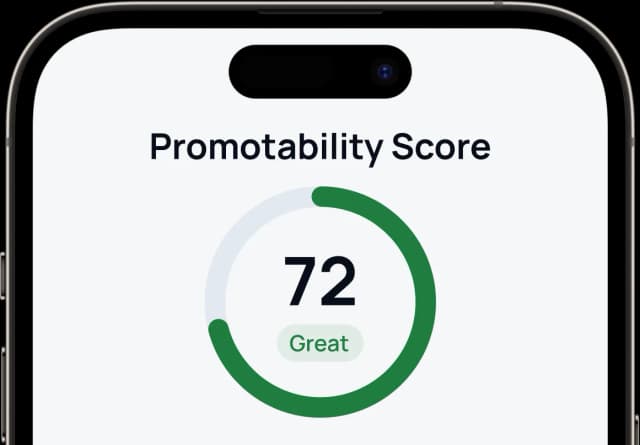
Building your promotion case?
Get AI coaching on what to document and how to present it.

Share this article
You've been an L4 PM at Amazon for a year. You're shipping features, writing PRFAQs, and attending sprint reviews. Your manager says you're doing well. But "doing well" and "getting promoted" are two different things at Amazon.
The L4-to-L5 jump is the fastest progression point in Amazon's PM career ladder. Most PMs who reach L5 do so within 9 months to 2 years. But speed doesn't mean it's automatic. You need to demonstrate that you've moved from executing someone else's product vision to owning product decisions independently, and you need to prove it through Amazon's documentation-heavy promotion process.
How the L4 to L5 PM promotion works at Amazon
Amazon's promotion process is manager-driven. Your manager identifies you as ready, writes a promotion document structured around Leadership Principles, gathers stakeholder endorsements, and presents it to a promotion panel. You don't self-nominate.
The promo doc for L4 to L5 is shorter than what SDE2s face for SDE3 (you're not writing 15 pages), but it still needs to demonstrate clear product ownership and LP-aligned impact. Your manager gathers feedback from people who've worked with you cross-functionally: engineers, designers, data scientists, and other PMs.
The panel reviews the case and either approves or rejects. Decisions are finalized during the Organization and Leadership Review (OLR), where senior leaders calibrate performance ratings using a forced distribution. You need a strong Forte rating to be promotion-eligible — Top Tier (TT) or High Value (HV3) puts you in the best position.
What L5 PM actually looks like at Amazon
The core shift from L4 to L5 isn't shipping more features. It's moving from guided execution to independent product ownership.
| Dimension | L4 PM | L5 PM |
|---|---|---|
| Scope | Single feature area under close guidance | Full product area owned end-to-end |
| Autonomy | Executes against product roadmaps set by others | Defines requirements, writes PRFAQs, and drives product direction |
| Decisions | Makes tactical product choices with manager input | Makes customer-obsessed decisions independently |
| Documents | Contributes to PRFAQs and requirements docs | Authors six-pagers and PRFAQs for leadership review |
| Impact | Ships features on time with guidance | Drives measurable business outcomes through product decisions |
| Influence | Coordinates with immediate engineering team | Partners cross-functionally with engineering, design, and data science |
An L4 PM builds what's on the roadmap. An L5 PM shapes what goes on the roadmap, backs it up with customer data, and owns the outcome when it ships.
The criteria that actually matter for L5
Three areas separate L4 PMs who get promoted from those who stay put.
Independent product thinking is the biggest filter. The panel wants to see that you identified customer problems on your own, proposed solutions backed by data, and drove those solutions to ship without your manager telling you what to build. If every product decision in your promo doc originated from someone else, the case falls apart.
Amazon's writing culture is where many L4 PMs underperform. PRFAQs and six-pagers aren't busywork at Amazon — they're how product thinking is evaluated. A crisp, well-reasoned PRFAQ demonstrates product judgment more than any Jira ticket. If your documents read like task lists rather than product arguments, the panel notices.
Leadership Principle alignment runs through everything. At L5, the LPs most commonly cited in strong PM promotion cases are Customer Obsession (decisions rooted in real customer needs, not assumptions), Ownership (treating your product area as if you built the company around it), and Bias for Action (shipping and iterating rather than waiting for perfect information).
Building your L5 PM case at Amazon
Step 1: Have the explicit promotion conversation
Ask your manager: "What does L5-level product ownership look like on this team? What specific evidence would you need to see in my promo doc?" Get concrete answers, not vague encouragement. You want to know exactly which projects and behaviors they'd point to when writing your doc.
Step 2: Find or create L5-scope product work
Look for product problems that require you to define the solution, not just execute it. Write a PRFAQ for a feature that came from your own customer research, not your manager's roadmap. If your current scope is purely execution-focused, propose an expansion. Frame it in terms of customer impact: "I've identified a customer problem that affects [metric]. Here's my proposed solution."
Step 3: Write crisp documents that demonstrate product judgment
Every PRFAQ and six-pager you write is a promotion artifact. Don't rush them. Structure your documents around the customer problem, the proposed solution, the metrics you'll use to measure success, and the trade-offs you considered. These documents serve as direct evidence in your promo doc.
Step 4: Build cross-functional credibility
Your manager needs endorsements from engineers, designers, and data scientists who've seen your L5-level work. These relationships take months to build. Start partnering closely with your engineering leads on product decisions, not just sprint coordination. Get designers involved in problem definition, not just mockup reviews.
Step 5: Document your wins in real time
Don't reconstruct your accomplishments at promo time. Keep a running log of product decisions you made independently, metrics you moved, customer problems you identified, and PRFAQs you authored. Your manager writes the promo doc, but they write it from your material. Thin input produces a thin doc.
Common mistakes that stall L4-to-L5 PM promotions
Staying in execution mode. You ship every feature on the roadmap, hit every deadline, and your manager is happy. But the panel doesn't promote execution — they promote product ownership. If you're building what others decided to build, you're demonstrating L4 competence, not L5 readiness.
Weak documents. At Amazon, your writing is your product thinking made visible. PRFAQs that read like requirements lists, six-pagers that lack clear customer insight, or documents that don't consider trade-offs signal that you're not yet thinking at L5 scope. Invest in document quality disproportionately to other tasks.
Not building LP stories. Your promo doc needs specific examples mapped to Leadership Principles. "I shipped feature X on time" isn't an LP story. "I identified that customers were abandoning the checkout flow at step 3, proposed a redesign backed by A/B test data, and reduced abandonment by 18%" is a Customer Obsession story with measurable impact.
Passive cross-functional relationships. Attending sprint standups and reviewing Jira boards doesn't build the credibility you need for endorsements. The engineers and designers who endorse you need to have seen you make product decisions, not just coordinate tasks.
Not tracking impact metrics. Every product decision you make should have a measurable outcome. If you can't point to specific metrics that moved because of your work, the promo doc will be full of activity without evidence of impact.
Timeline and realistic expectations
| Timeline | What it looks like | How common |
|---|---|---|
| 9-12 months | Strong product ownership from day one, clear L5-scope work, supportive manager | Fast but achievable |
| 1.5-2 years | Standard path with growing scope and building LP evidence | Most common |
| 2+ years | Scope constraints, team change needed, or documentation gaps | Less common for L4→L5 |
L4 to L5 is the fastest promotion at Amazon for PMs. The company expects competent PMs to advance from L4 — staying at this level for more than 2 years may signal a misalignment between your work and promotion criteria.
That said, the timeline depends heavily on your team. Some product areas offer natural L5-scope work (customer-facing features with measurable metrics). Others are execution-heavy with limited room for independent product thinking. If your team doesn't have L5-scope work after 12 months, that's a signal worth discussing with your manager.
Frequently asked questions
How long does the L4 to L5 PM promotion take at Amazon?
Most PMs who make L5 do so within 9 months to 2 years. The L4-to-L5 jump is the fastest progression point in Amazon's PM ladder. The biggest variables are access to L5-scope product work and manager support. If your team doesn't offer opportunities for independent product ownership, the timeline stretches regardless of your performance.
What Forte rating do I need for L5 PM at Amazon?
You need at least a High Value (HV) rating, with Top Tier (TT) or HV3 significantly improving your chances. The OLR calibration uses forced distribution, so your rating depends on how you stack up against L4 PM peers across the organization.
What Leadership Principles matter most for L4 to L5 PM?
Customer Obsession, Ownership, and Bias for Action are the most commonly cited in strong L5 PM promotion cases. The panel wants evidence that you make product decisions rooted in customer needs (not assumptions), treat your product area with full accountability, and ship decisions rather than waiting for perfect data.
CareerClimb helps you track your wins and map them to Amazon's Leadership Principles week by week, so when your manager writes your PM promo doc, they're working from evidence instead of memory. Download CareerClimb
Are You Ready to Make This Jump?
Get a personalized score and find out what's holding you back.
8 questions · about 2 minutes · free score
1 of 8