How to Get Promoted as a Data Scientist


 CareerClimb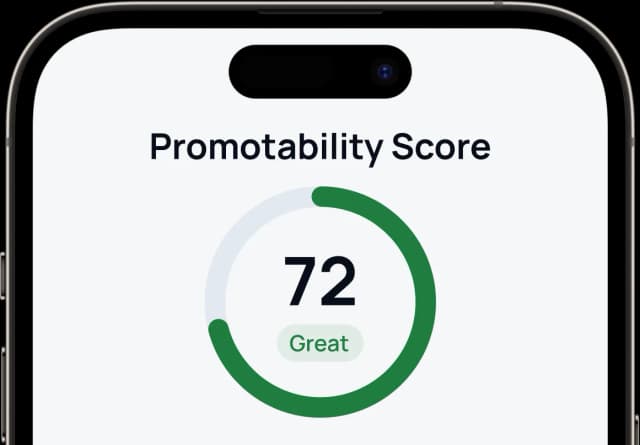
Building your DS promotion case?
Get AI coaching on framing your analyses and models into evidence your manager can take to committee.

Share this article
You built the model. You ran the analysis. You presented findings to stakeholders, wrote the executive summary, cleaned the data nobody wanted to touch, and delivered recommendations that the product team used to make their next decision.
And still, you weren't promoted.
If you're a data scientist wondering why strong technical work hasn't translated into a title change, the problem isn't your skills. It's how the role is structured. Data scientist promotions are some of the hardest to earn in tech because your output is indirect. Engineers ship code. Designers ship mocks. Data scientists ship... insights. Recommendations. Analyses that informed a decision someone else gets credit for.
That indirectness is the core problem. If you don't know how to document and communicate what your work actually changed, nobody else will reconstruct it for you. Your promotion case doesn't build itself. You build it.
Why Data Science Promotions Are Harder to Prove
Every role has a promotion problem, but data science has a specific one: your impact is almost always one step removed from the outcome.
An engineer who reduces page load time by 200ms can point to the commit and the latency graph. A data scientist who identified the user segment most likely to churn, then recommended the retention strategy that product adopted, has a much harder time proving causality. Did retention improve because of your analysis? Or because of the marketing campaign that ran in parallel? Or because the product team independently had the same idea?
This creates three challenges that stack:
- Attribution is fuzzy. When a business metric improves, multiple initiatives contributed. Your analysis was one input. Isolating your specific contribution requires documentation you probably didn't keep.
- Not all work ships. Some of your best work is exploratory. An analysis that says "don't invest in X" prevents a bad decision, but "mistakes the company didn't make" is an impossible metric to track. There's no dashboard for avoided losses.
- Technical depth doesn't equal business impact. A model with 99% accuracy that nobody uses in production has zero business value. Promotion committees don't care about notebook elegance. They care about deployed outcomes.
Most data scientists don't stall because of technical skill. They stall because they can't connect their work to business results in a way that survives a calibration conversation.
What Actually Changes Between Data Science Levels
Before you build a case, you need to understand what the next level requires. Most data scientists assume promotion means "do harder analysis." It doesn't.
DS to Senior DS
The jump from DS to Senior DS is about independence and business context.
At the DS level, you execute analyses that someone else scoped. Your manager defines the question, you answer it. At Senior DS, you identify the questions worth asking in the first place. You own medium-sized projects end-to-end, from problem identification through stakeholder presentation and impact measurement.
What changes:
- Problem identification over problem execution. You find the business problem, not just solve the one you were given. Noticing that churn spiked in a specific user segment and flagging it before anyone asked you to investigate is a Senior signal.
- Stakeholder management. You work directly with product, engineering, and business teams. Presenting results to your manager, who then presents to stakeholders, is not the Senior bar. Presenting to stakeholders yourself is.
- Technical mentoring. Senior data scientists help juniors improve their methodology, review their code, and develop their analytical thinking.
Typical timeline at major tech companies: 18 to 24 months from DS to Senior DS.
Senior DS to Lead or Staff DS
This is the jump where most careers stall. At Google, the L5-to-L6 transition is where data scientists get stuck for years. At Meta, IC5-to-IC6 is the same bottleneck.
The core shift: you stop being measured primarily on your own output and start being measured on the output of everyone around you.
What changes:
- Multiplying impact through others. You create reusable tools, frameworks, and pipelines that other data scientists use. Your hours invested produce more hours of high-quality work from others.
- Cross-team influence. You shape the data science roadmap for an entire product area, not just your team's slice. Senior leadership adopts your frameworks across the org.
- Ownership of systems, not projects. You're accountable for the end-to-end health of ML and analytical solutions across multiple initiatives.
The common blocker at this level is being excellent at individual work but never transitioning to work that scales beyond you. If you're the best data scientist on your team but nobody else got better because of you, the Lead case is weak.
Five Strategies That Actually Get Data Scientists Promoted
1. Translate Every Analysis Into Business Language
This is the most impactful change most data scientists can make, and it costs nothing.
Technical metrics mean nothing to a promotion committee. Model accuracy, AUC scores, p-values, and feature importance rankings are useful inside your team. Outside your team, they're noise.
Every project you complete should have a one-sentence business translation:
- Not: "Improved the churn model AUC by 12%"
- Yes: "The updated churn model identified 340 at-risk enterprise accounts in Q3, and the retention team saved 68 of them, representing $4.1M in annual contract value"
Your manager cannot repeat your AUC improvement in a calibration room. They can repeat the $4.1M number. Give them the sentence they need.
2. Document Impact Like Your Promotion Depends on It (Because It Does)
Data science has an attribution problem that other roles don't share to the same degree. Your insight informed someone else's action, and they got the visible outcome. If you don't document the chain from your analysis to the business result, you lose it.
Keep a running document that tracks:
- What you did. The analysis, the model, the recommendation.
- Who acted on it. Which team or stakeholder used your output.
- What happened. The downstream business result, even if it took months to materialize.
- Your specific role. Be precise about what you contributed versus what others contributed.
Check this document every two weeks. Add to it while the context is fresh. By the time review season arrives, you'll have a case that's specific, evidence-based, and hard to dismiss.
3. Stop Waiting for Someone to Assign You Bigger Problems
Promoted data scientists find the problem themselves. They don't wait for a product manager to write a ticket or for their manager to scope the next analysis.
This looks like:
- Noticing a trend in the data that nobody asked about, investigating it, and bringing the finding to stakeholders before it becomes a fire.
- Proposing a new analysis based on a gap you identified in how the team measures success.
- Volunteering to be the DS lead on a cross-functional initiative where data science doesn't have a seat yet.
A data scientist who earned her first promotion in 18 months put it this way: get good enough at your current work that you create bandwidth, then use that bandwidth to take on work at the next level. Your manager needs to see that you're already operating above your title.
4. Build Things That Outlive Your Involvement
At the Senior-to-Lead level, the promotion signal is whether your work scales.
- Build a reusable pipeline that your team uses daily, not a one-off notebook.
- Write documentation that teaches your approach so other data scientists can replicate it without asking you.
- Create internal tools that save the team hours every week.
- Mentor junior data scientists with enough structure that they grow.
If you leave for vacation and your team's productivity drops, you haven't scaled your knowledge. Promoted leads make the team better whether they're in the room or not.
5. Learn Your Company's Promotion Mechanics Before You Need Them
Every company promotes differently. Some use committee-based reviews. Some rely on manager advocacy. Some require self-nomination with a promotion packet. Some combine all three.
If you don't know how your company's process works, you're building a case blind. Ask:
- What are the specific criteria for the next level?
- Who makes the decision: your manager, a committee, or both?
- What evidence carries the most weight?
- When is the promotion cycle, and what's the preparation timeline?
- What did recently promoted peers on your team do differently?
Mandy Liu, a data scientist who earned her first promotion in 18 months, credited learning the promotion mechanics early as one of the most important things she did. She sought feedback from recently promoted peers and structured her year around closing the gaps they identified.
Five Mistakes That Stall Data Science Careers
Building models nobody uses. Technical sophistication means nothing if the model never makes it to production. A simple logistic regression that ships and saves $2M beats a transformer architecture that lives in a notebook. Optimize for deployed impact, not research novelty.
Letting the analysis speak for itself. It won't. If you finish an analysis and email the results to your manager without presenting them to the broader stakeholders who will act on them, you've done half the job. Visibility is not optional for promotion. It's required.
Treating the role as purely technical. The promotion gap for most data scientists is strategic thinking and stakeholder influence, not modeling skill. If you spend 95% of your time in Jupyter and 5% talking to people, you need to change that ratio. The Senior and Lead levels demand more business context, more cross-functional work, and more communication.
Confusing "interesting" with "impactful." The coolest analysis you ever did might not be the one that gets you promoted. The boring churn segmentation that saved $4M in renewals will. Choose projects based on business impact, not intellectual novelty.
Never having the promotion conversation. If you haven't told your manager "I want to be promoted to Senior DS, and I need to understand what the criteria are," you're relying on them to guess. Have the conversation. Identify gaps together. Track your progress against those gaps quarterly. This is not aggressive. It's prepared.
How to Build Your DS Promotion Case
Once you understand the next level's requirements, the work becomes documentation and gap-closing.
Frame every project as a business result
Go through your last six months of work. For every project, write one sentence connecting it to a business outcome. If you can't draw the connection, either the project didn't have business impact (which is a signal about your project selection) or you didn't track the downstream result (which is a signal about your documentation).
Collect evidence from the people who used your work
Stakeholder feedback is powerful in calibration rooms. Ask the product manager who acted on your recommendation to confirm the result. Ask the engineering team that deployed your model to share production metrics. Third-party validation turns your self-reported wins into verified evidence. Writing a strong promotion case covers how to structure this evidence so it holds up under scrutiny.
Track your scope growth over time
Your promotion case should show a clear trajectory: from executing assigned analyses to independently owning projects to influencing decisions beyond your team. Map your projects over the past year and label each one by scope level. If the scope isn't growing, that's the gap to address.
Set a promotion timeline with your manager
Say it directly: "I want to work toward Senior DS. What are the gaps between where I am now and what's required?" Then revisit that conversation quarterly. Your manager is not your opponent. They need you to tell them what you're aiming for so they can advocate effectively.
The Honest Reality
Data science promotions take time. Most data scientists spend 18 to 24 months before moving from DS to Senior DS, and the jump to Lead or Staff can take three to five years or more. The IC5-to-IC6 transition at FAANG companies is where the majority of data science careers plateau, and there's no shortcut through it.
But the data scientists who advance share a common pattern: they treat promotion as something they build, not something that happens to them. They document impact in business terms. They find bigger problems before being asked. They make the people around them better. And they have the conversation with their manager about what the next level looks like.
Your analyses are your evidence. Start treating them that way.
The hardest part of building a data science promotion case is capturing the impact before it fades. CareerClimb helps you log wins and evidence as they happen, then structures them into a case your manager can champion in calibration. Download CareerClimb free and start building your case today.