How to Get Promoted as a Designer


 CareerClimb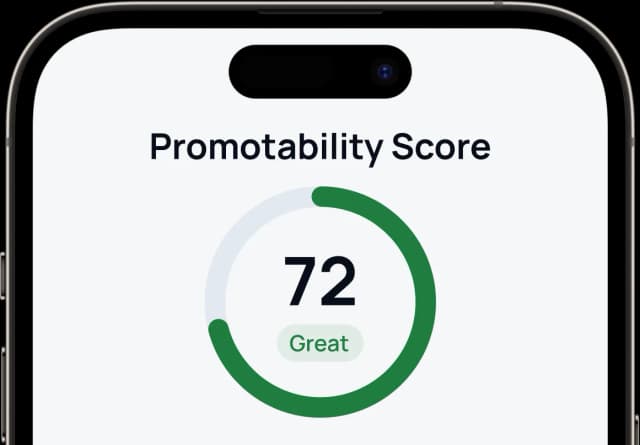
Stuck at the same design level?
Get AI coaching on framing your design impact into a case your manager can champion.

Share this article
You redesigned the onboarding flow. Ran usability studies. Built a design system from scratch. Improved conversion by 30%.
And still, you weren't promoted.
If you're a product designer or UX designer wondering why strong craft hasn't translated into a title change, the problem is specific to your role. Design promotions are some of the hardest to earn in tech because your output is subjective. Engineers have commit histories. PMs have roadmaps. Designers have Figma files that went through twelve rounds of feedback and a final version that looks nothing like what you proposed.
That ambiguity is the problem. Your best design decisions are invisible in a calibration room unless you've documented them. Your promotion case doesn't build itself. You build it.
Why Designer Promotions Are Harder to Prove
Every role has a promotion problem, but design has a particular one: your contribution disappears into the product.
When a feature ships and succeeds, engineering built it. Product managed it. Design "made it look nice." The fact that you reframed the problem, ran the research that changed the product direction, or identified the usability issue that was tanking retention? That part isn't in anyone's deploy log.
This creates three problems:
- Attribution is collaborative by default. Design decisions happen in reviews, in cross-functional critiques, in hallway conversations. Your specific contribution to the final product is hard to isolate because the process is designed to be collaborative.
- Craft alone doesn't register at promotion time. A polished, pixel-perfect interface is expected, not rewarded. If your promotion case reads like a portfolio review, it's missing the strategic layer that calibration committees care about.
- Your best decisions look like "nothing happened." The feature you killed before it wasted two engineering sprints. The scope you cut that kept the launch on time. The edge case you caught in research that prevented a support nightmare. These don't show up in launch announcements.
One designer on Team Blind described it this way: "The hardest part is that design decisions are collaborative. My manager can't point to one decision and say 'that was her.'"
That's why documentation matters more for designers than almost any other role. The same calibration dynamics that challenge PMs and TPMs hit designers even harder when craft is the only thing in the case.
What Actually Changes Between Design Levels
Before you build a promotion case, you need to understand what the next level requires. Most designers assume promotion means "do better design work." It doesn't.
Mid-Level to Senior Designer
The jump from mid-level to senior is about problem definition, not problem execution.
At the mid-level, you receive a brief from a PM, explore solutions, and deliver a polished design. At the senior level, you define the brief. You identify the user problem, frame the design opportunity, and shape the product direction before anyone opens Figma.
What changes:
- Scope expands from features to product areas. You own end-to-end user journeys, not individual screens. Your manager trusts you to handle an ambiguous problem space without detailed direction.
- Craft becomes a baseline, not a differentiator. Beautiful designs are expected at every level. The bar for senior is strategic thinking: why this solution, what trade-offs you considered, and how this fits the product vision.
- Mentoring becomes part of the job. Senior designers raise the quality bar for the whole team. If you're not giving directional feedback, running design critiques, or helping junior designers grow, you're missing a signal the rubric cares about.
Senior to Staff or Principal Designer
This is where the job changes completely. You stop designing features and start shaping systems.
What changes:
- You think in systems. Design systems, cross-product patterns, platform-level UX. Your work affects every product surface, not one feature.
- Your audience shifts. You partner with VPs and directors, not just PMs and engineers. You need to communicate design strategy in terms executives care about: business impact, competitive differentiation, and user retention.
- Your output is the team's output. You make the designers around you better. Promotion committees measure your influence on the design organization, not the mocks you shipped.
Understanding this shift tells you what evidence to collect. If you're aiming for senior but only showing feature-level execution, you're building the wrong case.
The Four Things That Get Designers Promoted
The designers who move up keep doing these four things. The ones who plateau don't.
1. Connecting Design to Business Outcomes
This is the gap that separates mid-level designers from senior ones. A UX Playbook analysis put it bluntly: "A UX designer who understands business metrics is the one who gets promoted."
Most designers describe their work in craft terms: "I redesigned the settings page." Promoted designers describe it in business terms: "I simplified the settings flow because support ticket data showed 23% of users couldn't find notification preferences, which was driving churn in the first week."
The difference is one sentence. But that sentence connects your design decision to a metric someone in leadership tracks. Practice it.
2. Influencing Product Direction
Every designer talks about "having a seat at the table," but promotion committees want evidence that you used it. That means:
- Changing the product roadmap based on research you conducted or a usability problem you identified before anyone else saw it.
- Pushing back on a PM's brief with evidence. Not "I don't think this is the right approach" but "User research from Q2 showed this pattern fails for 40% of our users. Here's what I'd propose instead."
- Shaping how engineering thinks about the user. When an engineer asks you "what should this state look like?" and you can explain the user's mental model behind your design, you're influencing how the team thinks, not just what they build.
One promoted designer described the shift this way: "I stopped thinking of myself as 'the designer' and started acting as a product partner."
3. Handling Feedback Like a Professional
The way you receive feedback is a stronger promotion signal than most designers realize.
There's a hierarchy to feedback responses, and calibration committees notice where you fall:
- Defensive ("I already tried that, it doesn't work"): career-limiting.
- Receptive ("Thanks for the feedback, I'll think about it"): neutral.
- Integrative ("I revised the approach based on your input and here's the updated version"): positive.
- Transformative ("Your feedback about the hierarchy made me rethink the whole flow. I've revised it and found two other places in the product where the same problem exists"): this is what promotion-ready looks like.
If you walk out of a design critique thinking about how to defend your work, you're operating at a level below where you want to be.
4. Making the People Around You Better
At every level above mid, the expectation is that you multiply the design quality of the team. For designers targeting senior, this shows up as:
- Running useful design critiques. Not the kind where everyone says "looks great." The kind where you teach the team how to give specific, directional feedback that improves the work.
- Mentoring junior designers. Helping them think through problems, not handing them solutions. Teaching them how to present design rationale to stakeholders.
- Improving team processes. Did you build a research template that saved 10 hours per study? Did you restructure how your team handles design QA? These contributions matter at promotion time.
- Hiring. Participating in design portfolio reviews and interviews. If you're senior enough to evaluate candidates, it signals you're operating at the next level.
Five Mistakes That Keep Designers Stuck
The tool mastery trap
Knowing every Figma shortcut doesn't get you promoted. It makes you faster at producing deliverables, but speed isn't what the next level measures. The skills that matter for promotion are presenting design rationale, persuading stakeholders, mentoring others, and connecting design to business outcomes. These are soft skills, not toolbar skills.
Designing in isolation
Excellent design delivered by a designer who's difficult to work with won't lead to advancement. Intercom's design leadership team has said this directly. If your engineering partners, PMs, and researchers can't articulate what you bring to the collaboration, your manager's advocacy loses weight in calibration. Build relationships where colleagues can speak to your judgment and influence, not just your visual output. What managers look for when promoting employees confirms that peer evidence of cross-functional impact outweighs individual output in almost every calibration room.
Treating design as a service org
If you wait for PMs to hand you problems to solve, you've capped your own growth. Many design teams function as support: PM defines the problem, design makes it usable, engineering builds it. Promoted designers break out of this by identifying problems before anyone asks them to. They bring user insights to roadmap discussions. They propose solutions, not just polish requests.
Never having the promotion conversation
You assume your manager knows you want a promotion. They might. But if you've never said, "I want to move to senior designer by Q4, and I need to understand the criteria," you're leaving it to chance. Ask for the rubric. Identify the gaps with your manager. Build a plan to close them. This is preparation, not entitlement.
Waiting for the perfect portfolio piece
Not every design outcome has a clean before-and-after. If you only document wins with dramatic visual improvements, you'll miss the decisions that mattered most: the feature you descoped that saved the launch timeline, the research finding that pivoted the product strategy, the accessibility audit that prevented a compliance issue. Document these with the reasoning and context, even when the screenshots aren't impressive.
How to Build Your Designer Promotion Case
Once you know what the next level requires, you bridge the gap between doing the work and getting credit for it through documentation.
Document decisions, not deliverables
Every time you make a significant design decision, write it down: the user problem, the options you explored, the data that informed your choice, the trade-off you accepted, and what happened after launch. This creates a trail of judgment. A Figma file shows what you designed. A decision log shows why.
Track what you influenced, not just what you designed
Keep a running log of moments where you changed the product direction: a PM pivot triggered by your research, an engineering approach shift because of your prototype, a feature cut that saved the team weeks. These influence moments are the hardest to recall at review time and the strongest evidence in a promotion case.
Collect feedback that proves scope growth
Ask peers and stakeholders for feedback that addresses how your role has expanded. The best peer feedback for a designer promotion case sounds like: "They stepped in on the checkout redesign and led the research and strategy at a level I'd expect from a senior designer." Generic praise ("great eye for design") does nothing in calibration.
Connect every win to a business result
For every win you document, add one sentence connecting it to a user or business outcome. "I redesigned the onboarding flow" becomes "I redesigned the onboarding flow after usability testing showed 35% of new users dropped off at step three. Post-launch, completion rate increased from 58% to 81%." If you don't have hard numbers, frame qualitative impact: support tickets reduced, user confusion eliminated, development time saved.
Set a timeline with your manager
Have the conversation. Say: "I want to work toward senior designer. What gaps do I need to close?" Then check in quarterly. Track your progress against those gaps where your manager can see it. This is not pushing. It's being prepared.
When Promotion Isn't Coming at Your Current Company
Sometimes the problem isn't your performance. Some design organizations operate as service teams where the promotion ceiling is low. Some companies don't have a staff or principal IC track for designers.
Red flags worth paying attention to:
- Budget freezes on design promotions while engineering and PM promotions continue.
- Flat hierarchy with only two or three design levels.
- Operating at the next level for six months or more without any movement or acknowledgment.
- Promotion criteria that shift every time you meet them.
If any of these describe your situation, the fastest path to the next level might be an external move. Recognizing a structural ceiling is different from giving up.
The Honest Reality
Designer promotions take time. Most designers spend two to three years between levels, and the jump from senior to staff can take longer because fewer companies have a clear IC design track at that altitude.
But the designers who advance treat the promotion like they'd treat any other design problem. Research the criteria. Identify the gaps. Prototype a case. Test it with your manager. Iterate based on what you learn.
Your design decisions are your product. Start documenting them.
Building your designer promotion case is harder when your best decisions disappear into the product. CareerClimb helps you capture design wins, research insights, and influence moments as they happen, then turns them into a structured case your manager can champion in the room where promotions are decided. Download CareerClimb free and start building your case today.