What Is an AI Career Coach?

 CareerClimb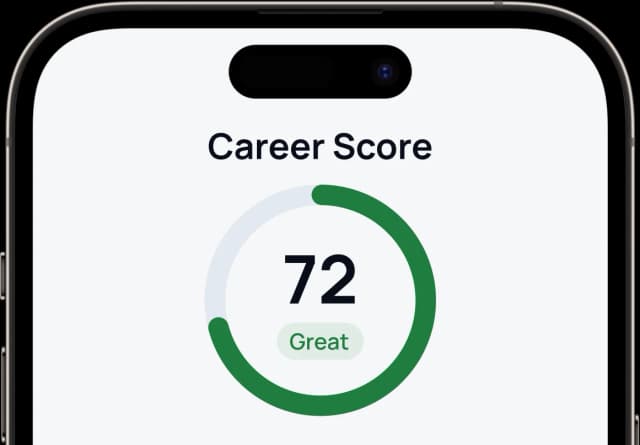
Curious about AI coaching?
Try a career coach built specifically for engineers.

Share this article
The phrase "AI career coach" is everywhere right now. LinkedIn ads. App store listings. Blog posts telling you to paste your resume into ChatGPT and ask it for advice. The term gets used to describe everything from a chatbot that rewrites your resume to a full coaching platform that tracks your progress over months.
That range is the problem. When everything is an "AI career coach," the label stops meaning anything. And if you're a software engineer trying to figure out whether one of these tools can actually help you get promoted, the vagueness costs you real time. You try the wrong tool, get generic advice you could have found on Google, and end up exactly where you started.
Here's what an AI career coach actually is, what it can and can't do, and how to tell whether one is worth your time.
What an AI career coach actually is
An AI career coach is software that uses artificial intelligence to give you personalized career guidance. It adapts to your specific situation: your role, your level, your goals, your company, your history.
That's the idea, anyway. In practice, the term covers a wide range of tools that work very differently:
- Generic AI assistants like ChatGPT, Claude, and Gemini. You can ask them career questions and get solid answers. But they don't know your situation unless you tell them every time, and they forget everything when you close the tab.
- Resume and job search tools like Kickresume, Wonsulting, or FinalRound use AI to help you write resumes, prep for interviews, or optimize job applications. Useful if you're job searching. Not built for people who want to grow where they already are.
- Enterprise coaching platforms like BetterUp and CoachHub pair AI with human coaches. They're sold to companies, not individuals. Your employer pays, and the focus is usually leadership development or general well-being, not individual contributor promotion.
- Purpose-built AI career coaching apps are designed for a specific audience and a specific problem. They carry context across sessions, track your progress, and give you guidance based on what you've actually done, not what you told them five minutes ago.
These categories matter more than the label they share. An AI career coach that forgets your situation every session isn't coaching you. It's answering questions.
What a real AI career coach can do
The advice itself isn't new. "Document your wins" and "talk to your manager about your goals" have been true for decades. What's changed is the delivery mechanism.
A purpose-built AI career coach remembers your role, your level, your company, your manager's communication style, and what you told it last week. You don't re-explain your situation every time. The conversation builds on itself, the way it would with a human coach you've been working with for months.
It also captures evidence as it happens. The biggest failure mode in career development isn't bad strategy. It's forgetting what you did. Research on memory decay shows people forget roughly 70% of new information within a few months. An AI career coach that captures your wins during conversation and transforms casual language into professional impact statements solves the documentation problem at the source.
Then there's specificity. "Build more visibility" is advice. "Your manager doesn't know you want the senior title, and that gap is capping your promotion case right now" is coaching. The difference is context. An AI career coach with enough data about your situation can identify the specific bottleneck instead of reciting the general framework.
The accountability piece matters too. You told your coach you'd have the career conversation with your manager this week. A real AI career coach asks you about it next week. That loop, someone remembering what you committed to and checking in, is what separates advice from behavior change.
And instead of the vague feeling that you're "probably close" to promotion-ready, a structured AI career coach shows you where your evidence is strong and where the gaps are. Not a prediction of whether you'll get promoted (nobody can promise that), but a clear picture of the inputs you control.
What an AI career coach can't do
Honesty about limitations matters here, because overpromising is how most career tools lose trust.
No AI career coach can guarantee you'll get promoted. Promotions depend on budget, timing, organizational politics, and decisions made by people in rooms you're not in. No tool, human or AI, controls those variables. What a good AI career coach does is make sure that when those decisions happen, you have the strongest possible case.
It also can't replace your judgment. AI career coaching works best as a thinking partner, not a decision-maker. It can surface patterns you've missed, reframe your situation, and suggest actions. But you know your company, your team, and your manager better than any tool does. The coach informs your decisions. It doesn't make them for you.
There's also a ceiling on what AI can handle. A Conference Board study found that AI can handle up to 90% of day-to-day coaching functions, but human expertise is still critical for emotionally charged, political, or values-based discussions. If you're navigating a hostile manager, a potential legal issue, or a decision that could reshape your career, a human coach or mentor adds judgment that AI doesn't have.
And the obvious one: it can't do the work for you. The best AI career coach in the world is useless if you don't open it. Coaching, whether human or AI, only works when you engage with it consistently. The tool builds your case. You still have to show up.
AI career coach vs. human career coach
This isn't an either/or decision. They solve different parts of the same problem. A full comparison of AI vs. human career coaching breaks down cost, availability, memory, and which situations call for each — but the short version is below.
A human coach is better at the high-stakes, emotionally loaded moments. Navigating a hostile skip-level. Deciding whether to take the severance or fight the Performance Improvement Plan (PIP). Handling a reorg that puts your promotion at risk. These require judgment, empathy, and pattern recognition that AI doesn't match. A great human coach also picks up on tone, hesitation, and what you're not saying. AI is getting better at this, but it's not there yet.
An AI career coach wins on access and consistency. Your human coach has a calendar. An AI career coach is there at 11pm on a Tuesday when you're spiraling after a bad 1:1. Human career coaching runs $200–500 per hour, and most individual contributors can't afford that. Their employer isn't paying for BetterUp either.
The memory advantage is real too. Human coaches take notes. AI career coaches remember everything: every win, every action item, every detail about your manager and your rubric gaps. A human coach meets with you biweekly. An AI career coach captures wins every time you mention one. By review season, you have a complete record instead of a frantic reconstruction.
For many engineers, the best setup is both: an AI career coach for the daily system (logging wins, weekly check-ins, progress tracking) and a human coach or mentor for the moments that need real human judgment.
AI career coach vs. ChatGPT
This is the comparison most engineers actually need, because ChatGPT is free and right there. Why pay for something else?
ChatGPT is an excellent question-answering tool. It is not a coaching system. The difference is structural.
ChatGPT starts fresh every conversation. A purpose-built AI career coach carries your full context: your role, your company, your goals, your manager, your wins, your action items, and how long until your next review cycle. You don't paste a wall of context every session.
When you mention a win to ChatGPT, it responds helpfully and then forgets. An AI career coaching app captures that win, transforms it into a professional impact statement, and files it in your promotion case. The evidence compounds over time.
ChatGPT also doesn't know what you said you'd do last week. A real AI career coach follows up. That weekly loop is what turns good intentions into actual behavior change. And where ChatGPT gives you advice when you ask for it, an AI career coach runs a system: weekly check-ins, win logging, progress tracking, gap identification. The system works between sessions, not just during them.
If you want a deeper look at where ChatGPT specifically falls short as a career tool, we wrote a full breakdown: Why Using ChatGPT as Your Career Coach Is a Mistake.
Who an AI career coach is for
Not everyone needs one. Here's who gets the most from it:
If you're an Individual Contributor (IC) trying to move from L3 to L4, SWE II to Senior, or Senior to Staff, an AI career coach built for software engineers gives you the system that generic advice can't. It knows what promotion-ready looks like at your level and helps you build a documented case against your specific rubric.
If you know the technical side but not the strategic side, same thing. You can ship features, debug complex systems, and design architectures. But when it comes to making your work visible, navigating calibration, or having the career conversation with your manager, you're flying blind. Good work alone isn't enough to get promoted, and that strategic gap is what keeps most engineers stuck.
If you can't afford a human coach, the math is simple. Human career coaching runs $200–500/hour, and most companies only offer it to executives. An AI career coaching app makes the coaching layer accessible at a fraction of the cost.
And if tracking your wins feels like bragging, if you'd rather just do the work and hope someone notices, an AI career coach handles the documentation for you. You talk about your week. It captures the evidence. Review season arrives and you have a record instead of a blank page.
What to look for in an AI career coach app
If you're evaluating AI career coaching tools, a few questions cut through the marketing quickly.
Does it carry context across sessions? If you re-explain your situation every time, it's a chatbot, not a coach.
Does it capture your evidence? Telling you to "log your wins" is the easy part. A tool that actually logs them during conversation is doing the hard part.
Is it built for your domain? A career coaching tool built for software engineers knows what calibration means, what L5 scope looks like, and why your promotion rubric matters more than generic career advice. Generic tools don't.
Does it follow up? If the tool remembers what you committed to and checks in next week, that's coaching. If the conversation ends and disappears, it's a chatbot with better branding.
Can you see where your case stands? A score or progress view based on your actual evidence, not a vibes-based "you're doing great," tells you where to focus.
And is it honest about what it can't do? Any AI career coach that promises you'll get promoted is lying. Promotions depend on factors outside your control. The honest promise is: your case will be as strong as possible when the decision is made.
What this looks like in practice
Career Climb is an AI career coaching app built specifically for software engineers targeting promotion. It's a concrete example of what a purpose-built AI career coach looks like versus a generic tool.
Summit, the AI coach inside Career Climb, carries your full context across every conversation: your level, your company, your manager's communication style, your logged wins, your open action items, and your timeline to the next review cycle. When you mention something you shipped, Summit captures the win immediately: "I finally got that API migration working" becomes a structured impact statement filed in your promotion case.
Weekly check-ins follow up on what you committed to. A Promotability Score tracks four inputs you control (Documentation, Visibility, Manager Alignment, and Clarity) so you can see exactly where the gaps are. The score doesn't predict promotion outcomes. It tells you where your case is strong and where it's thin, in terms you can act on this week.
The model is simple: every win you log builds a stronger case. The evidence compounds. Review season is just the deadline.
If you've been piecing together career advice from ChatGPT prompts, Reddit threads, and half-remembered feedback from your last 1:1, an AI career coach gives you the system those fragments can't. Career Climb builds your promotion case every week, not just the three weeks before review season. Download Career Climb