What Is a Promotion Rubric (And Why Most Engineers Have Never Actually Read Theirs)


 CareerClimb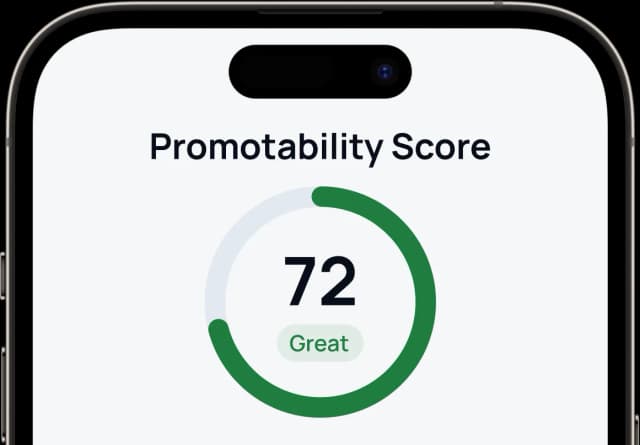
Never read your rubric?
Understand what you're actually being measured against.

Share this article
Most engineers are working toward a promotion using a combination of vibes, secondhand intel from colleagues, and vague reassurances from their manager. Meanwhile, somewhere in their company's internal wiki, there is a document that spells out, explicitly and in writing, what the next level requires.
That document is a promotion rubric. And most engineers have never opened it.
The rubric is the only authoritative source for what your company actually expects at the next level. Everything else, your manager's hints, your colleagues' theories about what got them promoted, your sense that you're "almost there," is noise layered on top of a document you haven't read.
What a promotion rubric actually is
A promotion rubric is a written document, usually maintained by Human Resources (HR) or engineering leadership, that defines the expectations for each level of a job ladder. Most tech companies have them. They describe what a Senior Engineer does that a Software Engineer II doesn't. What a Staff Engineer contributes that a Senior doesn't.
The terminology varies by company. Some call it a promotion rubric. Others call it a career ladder, a levels framework, a performance standards document, or simply "the criteria." The names differ. The function is the same: a rubric is the definition of what promotion-ready looks like.
At most tech companies, rubrics are structured around several dimensions. The specifics vary, but the categories tend to cluster around the same themes:
Technical Excellence: the depth and quality of your engineering contributions. System design capability, code quality, ability to work on ambiguous, high-complexity problems.
Delivery and Execution: your track record of actually shipping things. Reliability, ownership, ability to drive projects from concept to completion without constant oversight.
Leadership and Influence: your footprint beyond your immediate team. Mentorship, cross-functional collaboration, driving technical decisions that affect others.
Communication: how well you operate in the layer above the code. Design documents, technical reviews, stakeholder updates, the ability to explain complex work clearly.
Scope and Impact: whether the work you're doing is proportional to the level you're targeting. A senior engineer's wins should look different from a mid-level engineer's wins, not just technically, but in their organizational reach.
Most rubrics break these categories into explicit behaviors or traits, then describe what meets the bar, approaches the bar, and exceeds the bar looks like for each one.
Why most engineers have never read theirs
The reasons are usually mundane. Some engineers don't know the document exists. At smaller companies or early-stage startups, there may not be a formal rubric at all. At large companies, the rubric exists but lives in a corner of an internal wiki nobody points you to when you join.
Some engineers know the rubric exists but assume they already understand what it says. They've absorbed the level expectations through conversations with their manager, by watching colleagues get promoted, or by pattern-matching on who seems to move up fastest. They feel like they have a working mental model. They don't check whether that mental model matches the document.
Some engineers avoid the rubric because reading it explicitly confirms that they're not there yet. Vague aspiration is more comfortable than a checklist of gaps.
And some engineers have tried to read it and found the language too abstract to be useful. "Demonstrates leadership" and "drives impact beyond their immediate team" are phrases that live in every promotion rubric at every tech company. Without a way to connect those phrases to specific things you've actually done, the rubric reads like a motivational poster: technically true, operationally useless.
All of these patterns lead to the same place: engineers stuck at the same level for longer than they expected, making implicit assumptions about what's required, and doing work that may or may not map to what the company actually cares about at the next level.
What changes when you read it
Reading the rubric does something specific. It converts your promotion goal from a vague aspiration to a defined checklist.
Before reading the rubric, a promotion goal looks like: "I want to be a Senior Engineer."
After reading it, the goal is: "My company defines Senior Engineering as demonstrated impact across three or more areas. I have clear evidence in Delivery and Technical Excellence. My rubric requires mentoring junior engineers, and I haven't logged anything in that category. I need to fix that before my next review."
The second version is actionable. The first is just hope.
The effects follow from there. When you know what the rubric requires, you stop optimizing for whatever feels impactful and start working on things that directly address criteria you know you're weak on. Your 1:1 conversations with your manager change: instead of "am I doing well," you're asking "my rubric says I need to demonstrate influence beyond my team. Can you help me find the right project for that?" You're logging wins categorized by rubric criterion and tracking coverage, not assembling a list at the end of the cycle. And you can see your own gaps before calibration happens, not after.
The engineers who figure this out describe a similar realization: the promotion system suddenly felt less arbitrary. Good work alone doesn't get you promoted, but good work that visibly addresses the criteria in your rubric is a very different thing.
The part that's still hard
Reading the rubric doesn't solve everything. Two problems remain even after you've opened the document.
The rubric is often written in vague language on purpose. "Demonstrates leadership" doesn't tell you whether your experience leading the architecture review for your team's last project counts. "Influences technical direction beyond their immediate team" doesn't tell you whether your design document that got adopted by two other teams is sufficient evidence. Rubrics intentionally leave room for judgment. The interpretation is still yours to figure out. Unclear rubric language is one of the three main caps on your promotion chances:
- Vague criteria you can't map your work to
- A manager conversation you haven't had about your gaps
- A missing evidence category in your promotion case
Mapping your actual work to rubric criteria is harder than it sounds. Most engineers have done things in the last six months that touch multiple rubric categories. But their wins live in their head, in commit history, in Slack threads, not organized by rubric criterion. When review season arrives, the reconstruction task is enormous, and most of what happened six months ago has faded.
This is where the gap between "reading your rubric" and "using your rubric" opens up. Reading it once is table stakes. The real leverage is in continuously mapping your work against its criteria.
What a rubric analyzer does
There's an emerging category of Artificial Intelligence (AI) tooling, often called a rubric analyzer, designed to close this gap.
You paste in your company's promotion rubric (text, PDF, or a photo of the printed doc) and the tool parses it into structured criteria. It maps your documented wins against each criterion, identifies where your evidence is strong and where it's thin, and generates specific action items for the gaps.
A rubric analyzer might tell you:
"Your rubric for Staff Engineer requires 'Mentors junior engineers regularly.' You haven't logged any wins in that category. Want to talk about what mentoring you've done recently?"
Or:
"You've addressed 7 of 12 criteria in your rubric. Your strongest coverage is in Delivery and Technical Excellence. You have minimal evidence in Leadership and Communication."
When a coaching tool knows your rubric, the feedback changes. Every action item is grounded in the actual criteria your promotion committee uses, not a generic framework someone assembled for engineers broadly. Your coach can tell you that you have four wins in Delivery and zero in Leadership and Communication, not because it guessed, but because it's reading your company's definition.
Most managers don't have time to do rubric-to-wins mapping for every direct report. Generic career advice doesn't know your rubric. ChatGPT doesn't know what L5 looks like at your company, and it forgets everything you told it the moment you close the tab. A coaching tool that holds your rubric, remembers your wins, and connects the two is a different thing.
CareerClimb's rubric analyzer does exactly this. Upload your rubric, and it extracts every criterion, asks what you've already done, and identifies the gaps you still need to close. Combined with logging wins as they happen and categorizing them by impact type, it turns "my rubric requires mentoring" from an abstract line item into a specific answer: yes, no, or here's what to work on next. That's the same foundation that makes your manager's job easier when they're advocating for you in calibration.
Start with the document
The practical first step isn't AI tooling. It's just reading what your company has already written.
Find your promotion rubric. If you're not sure where it is, ask your manager directly: "Can you share the criteria document for the next level?" Most managers will send it immediately. Some will realize you're the only person who has ever asked. Either outcome is information.
Read it with a specific question in mind: where is my evidence thin? Not "what do I need to do," but "what have I been doing, and how well does it map to what's actually required here?"
The answer to that question is the foundation of a real promotion case, not an assumption about one.
Build your case against the actual criteria
Career Climb tracks your wins and helps you understand where your evidence is strong and where it's not, so when review season comes, you're not reconstructing six months of work from memory. Download Career Climb