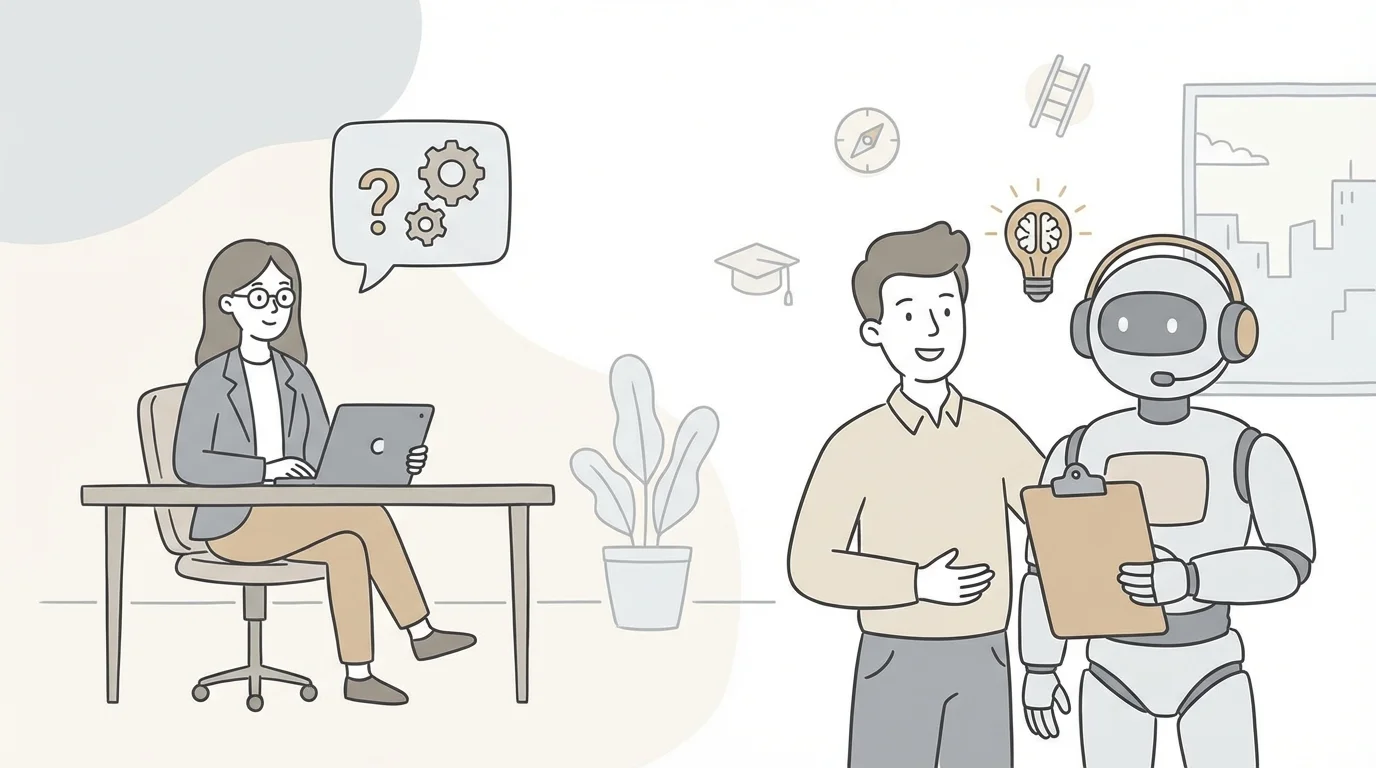
Why Using ChatGPT as Your Career Coach Is a Mistake


 CareerClimb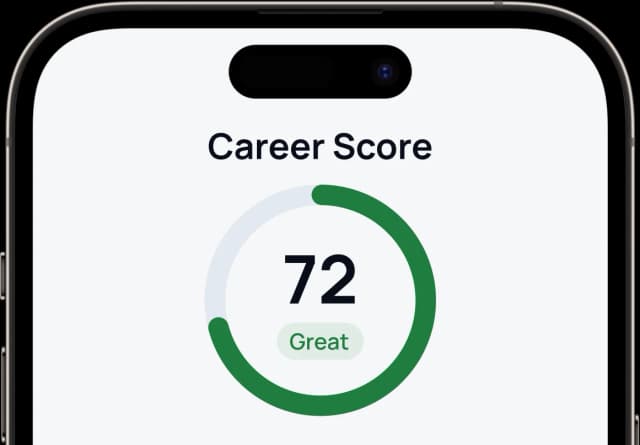
Not sure where your career stands?
Most people find out they're behind at review time. CareerClimb tells you now — and shows you what to do about it.

Share this article
You opened ChatGPT, typed "how do I get promoted faster as a software engineer," and got a surprisingly solid answer. Document your wins. Make sure your manager knows your goals. Build visibility. Show leadership beyond your immediate scope.
Good advice. All of it.
You closed the tab. You started working on those things, sort of. And at your next review cycle, you were still waiting.
ChatGPT gave you the right framework. But the right framework, delivered once, in a vacuum, with no follow-through and no memory of who you are, that's not coaching. That's a blog post.
Career advice and career coaching are different things
Career advice is generic. It transfers to any engineer at any company and has been true for twenty years. "Log your wins." "Align with your manager." "Build visibility before review season." None of this is wrong. You've probably read it in five different places.
Career coaching is specific to you. It knows your company's promotion rubric. It knows your manager values directness and hates surprises. It knows you haven't had the career conversation with her yet, and that gap is the single biggest thing holding back your case. It remembers what you shared three weeks ago and follows up.
ChatGPT can do the first thing. It can't do the second.
This is why engineers who use ChatGPT as their primary AI career coach hit a ceiling. ChatGPT is a good tool. It's excellent at answering questions. But what engineers actually need isn't answers. It's a system.
Five reasons ChatGPT fails as a career coach
1. It forgets everything the moment you close the tab
Every conversation with ChatGPT starts from scratch. It doesn't know you got passed over at your last review. It doesn't know your manager gave you mixed signals about the senior track. It doesn't know you've been at the same level for 26 months and your next review cycle opens in eight weeks.
You can paste all of this context in every single time. Maybe you do, the first few conversations. But nobody sustains that habit. The conversation ends, the tab closes, and the context vanishes.
This isn't a minor inconvenience. It's a structural problem. A coaching relationship only works if the coach knows your story. Without persistent memory, every session is a first consultation. You're re-explaining your situation instead of building on it.
Career Climb's coach, Summit, loads your full context before every conversation: your level, your company, your manager's communication style, your recent wins, your open action items, and exactly how long until your next review. You don't start over. You pick up where you left off.
2. It doesn't know your promotion rubric
"Be more strategic" is advice that works anywhere. "Close these three specific rubric gaps before your October review cycle" is what actually gets you promoted.
ChatGPT doesn't know what Exceeds Expectations looks like at your specific company. It doesn't know whether your company prioritizes technical scope or organizational influence at your level. It doesn't know that your manager already told you the gap in your case is leadership, not delivery.
This sounds like a fine-tuning problem. It's actually the whole game. Promotion criteria vary substantially across companies, levels, and even teams. Generic SWE career advice and company-and-level-specific coaching produce very different results. The difference is what separates someone who "sort of knows what they need to do" from someone who has a documented case. And most engineers have never actually read their promotion rubric: they're operating on assumptions about what it says.
A real AI career coaching app built for software engineers maps your evidence to rubric categories and shows you where you're thin. ChatGPT can tell you what rubric categories typically matter. It can't tell you where your case stands against them.
3. Wins fall through the cracks
This is the biggest failure mode, and it's subtle because it looks fine in the moment.
Even with solid ChatGPT advice, the conversation ends and nothing is documented. Your wins from last quarter are still in your head, half-forgotten. The API migration you shipped in October that unblocked two other teams? The onboarding you ran for three new engineers? Not written down anywhere.
Hermann Ebbinghaus's forgetting curve research shows people forget roughly 70% of new information within a few months, and there's no reason to believe career accomplishments are different. You're not sitting there cataloging your contributions. You're shipping the next thing.
Then review season arrives. You have three weeks to reconstruct six months of work. You write a self-review that undersells your impact because you genuinely can't remember the specifics. Your manager reads a thin case. The outcome is predictable.
An AI career coaching app that gives you advice about logging wins, without actually logging them, is solving the wrong problem.
Win capture is the highest-priority feature in Career Climb for a reason. When you talk to Summit and mention something you shipped, it captures that win immediately. "I finally got that API migration working" becomes "Delivered API migration project, reducing latency by 40% and enabling real-time features across the platform." The transformation happens during the conversation, and the win gets filed in your promotion case right then.
By review season, you're editing and selecting from a complete record, not reconstructing from memory.
4. There's no accountability loop
This one is quiet, and it makes everything else fall apart.
You ask ChatGPT what to do about visibility. It tells you: present your work at the next all-hands, send your manager a weekly status update, write up that architecture decision as an internal post. Correct advice.
Two weeks later, you've done none of it. No nudge. No follow-up. No "did you ever have that conversation with your manager?" ChatGPT has no idea what you said. It has no idea you committed to something and didn't follow through.
Accountability is what separates goal-setting from behavior change. The reason coaches (human or AI) produce results is that they follow up. They hold the thread. They create the mild social pressure of someone who knows what you said you'd do.
Career Climb builds this into the product. A Friday check-in at the end of each week asks how it went. But it's not a generic check-in: Summit remembers your action items and asks about them directly. Not "how was your week?" but "You were going to ask your manager about the senior track. Did that happen?"
That follow-up is the coaching loop. ChatGPT doesn't have one.
5. It can't tell you where your case actually stands
"Am I ready for promotion?" is one of the most common questions engineers ask their managers, their mentors, and yes, ChatGPT.
ChatGPT's answer: make sure you have strong performance reviews, demonstrate leadership, align with your manager. The right framework, again. Zero signal about where your case stands right now.
A real AI career coaching app for engineers gives you a score based on what you've actually done, not generic benchmarks. Career Climb's Promotability Score tracks four inputs you control: Documentation (wins logged), Visibility (who knows about your work), Manager Alignment (have you had the career conversation?), and Clarity (do you know what the next level requires?).
The score doesn't predict whether you'll get promoted. Promotions depend on factors outside your control, and we don't pretend otherwise. But it tells you exactly where your case is strong and where the gaps are. When your score is capped because you haven't had the manager conversation yet, that's not a vague suggestion to "align with your manager." It's a specific signal: this one thing is blocking your case right now.
The pattern worth naming
There's something engineers do (trained by years of solving well-defined problems) that works against them in career development.
The pattern: search for the answer, apply it, move on. Ask a question, get the answer, close the loop. It's efficient for debugging. It's the wrong model for promotions.
Career development isn't a question you answer once. It's a system you run for months: capturing evidence as work happens, staying aligned with your manager, making your work visible before review season rather than during it. The engineers who get promoted aren't the ones who found better advice. They're the ones who ran the system consistently.
On Team Blind, where engineers verify their identity by company email, the same patterns come up in promotion retrospectives. Engineers who made the leap describe the same turning points: they started logging wins as work happened instead of reconstructing at year-end. They had the direct career conversation with their manager months before review season. They made their work visible regularly, not in a scramble the week self-reviews were due.
None of that required a clever prompt. It required a system that kept working between the moments they were paying attention.
What to actually look for in an AI career coach
If you're thinking about which AI career coaching tool to use, understanding what an AI career coach actually is helps set the baseline. A few questions sort it out quickly:
- Does it have persistent memory, or do you re-explain your situation every session?
- Does it capture your evidence, or just advise you to capture it?
- Is it built for software engineers specifically, or is it generic coaching retrofitted for tech?
- Does it follow up on what you committed to, or does the conversation end and disappear?
- Can you see where your case stands, or is progress invisible until review season?
ChatGPT scores near zero on this list. That's not a knock on it. It's a general-purpose tool built to answer questions, and it does that well. It was not built to coach you through a six-month promotion cycle. That's a different problem.
Career Climb is an AI career coaching app built for that second problem. Summit, the AI coach, carries your full context across every conversation. Your wins get logged and organized into your promotion case as they happen. Weekly check-ins follow up on what you said you'd do. And your Promotability Score tells you exactly where the gaps are, in terms you can act on today.
If you've been getting career advice from ChatGPT and wondering why nothing has shifted, this is why. The advice was probably fine. What was missing was the system around it.
Career Climb's AI coach, Summit, knows your situation, tracks your wins, and follows up on what you committed to, so your promotion case is building every week, not just in the three weeks before review season. Download Career Climb