When Your Team Gets Absorbed Into Another Team

 CareerClimb
Doing great work nobody sees?
Get a plan to make your work visible to the people who decide what happens to your career.

Share this article
One morning you open Slack and there's a message from your director. Something about "organizational alignment" and "combining strengths." You read it twice. The translation: your team is being absorbed into another team.
Your manager might be staying, or might not. Your projects might continue, or might not. The only certainty is that the team you knew yesterday no longer exists in the same form.
This is one of the most disorienting things that happens in tech. Not because the work changes overnight, but because the invisible infrastructure you relied on, your relationships, your reputation, your place in the pecking order, all of it resets.
Here's how to handle it without losing ground.
Why Team Absorptions Hit Harder Than Regular Reorgs
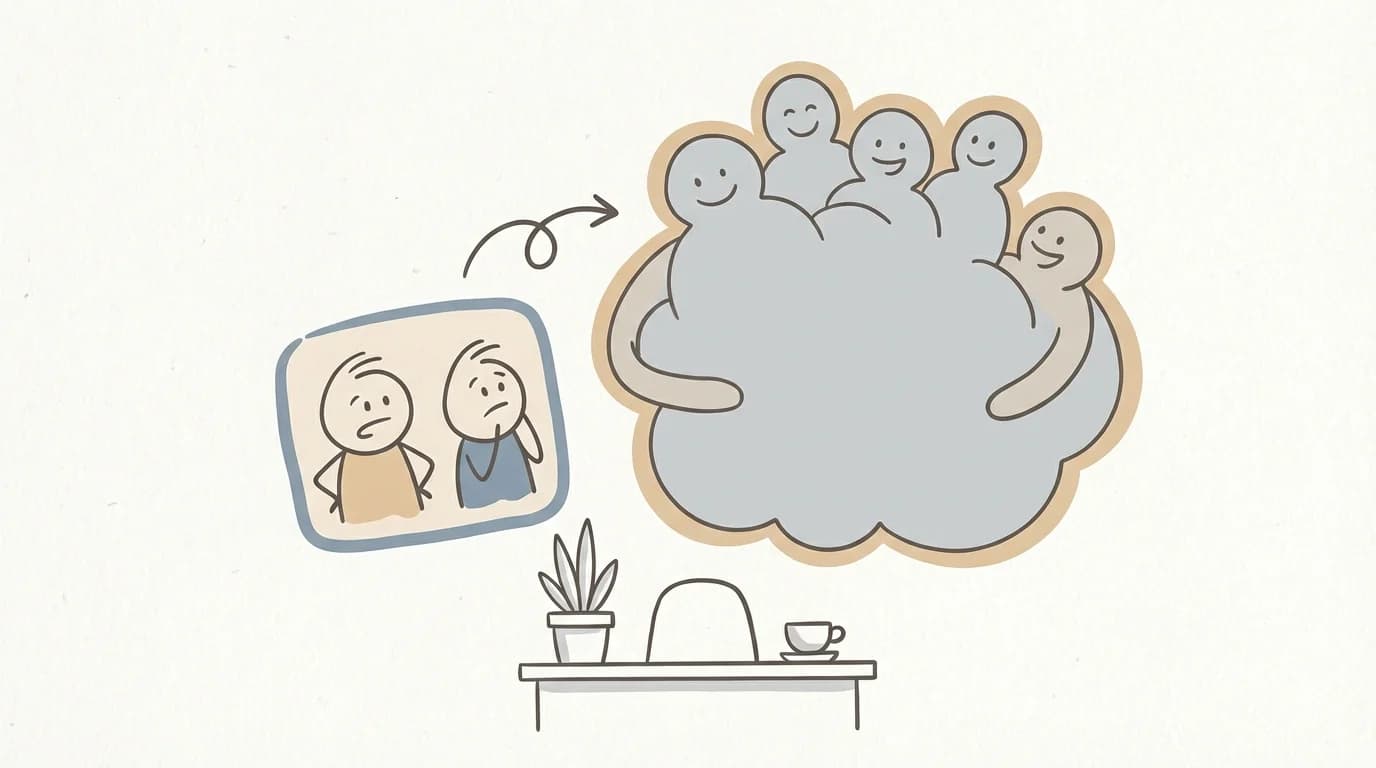
A standard reorg reshuffles reporting lines. A team absorption is different. One team's identity gets erased and folded into another.
Research on organizational mergers from the Journal of Applied Psychology (Sung, Woehler et al., 2017) found that people respond to these transitions with a mix of anxiety, frustration, and insecurity that often contradicts their outward behavior. You might say "I'm fine, whatever" in the all-hands while privately scanning LinkedIn job postings that evening.
The research also found something that matters for your career: employees from the "absorbed" group consistently experience more negative effects than those on the receiving side. The absorbing team keeps their processes, their norms, their manager relationships. You lose yours.
The First Two Weeks Matter Most
The window right after a team absorption is when the new hierarchy is forming. Roles are fluid. Impressions are being made. If you wait to "see how things shake out," you're handing that window to someone who won't wait.
Figure out the real org chart
The announced structure and the actual power dynamics rarely match. Before you do anything else, answer these questions:
- Who is your new manager? Not your skip-level, not the org lead. Who will write your performance review?
- Who is their manager, and what does that person care about?
- Are there engineers from the absorbing team who already have strong relationships with leadership? Those people have a head start on you. Know who they are.
Have the conversation with your new manager early
Don't wait for your new manager to "get settled." They're forming opinions about their new reports right now, and silence from you reads as disengagement.
Request a 1:1 within the first week. Come with a short summary of what you've been working on, where your projects stand, and what you think your biggest areas of impact are. This is not the time for humility. Your new manager has no context about you. If you don't provide it, they'll fill in the blanks with assumptions.
A simple framing: "I wanted to make sure you had context on what I've been focused on, since we haven't worked together before. Here's where my projects are and where I think I can have the most impact going forward."
Understand what's actually changing about your work
Some absorptions are structural only, where reporting lines change but the work stays the same. Others are a complete overhaul, where your projects get deprioritized, your tech stack gets replaced, or your role shifts from feature development to support.
Find out which one this is as fast as possible. Ask directly: "Are the projects I've been leading going to continue as planned, or should I expect changes?" The answer determines your strategy.
Protecting Your Promotion Timeline
This is the question that keeps engineers up at night after a team absorption: does this reset my promotion clock?
The honest answer is: it depends, but you have more control than you think.
The risk is real
On Team Blind, engineers frequently describe team changes as promotion-timeline killers. The pattern is predictable: new manager doesn't know your work, new manager has their own priorities, new manager needs time to evaluate the team. By the time they have context on you, months have passed and the next review cycle is already starting fresh.
What you can control
Your prior accomplishments don't disappear just because your reporting line changed. But they do become invisible unless you make them visible again.
Within the first month of the absorption, get your wins documented and in front of your new manager. Not in a "here's my brag doc" way, but woven into conversations: "When I led the migration to the new API layer last quarter, one thing I learned was..." You're sharing context and demonstrating impact simultaneously.
If your company has a formal promotion process, ask your new manager directly where you stand. "I was tracking toward a promotion conversation with my previous manager. I want to make sure that work carries forward. Can we talk about where I am in the process?" For the full playbook on carrying your case forward, how to rebuild your promotion case with a new manager covers exactly this scenario.
This feels forward, and it is. But new managers appreciate directness because it saves them from guessing what their new reports care about.
When the Absorption Is Actually Bad News
Not every team absorption is a lateral move. Sometimes it's a signal that your work area is being deprioritized, or that leadership sees your old team as redundant.
Warning signs:
- Your projects get shelved or merged into someone else's roadmap without your involvement
- You're moved from building features to doing support or maintenance work
- The engineers from the absorbing team get the visible, high-impact assignments while you get cleanup
- Your new manager seems disinterested in your career goals and focuses only on immediate output
- Headcount discussions happen and your role feels like it's being "justified" rather than assumed
If you see two or more of these, start thinking about whether this team is the right place for your next chapter. You don't have to act immediately, but you should be honest with yourself about what you're observing.
How to Build Standing on the New Team
Assuming the absorption is a genuine restructuring and not a slow-motion layoff, here's how to establish yourself:
Learn the new team's language. Every team has its own vocabulary, its own way of defining "impact," its own set of inside references. Pick it up fast. The absorbing team's norms are going to dominate, and fighting that wastes energy.
Find a quick win. Identify something you can ship, fix, or improve in the first four to six weeks. It doesn't have to be massive. A quick contribution that's visible to the new leadership proves you're not coasting through the transition.
Offer to bridge knowledge gaps. You know things about your old team's systems, customers, and technical debt that the absorbing team doesn't. Position yourself as the person who connects the dots, not the person mourning the old structure.
Build relationships horizontally, not just vertically. Your new peers on the absorbing team are forming opinions about the people joining their team. Grab coffee (virtual or real), ask about their projects, learn what they're working on. These relationships matter more than your relationship with leadership in the first few months.
The Emotional Part Nobody Talks About
Team absorptions are a kind of professional grief. You lose a manager who knew you, teammates who had your back, a rhythm you'd built over months or years. That loss is real, even if nobody names it.
It's normal to feel resentful, confused, or demoralized after an absorption. The problem isn't the feeling. The problem is letting it drive your behavior. Engineers who check out, stop contributing, or visibly sulk through the transition are the ones who get managed out three months later.
Process the frustration privately. Vent to a friend, a partner, a coach. But at work, channel that energy into establishing yourself on the new team. The faster you engage, the faster the disorientation fades.
When to Stay and When to Start Looking
Stay if the new team has real scope, a competent manager, and work that advances your career. A team absorption is disruptive, but it can also land you in a better position if the new org is higher-priority, better-funded, or has a clearer path to impact.
Start looking if the absorption is clearly a demotion in disguise, if your work is being sidelined, or if the new leadership shows no interest in your growth. Don't rage-quit. Use the transition period to interview quietly while you still have the stability of a paycheck and a team.
The worst move is staying in a dead-end situation out of loyalty to people who may have already moved on.
CareerClimb helps you navigate team changes without losing momentum. Summit, your AI career coach, tracks your wins, helps you reframe your case for new leadership, and keeps your promotion timeline on track no matter how your org chart shifts. Download CareerClimb to stay in control of your career.