How to Survive a PIP Without Breaking Yourself

 CareerClimb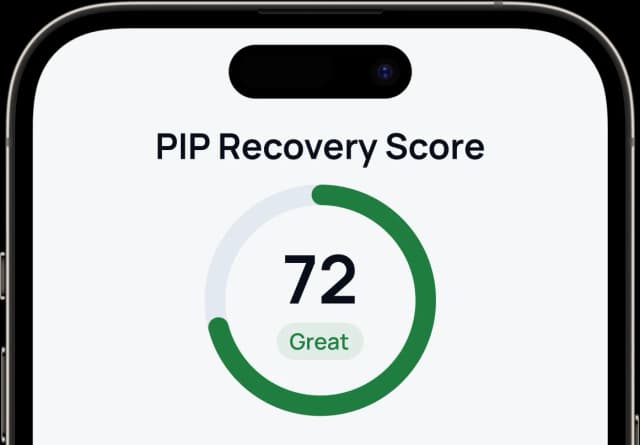
On a PIP and burning out?
Get a plan that doesn't destroy you in the process.

Share this article
You've made the decision. You're fighting your Performance Improvement Plan (PIP). You went through the week 1 work: clarified the criteria, set up the documentation system, sent the first proactive status email before your manager could write their assessment.
Now it's week three. Or week five. Or week seven.
And something unexpected is happening. Not to your work output. Something is happening to you.
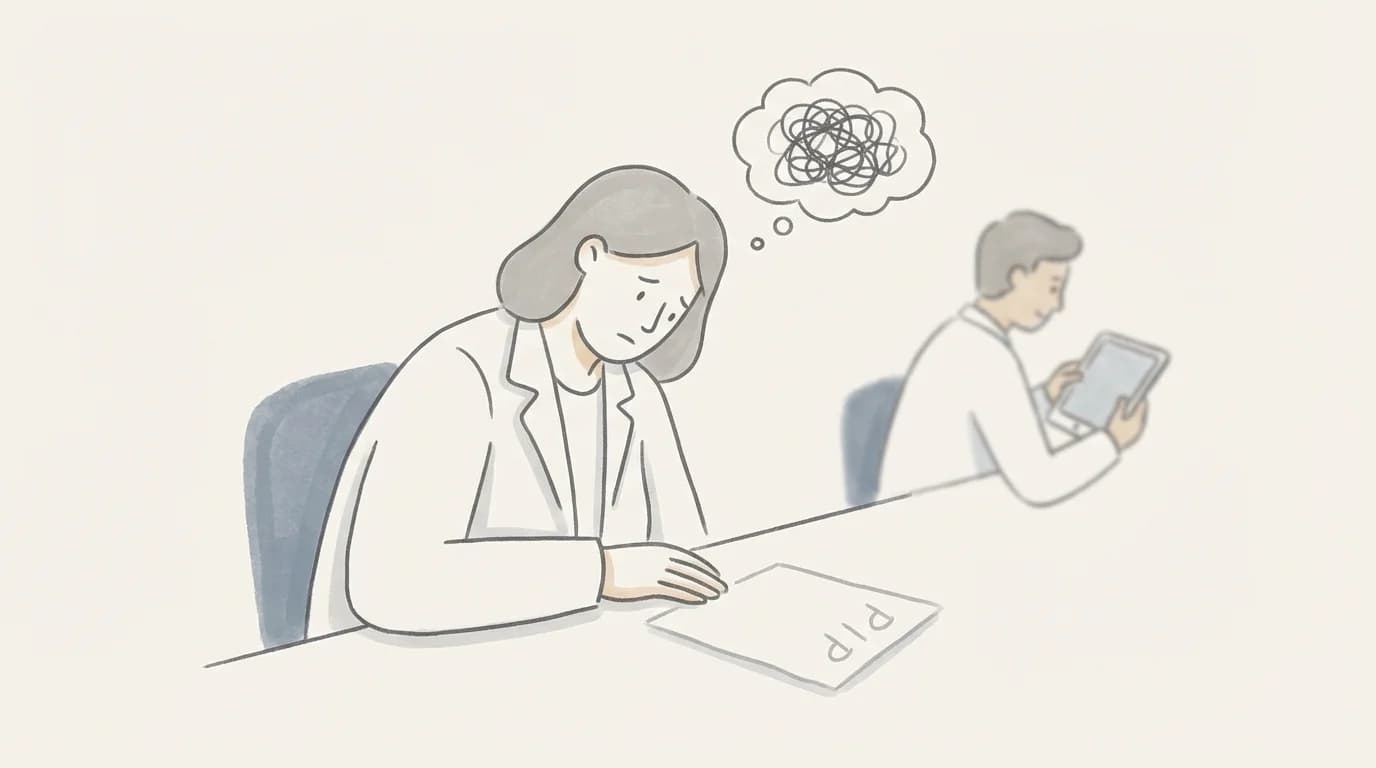
The acute shock of the first week is gone. What replaced it is harder to name: a low-grade, persistent drain that sits underneath everything you do. You're still producing. You're still performing. But the effort required to get through a single workday is categorically different from what it was six months ago. The weekly check-in isn't just a meeting. It's a recurring performance evaluation you have to emotionally prepare for and then recover from. Every Slack message to your manager gets a second read before you send it. Your weekends don't fully reset anymore.
This is the part nobody writes about. Not the initial shock, and not the tactical first week, but the sustained psychological cost of fighting a PIP while also trying to perform well enough to pass it. The conditions themselves are corrosive, even when you're doing everything right.
This article is about maintaining enough stability to keep performing. It's not about whether you should fight (that framework is in the fight-or-leave guide), and it doesn't cover the emotional experience of the first few days (that's its own piece). This is about week three and beyond.
The problem nobody names
Most writing about PIP survival focuses on two things: the tactical steps (documentation, clear criteria, proactive communication) and the binary outcome (you pass or you don't). What gets skipped is the experience in between: the sustained period of working under formal observation while trying to produce the work you're being evaluated on.
What makes this period psychologically different from ordinary work pressure isn't the volume of work or even the stakes. It's the conditions:
- Every action is being documented, and you know it
- Weekly check-ins function as recurring performance reviews with real consequences
- Your normal behavioral patterns shift because you're constantly monitoring yourself
- The uncertainty has no fixed end date you can see and trust
These conditions are corrosive in specific ways that affect performance, not just mood. Understanding how gives you something to work with.
The depletion paradox
Here's what's actually happening to your cognitive resources.
Baumeister, Bratslavsky, Muraven, and Tice (1998) proposed the strength model of self-control: self-regulation draws from a limited resource. The ability to override impulses, choose words carefully, manage emotional reactions, and maintain deliberate behavior all come from the same pool. Using it for one task reduces its availability for the next.
The practical upshot for someone on a PIP: you are burning that resource on self-monitoring before any actual work happens. Every Slack message to your manager that gets a second read. Every meeting where you're tracking how your contribution will be logged. Every deliverable reviewed twice. Each of those acts of deliberate self-control draws from the same pool you need for complex reasoning, careful judgment, and high-quality execution.
You're not just working hard. You're working watched. And working watched costs more.
This explains a pattern engineers fighting PIPs frequently describe: hitting an unexpected wall of cognitive fatigue by early afternoon, making worse decisions later in the day, and producing work that doesn't reflect what you're actually capable of. The self-monitoring doesn't run parallel to the performance problem. It feeds it.
The partial fix is counterintuitive. You reduce the depletion cost not by trying to monitor less (that doesn't work) but by externalizing the monitoring into a system that doesn't require constant active attention, something like a Recovery Score that tracks your progress against each criterion so you're not holding the whole picture in your head. If your documentation process is a predictable daily routine: ten minutes at end of day, standardized format, pre-built template. It costs far less than ad-hoc vigilance throughout the day. The depleting part isn't the documentation itself. It's the unstructured, always-on quality of monitoring without a system.
Engineers who describe surviving the extended fight period consistently report a shift around the time they stopped thinking about documentation and started just doing it, when it became mechanical rather than effortful. That shift is worth deliberately creating.
Are You at Risk of a PIP?
Find out if you're missing the warning signs — before it's too late.
7 questions · about 2 minutes · free score
1 of 7
If your manager put you on a PIP tomorrow, which of these could you produce right now?
Select all that apply.
Select all that apply
What sustained observation does to your work
There's a second, separate problem that operates at the level of what you choose to work on, not just how well you execute.
Staw, Sandelands, and Dutton (1981) described the threat-rigidity effect: under sustained organizational threat, people restrict their information processing, centralize control, and revert to familiar behaviors. They narrow rather than expand. They default to what they already know works, rather than taking on new problems that might not.
In a PIP context, this translates directly into behavior you've probably noticed in yourself: gravitating toward safe, visible, proven work rather than the kinds of ambitious projects that might demonstrate the initiative or leadership that got you PIP'd in the first place. You're closing tickets with clear definitions of done. You're avoiding ambiguous problems that require you to show judgment you're not sure you'll be credited for. You're producing volume where quality and risk-taking might serve you better.
The threat response is producing exactly the behavioral profile that created the problem.
There's also a separate distortion in how you perceive the observation itself. Gilovich, Medvec, and Savitsky (2000) documented the spotlight effect: people consistently overestimate how much others notice their specific actions and behaviors. In their studies, individuals estimated that observers noticed their contributions or mistakes at two to three times the actual rate.
In a PIP, the spotlight effect is partly grounded in reality. Your manager IS documenting more deliberately than before. But the subjective experience of that scrutiny still outruns what's actually happening. The result is behavior change that's disproportionate to the actual observation: hesitating to share ideas, overanalyzing your manager's tone, spending more time on visible tasks than their actual value warrants.
None of this is irrational. The threat response and the distorted perception are both your nervous system doing exactly what it was built to do. The problem is that they're working against you.
Knowing this doesn't make them stop. But it gives you something to work with. When you notice yourself gravitating toward the safe, familiar, visible work, you can recognize that as the threat-narrowing pattern rather than treating it as genuine preference. When you catch yourself overanalyzing a brief Slack reply, you can name the spotlight amplification rather than treating the read as accurate data.
The responses don't disappear, but naming them correctly gives you a small lever.
Staying connected without telling anyone
The isolation that comes with a PIP is well-documented. You can't tell colleagues; the career risk is real. Telling friends or family often goes sideways: people catastrophize, jump to tactics you're not ready for, or apply frameworks from different work cultures that don't fit. So most people carry the PIP privately. But the decision of who to tell, and how much, has more nuance than it looks at first.
That doesn't mean you have to isolate.
Research on social support finds that perceived social support (the sense that connection and help are available) provides genuine physiological benefit even without specific disclosure. A 2003 study on social buffering and cardiovascular stress response found that even low-threat generic social interaction lowered stress markers. The connection itself helps. You don't need to explain what you're going through.
One-degree disclosure is often enough: "I'm under a lot of pressure at work right now" communicates enough for people around you to adjust without triggering the complicated dynamics of full disclosure. It lets them check in, invite you to things, normalize conversation that isn't about your job performance. That covers most of what you actually need from social support.
Engineers who describe getting through extended PIP periods consistently mention non-work anchors: a weekly dinner, a sport, a hobby that has nothing to do with performance. Not as a distraction technique, but because the brain needs environments where it isn't in evaluation mode. Workday-only stress is hard enough. Stress that colonizes all available time is categorically harder to sustain.
Some people find partial relief in anonymous online communities: Reddit threads about PIP survival, forums where you can describe what's happening without it affecting your professional standing. The anonymity enables a kind of disclosure that's otherwise unavailable. Whether that's useful depends on whether you can engage with it without deepening the anxiety spiral rather than relieving it.
Setting a date
The most psychologically corrosive aspect of fighting a PIP isn't the work or even the weekly check-ins. It's the open-ended uncertainty. You don't know if you'll pass. You don't know if the criteria will shift. You don't know if the decision is already made. The fight continues while all of these unknowns remain unresolved.
Research on implementation intentions by Gollwitzer (1999) shows that setting a specific if-then plan dramatically improves follow-through and reduces the cognitive cost of ongoing decisions. The key mechanism is delegation: once you've committed to an action at a specific trigger, you don't have to keep re-evaluating whether to take it. The decision is already made.
Applied to the PIP context, the structure looks like this: pick a specific date at which you will honestly reassess your situation regardless of what external signals you've received by then. Not "when my manager says something that worries me," but a specific calendar date. Something like: "If it's [date], I will honestly evaluate whether this situation is still worth fighting, independent of what the check-ins have looked like."
This converts open-ended uncertainty into bounded challenge. Instead of "I don't know when this ends or how," the psychological experience becomes "I'm doing this until [date] and then I'll decide." The brain tolerates defined difficult periods significantly better than open-ended ones.
This isn't a resignation or a soft commitment to leave. It's a pre-commitment to an honest reassessment at a fixed point in time. Most people who set this date and reach it end up deciding to continue fighting, but they decide it deliberately, having re-evaluated rather than defaulted to continuation because stopping never felt like a clear option.
The endpoint also stops the daily re-litigation of the decision. Without a date, every day is an implicit recommitment that requires mental energy to maintain. Set the date and it's decided until that date.
Compartmentalization that actually works
The question of how to protect your life outside work during a PIP is real, and the standard advice ("leave work at the office") isn't wrong so much as incomplete.
Research on compartmentalization distinguishes between two versions:
- Healthy compartmentalization: emotions are deliberately parked to function during the workday, then processed later in a scheduled way. This builds a manageable day.
- Unhealthy compartmentalization: emotions are suppressed indefinitely, stored somewhere and never returned to. This accumulates until it doesn't.
The practical structure is a debrief: a bounded period, ideally at a consistent time, where you let yourself think about what happened and how you feel about it. Some people do this in writing. Some use it as structured time with a therapist or a trusted person outside work. The specific form matters less than the fact that the parking is genuinely temporary, that there is a return built in, not just a suppression.
This enables cleaner boundaries the rest of the time. If you know you're going to think about the PIP at 7pm for 20 minutes, it's easier to not think about it at 5pm. The suppression feels more legitimate when it's an actual deferral rather than an open-ended avoidance.
Engineers who describe navigating the extended fight period well often mention a shift in how they thought about weekends: not as time to recover from the PIP, but as time that was genuinely not about the PIP. This is different from trying not to think about it. It means the PIP gets its designated space: the debrief, the occasional update to a trusted person, the documentation window. Outside that space, other things get priority.
That boundary doesn't hold perfectly. But it holds better than no boundary at all.
The question under everything
There's a frame that tends to help engineers sustain the fight, and it's different from the "pass the PIP" frame.
The more sustainable question isn't: am I going to survive this? It's: am I building something I'd want even if I don't?
A documentation system that captures your work clearly. A track record of proactive communication. A clear-eyed understanding of what was and wasn't working in this role. These things have value whether you pass or not. They make the next thing, whether that's staying, leaving on your own timeline, or being let go, easier to navigate.
Engineers who describe coming out of PIPs in reasonable psychological shape, regardless of outcome, almost universally describe having reached a point where they stopped evaluating their situation solely through the pass/fail lens. They were building their case: the documented record of what they did, how they communicated it, what they learned. That building has value independent of whether one company's PIP process validates it.
That shift is not resignation. It's sustainability.
CareerClimb helps you document your work and track your progress throughout, so every check-in, you walk in with your record built and your evidence current, rather than reconstructing it under pressure. Download CareerClimb