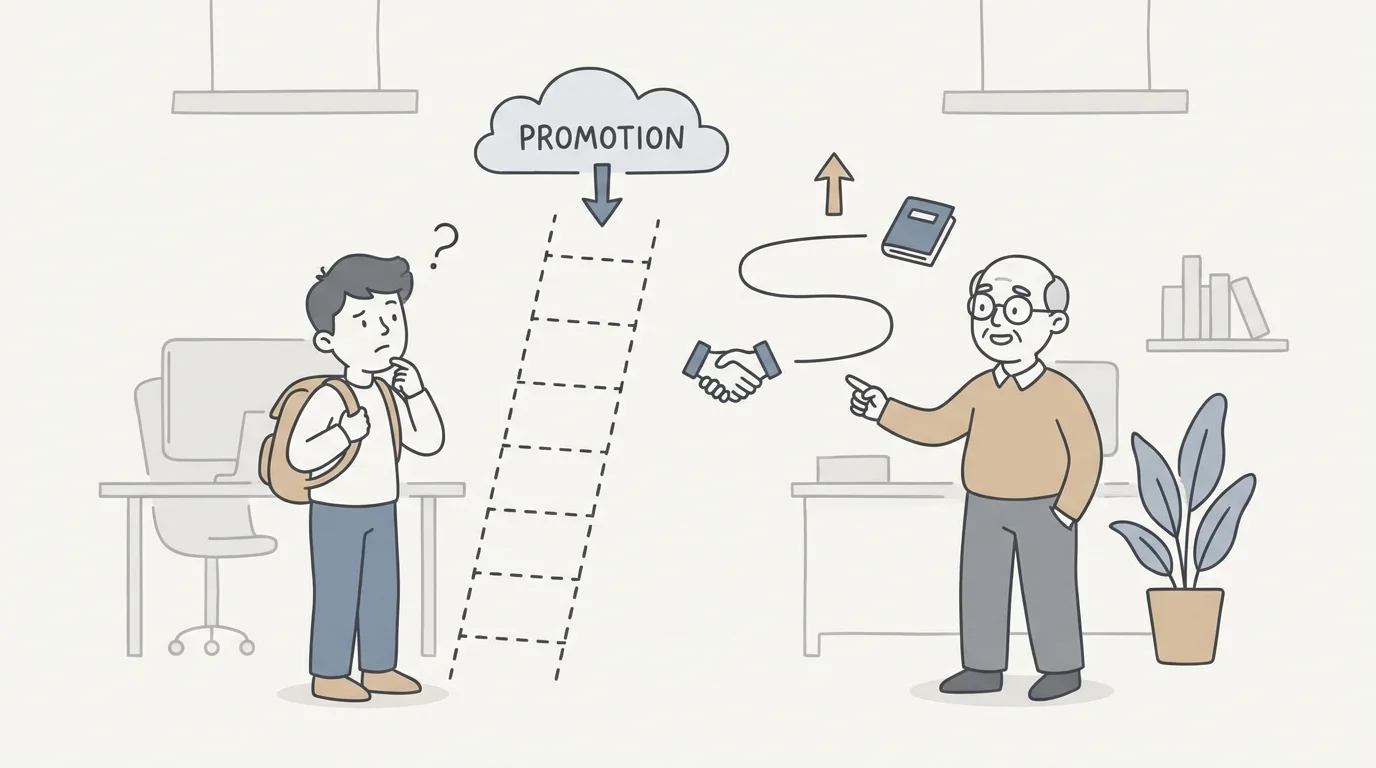
Mid-Year Check-In: How to Use It as a Promotion Conversation


 CareerClimb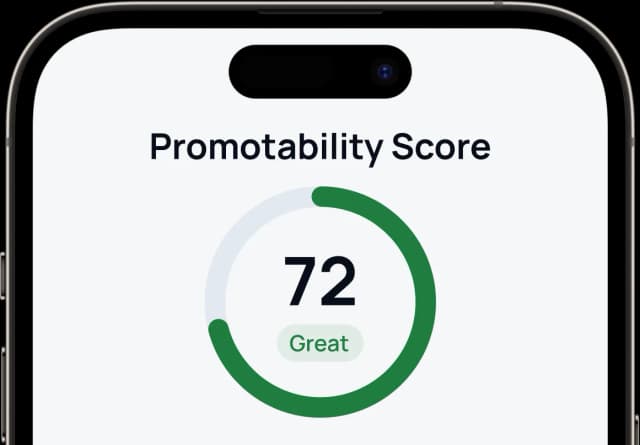
Mid-year check-in coming?
Turn it into a real promotion conversation.

Share this article
Your mid-year check-in is in two weeks. You already know how it'll go. Your manager will pull up a doc, skim through your goals from January, say something like "looks good, keep it up," and you'll both move on with your day.
Six months later, during the actual performance review, you'll hear: "You're not quite ready for the next level." And you'll wonder when, exactly, you were supposed to find that out.
This is the most common way mid-year reviews fail engineers. Not because the feedback is bad, but because the conversation never gets to the thing that matters most: whether you're actually building a promotion case, and what's missing from it.
The engineers who get promoted tend to treat mid-year differently. They walk in with a specific agenda. They leave with explicit answers about timeline, gaps, and what their manager actually needs to see before going to bat for them in calibration. The mid-year check-in isn't a formality for them. It's the conversation that sets up everything that happens in the second half of the year.
Why mid-year is the real promotion conversation
Most engineers think the annual review is when promotion decisions happen. That's technically true. But by the time your annual review rolls around, the outcome is already shaped by months of accumulated perception, calibration prep, and manager advocacy (or lack of it).
The mid-year check-in is where you still have time to change the trajectory.
Think about the math. If your company expects you to perform at the next level for six to twelve months before considering you for promotion, then the mid-year mark is either your confirmation that you're on pace or your last real chance to course-correct. After mid-year, you have roughly five to six months before calibration discussions start. That's enough time to close a gap. It's not enough time to discover a gap, process it, build a plan, and execute on it.
A Gallup study found that managers account for 70% of the variance in employee engagement. The same dynamic applies to promotions. Your manager is the one who writes your case, presents it in calibration, and defends it when someone pushes back. If they don't know you're targeting promotion this cycle, or if they have concerns they haven't shared, mid-year is when you need to find that out.
Waiting until the annual review to bring up promotion is like checking the weather after you've already left the house. The information might be accurate, but it's too late to be useful.
What most engineers get wrong about mid-year
The default mid-year conversation is a status update. Manager pulls up your goals. You talk about what you shipped. You both agree things are going well. You leave feeling vaguely positive.
None of that tells you anything about promotion.
Treating "good feedback" as a green light. Managers will tell you things are going well because they are going well at your current level. That's not the same as telling you you're ready for the next level. Plenty of engineers get consistently positive mid-year feedback and then get passed over in calibration. The gap between "doing well" and "promotable" is real, and your manager won't always volunteer where you fall on that spectrum.
Never naming promotion explicitly. If you don't say the word "promotion" in the conversation, your manager may not realize you're targeting it this cycle. They might assume you're content. They might be planning to bring it up next year. Managers are busy. They're managing six to ten other people. Your promotion timeline is not top of mind for them unless you put it there.
Assuming the rubric tells you everything. You might have read the level expectations and decided you're meeting them. Your manager might see it differently. The rubric describes behaviors at each level, but the interpretation of those behaviors varies by manager, by team, and by calibration group. What counts as "senior-level scope" on one team might not clear the bar on another. The mid-year conversation is where you check your self-assessment against your manager's.
The three things to get out of your mid-year check-in
Walk into this conversation with a specific agenda. You're trying to leave with three pieces of information.
1. Where does your manager think you are relative to the next level?
This is the most important question, and the one most engineers never ask directly. You need to know whether your manager sees you as close, far away, or somewhere in between.
Don't ask "Am I going to get promoted?" That puts your manager in a position to make a commitment they can't make. Instead, try something like:
"I've been thinking about what it would take to move to [next level]. Based on what you've seen in the last six months, how would you describe where I am relative to those expectations?"
This invites an honest assessment without forcing a yes-or-no answer. Most managers will give you a more candid read when you frame it this way, because you're asking for a description, not a promise.
2. What specific gaps need to close?
If your manager says you're close but not quite there, the next question is: close in what way, and not quite there in what way?
Push for specifics. "You need more scope" is not actionable. "You need to lead a cross-team effort where you're driving alignment across two or three teams" is. "You need to show more leadership" is vague. "I need to see you mentoring the two junior engineers on your team and leading the design review process for your area" is something you can actually do.
"If you were making the case for my promotion in calibration today, what's the part where you'd feel least confident? What evidence would make that part stronger?"
That question does two things. It frames your manager as your advocate (which is what you want them to be), and it identifies exactly where your case has holes.
3. What's the realistic timeline?
You need to know whether your manager thinks this cycle is realistic or whether you're looking at next year. This matters because it changes what you prioritize for the rest of the year.
If the answer is "this cycle is realistic," you need to spend the next five months building evidence and closing gaps. If the answer is "probably next cycle," you need to understand what needs to change between now and then, and whether you agree with that assessment.
"Given where I am right now, do you think the next review cycle is realistic for promotion, or are we looking at a longer timeline? I want to make sure I'm prioritizing the right things."
Some managers will be direct. Others will hedge. If you get a hedge, follow up: "I'm not looking for a guarantee. I just want to understand whether I should be focused on closing gaps for this cycle or building toward the next one."
Before the conversation: what to prepare
Don't walk into this meeting cold. Spend 30 minutes beforehand on three things.
Write down your top five wins from the first half of the year. Not a list of tasks. Wins. Things that had impact beyond your immediate scope, problems you identified and solved, moments where you operated at or above the level you're targeting. If you can't name five, that's useful information too.
Review the level expectations for your target role. Map your wins against them. Where are you strong? Where do you have gaps? Walk in with a hypothesis about where you stand. The conversation goes better when you're checking your read against your manager's rather than starting from zero.
Think about what you're going to ask for. Not just feedback. Specific opportunities. If you know you need more cross-team visibility, come prepared to ask about a specific project or initiative where you could get that. If you need to demonstrate technical leadership, identify a design review or architecture decision you could own.
After the conversation: the part most people skip
The conversation itself is only worth something if you act on it. Most engineers have a good mid-year check-in, feel motivated for a week, and then go back to their regular routine. Nothing changes.
Send a written summary within 24 hours. Email or message your manager with what you took away. Something like:
"Here's what I took away from our conversation: you see me as close to [next level] in [areas], with the main gap being [gap]. I'm planning to focus on [specific actions] over the next few months. Does that match your read?"
This creates a written record and forces alignment. If your manager disagrees with your summary, you'll find out now rather than in December.
Set monthly checkpoints. Don't wait another six months to revisit this. Ask your manager if you can do a quick five-minute check-in on promotion progress once a month in your regular 1:1. This keeps the conversation alive and prevents drift. It also means your manager is thinking about your promotion case regularly, not just when calibration season forces them to.
And document everything along the way. Every win, every piece of gap-closing work, every example of next-level behavior. Write it down the week it happens. RedThread Research found that employees who have regular performance conversations with their managers are 3.6 times more likely to be engaged. Part of that engagement comes from the simple act of tracking progress against a clear goal.
What if your manager isn't helpful?
Some managers are bad at these conversations. They'll give you vague platitudes, dodge the promotion question, or tell you everything is great without any useful specifics.
If that happens, try asking the question differently. Instead of "Where do I stand on promotion?", try: "If you had to write my promotion case today, what would be the strongest part and what would be the weakest part?" That reframes the conversation from evaluation to collaboration.
If your manager still can't or won't give you useful feedback, you have a bigger problem than mid-year timing. You might need to look for signals elsewhere, from peers, from your skip-level, or from the actual calibration criteria. But at minimum, you've signaled that you're serious about advancement, and you've documented that you asked.
The worst outcome isn't hearing "you're not ready." The worst outcome is hearing nothing and assuming silence means you're fine. That's how engineers end up blindsided in December, wondering why no one told them six months ago.
Your mid-year check-in is a 30-minute window that can shape the entire second half of your year. CareerClimb's AI coach, Summit, helps you prepare for exactly these conversations, with personalized talking points based on your wins, your gaps, and your specific promotion timeline. Download CareerClimb to stop guessing where you stand.