How to Explain a Layoff in Interviews

 CareerClimb
Explaining your layoff?
Get coaching on exactly what to say in interviews.

Share this article
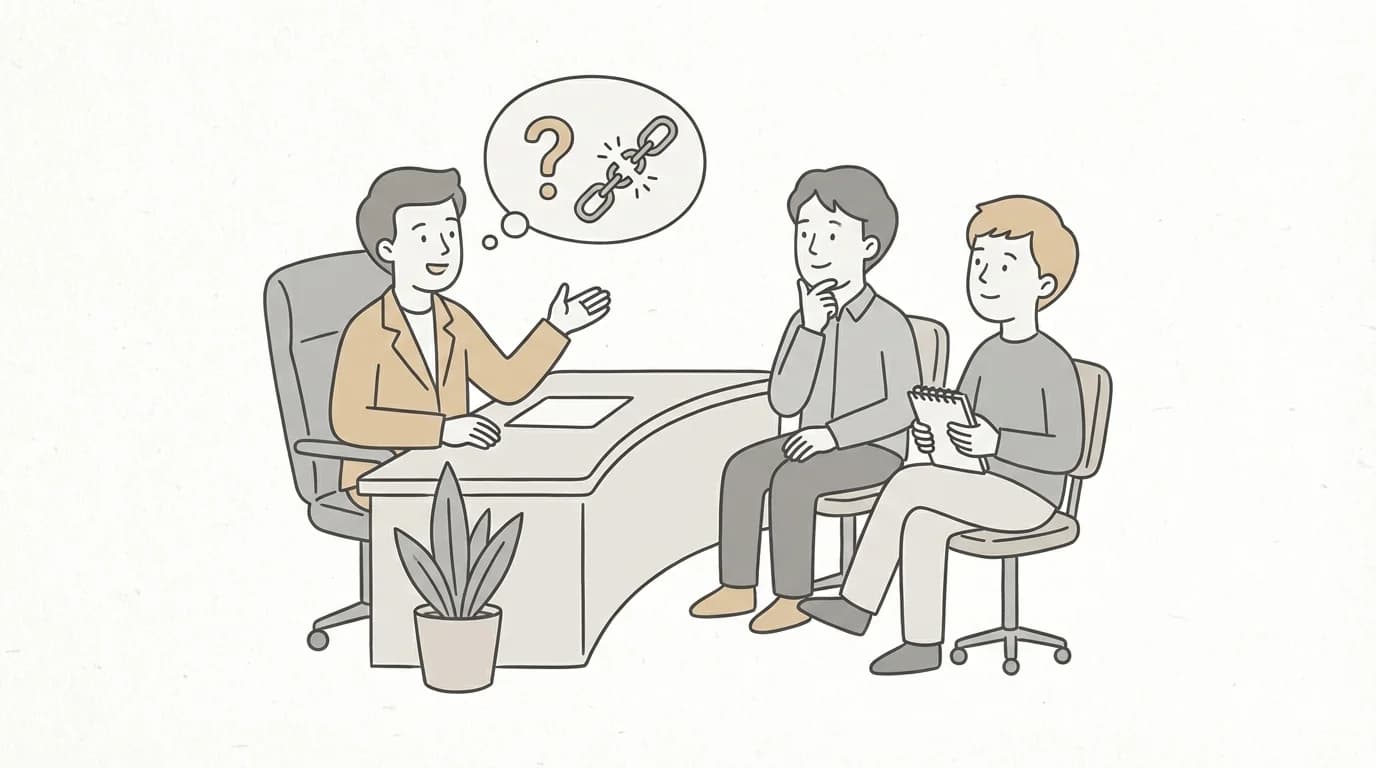
You know the question is coming. Somewhere in the first ten minutes of the call, the recruiter will ask: "So, why did you leave your last role?"
And even though you've rehearsed the answer, your chest tightens. You didn't choose to leave. You were laid off. You know it wasn't your fault. You know layoffs happen to good engineers every quarter now. But in the moment, it still feels like you have to defend yourself.
"Every time they asked why I left, I froze. I didn't know how much to say." That's a real reaction from a real engineer. If that sounds familiar, this article is for you.
Here's the truth: interviewers don't care that you were laid off nearly as much as you think they do. What they care about is how you talk about it. The framing matters more than the fact itself.
What interviewers are actually evaluating
When an interviewer asks about your layoff, they aren't judging you for it. They're evaluating three things:
- Was this a performance issue? They want to confirm the layoff was a business decision, not a termination for cause. A clear, calm answer settles this instantly.
- How do you handle adversity? Your tone and composure tell them more than your words. Bitterness is a red flag. Steadiness is a green one.
- Are you moving forward? They want to see that you've processed the situation and are focused on what's next. Not stuck. Not bitter. Ready.
Most hiring managers have been through layoffs themselves, either personally or on their teams. They understand. Your job is to make it easy for them to move past the question, not to convince them it never happened.
The 3-part framework
Every good layoff answer follows the same structure. Three sentences. Thirty seconds or less.
1. Brief context
State what happened. Keep it factual. One sentence.
You're explaining a business event, not defending a record. Budget cuts, restructuring, a product line shut down, headcount reductions. Name the cause and move on.
2. What you took from it
One sentence about what you learned, built, or worked on since. This shows momentum, not stagnation.
3. Why you're here
Connect to this specific role. Show that your search is intentional, not desperate.
That's it. Context, growth, forward motion. Interviewers hear the confidence in that structure, and the question is done.
Exact scripts for different interview stages
The right answer changes slightly depending on who's asking and when.
Phone screen with a recruiter
Recruiters are filtering. They need a quick, clean answer so they can check the box and move to your qualifications.
"My team was part of a company-wide reduction in force last fall. About 200 people were affected across engineering and product. Since then, I've been sharpening my system design skills and contributing to an open-source project in the observability space. When I saw this role, the work on [specific project or team] stood out because it lines up with the distributed systems problems I care about most."
Why this works: It names the scale (not personal). It shows productive use of time. It connects to the role.
Behavioral round with a hiring manager
Hiring managers listen more carefully. They want to understand your judgment and your composure.
"The company restructured after pulling back on two product lines. My entire team was dissolved. It was frustrating, honestly, because I'd just shipped [specific project] and felt strong about the trajectory. But I used the time to step back and think about what I want in my next role, which is why I'm specifically interested in what your team is building around [relevant area]."
Why this works: It acknowledges the emotional reality without wallowing. Mentioning a recent win signals performance wasn't the issue. The pivot to the role feels natural, not forced.
"Tell me about yourself"
This is where you can weave the layoff in without making it the center of your story.
"I'm a backend engineer with six years of experience, most recently at [Company], where I led the effort to migrate our payment processing to an event-driven architecture. The company went through a restructuring last quarter that affected my team, so I'm currently looking for a role where I can do more work at that systems level. That's what drew me to this position."
Why this works: The layoff is a transitional detail, not the headline. The story leads with your identity and ends with your interest.
What not to say
The wrong framing can turn a non-issue into a concern. These mistakes come from understandable impulses, but they hurt you in the room.
Badmouthing your former company. "Leadership had no idea what they were doing" or "the CEO ran the company into the ground" makes you sound bitter. Even if it's true, interviewers wonder if you'll talk about them the same way in a year.
Over-explaining. A three-minute monologue about the layoff timeline, the severance negotiation, and your feelings about it signals that you haven't processed it yet. Keep the answer under 30 seconds. If they want more detail, they'll ask.
Being defensive before anyone accuses you. "I want to make sure you know this had nothing to do with my performance" sounds like you're not sure about that yourself. Your composure and your track record make that case. You don't need to argue it directly.
Lying or hiding it. Don't say you left voluntarily if you didn't. Reference checks, LinkedIn timelines, and mutual connections can surface the truth. Being caught in a lie is far worse than being honest about a layoff.
Apologizing for it. "Unfortunately, I was laid off" or "I'm sorry to say I was let go" frames it as something shameful. It's not. Treat it as a fact, not a confession.
Different scenarios, different framing
Not every layoff looks the same. Here's how to adjust.
Mass layoff (hundreds or thousands affected)
This is the easiest to explain because the context speaks for itself. Name the scale: "The company reduced headcount by 15% across all departments." Interviewers have probably seen the headlines. Keep it brief.
Small team cut (5-10 people)
When the layoff was small, it's natural for interviewers to wonder if performance played a role. Counter this by mentioning the business reason: "The company pulled funding from the growth team after a strategic pivot. The whole team was dissolved." Then quickly mention a recent accomplishment from that role.
Recent layoff (within the last month)
Be straightforward: "This happened two weeks ago. I've been focused on identifying roles where I can do my best work, and this one stood out." Freshness isn't a red flag. Panic is. Speak calmly.
Layoff that happened 6+ months ago
The question shifts from "what happened" to "what have you been doing since." Be ready with specifics: freelance work, open-source contributions, certifications, side projects, or contract roles. If you took time off intentionally, say so: "I took three months to reset, then started focusing my search on [specific area]."
Multiple layoffs
Two layoffs on a resume can raise a question. The answer is the same structure, just repeated briefly: "The first was a company acquisition where they consolidated teams. The second was an industry-wide contraction that hit my org. Both were business-driven decisions." Naming the distinct causes shows this is a pattern in your industry, not in your performance.
How to handle the resume gap
A gap between jobs is normal after a layoff. Here's how to address it without it becoming the focus of the conversation.
On your resume: Add a brief note next to the end date. "Role ended due to company restructuring" or "Position eliminated in workforce reduction." This gives context before the interview even starts.
In a cover letter: One sentence is enough. "After my team was restructured out of [Company], I've been focused on [what you've been doing] and am now targeting roles in [area]."
In the interview: If they ask about the gap directly, treat it the same way. State what happened. State what you did. Move forward.
The key is having something to point to. It doesn't need to be a full-time role. A technical blog post, a contribution to an open-source tool, a course completion, or freelance work all count. What interviewers are checking for is momentum, not continuous employment.
Bring it up or wait to be asked?
Both approaches work. The right one depends on the setting.
Bring it up proactively when:
- The interviewer clearly hasn't read your resume closely
- The conversation is starting with "tell me about yourself"
- You want to control the framing from the start
Wait to be asked when:
- The interviewer seems focused on your skills and projects
- The conversation is flowing well and the question may never come
- You're in a technical round where job history isn't the focus
Either way, practice your answer out loud before the interview. The goal is for it to feel like any other sentence in your story. Not the climax. Not the confession. Just a transition.
Confidence changes everything
Two candidates can say the same words and leave completely different impressions.
Candidate A: eyes drop, voice gets quieter, the sentence trails off. "Yeah, I was, um, part of a layoff..." The interviewer now has a concern that didn't exist before.
Candidate B: same eye contact, same tone as every other answer. "My team was part of a company-wide reduction last October. Since then I've been..." The interviewer nods and moves on.
The difference isn't the facts. It's the delivery. If you treat the layoff like it's disqualifying, the interviewer might too. If you treat it as one data point in a longer career, that's how they'll file it.
Practice until the answer is boring to you. That's the right level of comfort.
Use the time between to build your case
Write down every significant thing you shipped, every problem you solved, every metric you moved. Not for your resume. For your interview answers. When a behavioral question asks you to describe a time you led a project or handled ambiguity, you want specific stories with real numbers. Documented wins make that easy. Reconstructing from a six-month-old memory makes it hard.
This is also a good time to think about how you talk about your work. In interviews, the ability to describe your impact clearly is the difference between a "maybe" and a "strong hire." That skill isn't bragging. It's preparation.
What to remember
A layoff is a business event. It's not a verdict on your ability. Interviewers at every level understand this, especially in tech, where restructurings happen quarterly.
Your answer doesn't need to be clever. It needs to be calm, brief, and forward-looking. Context, growth, forward motion. Practice it until it's automatic. Then walk into the interview and give it the same energy as every other answer.
The engineers who land offers after layoffs aren't the ones with the best explanation. They're the ones who spent the gap between jobs preparing, documenting, and building the evidence that makes every other interview answer stronger.
CareerClimb helps you frame your career story with evidence. Document your wins and impact so every interview answer is backed by real results. Download CareerClimb to start building your case today.