What to Cover in Your First 1:1 With a New Manager

 CareerClimb
First 1:1 with new manager?
Get a plan for making the right first impression.

Share this article
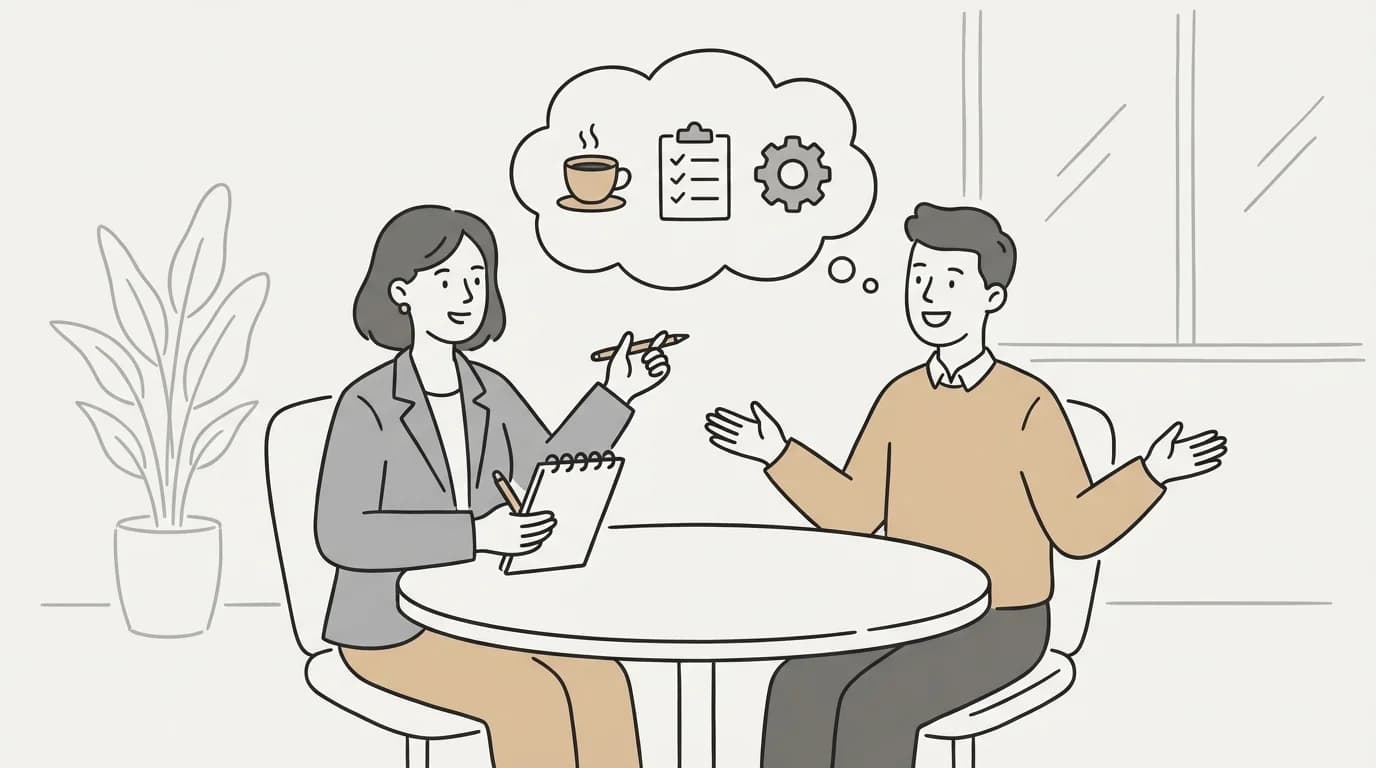
Your first 1:1 with a new manager sets the tone for everything that follows. Most engineers waste it on small talk or status updates. They walk in, answer "so what are you working on?" with a list of tickets, and walk out thinking the meeting went fine.
It didn't. You just spent your first private conversation with the person who controls your project assignments, shapes your performance narrative, and decides whether to advocate for your promotion, and you used it to recap a standup.
"My new manager asked 'so what are you working on?' and I just listed tickets. Biggest missed opportunity." That's a comment from a senior engineer on Blind, and it shows up in some form every time someone posts about a reorg or manager change. The first 1:1 is the one meeting where your manager is actively trying to figure out who you are, what you care about, and how to work with you. If you don't shape that impression, they'll form one on their own. It probably won't be wrong, but it will be incomplete.
Here's what to actually cover, and why each piece matters more than you think.
Start with how you work, not what you're working on
Your new manager will eventually learn what's on your plate. They have access to your tickets, your PRs, your team's roadmap. What they don't have is any idea how you operate. That's what this first conversation is for.
Tell them:
- How you prefer to receive feedback. Do you want it in the moment, or do you want time to process first? Do you prefer written feedback you can re-read, or is a direct conversation better? Saying this out loud prevents months of miscommunication.
- How you handle blockers. Some engineers flag blockers immediately. Others try to solve things independently for a day or two first. Neither is wrong, but your manager's expectations might not match your default. Name it early.
- What your communication style looks like. Are you someone who thinks out loud in meetings, or do you process quietly and follow up later? If your manager is used to reading the room by who speaks up, and you're the person who sends a Slack message after the meeting with your actual opinion, they need to know that.
This isn't a personality quiz. It's practical information that prevents your new manager from misreading you during the first few weeks, when impressions form fast and stick.
Ask them the same things in return. "How do you prefer to give feedback?" and "What does a good 1:1 look like for you?" are simple questions, but the answers tell you a lot about whether this person manages by checking in or checking up.
Set expectations for 1:1 cadence and format
Don't assume the format will be obvious. Some managers run 1:1s as structured agendas. Others treat them as open conversation. Some want a shared doc. Others prefer to wing it.
Ask directly:
- "How often do you want to meet, and for how long?" Weekly 30-minute 1:1s are the default at most companies, but some managers prefer biweekly. If yours suggests biweekly, that's half as many chances to build the relationship and surface problems early. It's worth pushing for weekly, at least for the first couple of months.
- "Do you want me to bring an agenda, or do you prefer to keep it open?" The right answer here is almost always "bring an agenda." But ask anyway. If your manager says open format, you can still bring topics without it feeling forced.
- "What's the best way to flag something urgent between meetings?" Slack DM? A quick call? Waiting until the next 1:1? This sounds minor, but getting it wrong early can make you look either too needy or too independent, depending on the manager.
The goal is to make the mechanics explicit. When 1:1 format is left undefined, it drifts into whatever requires the least effort from both sides. That's usually a status update. Status updates are where career conversations go to die.
Share context without info-dumping
Your new manager is probably inheriting multiple reports at once. They're drinking from a firehose. If you walk in and spend 20 minutes narrating your project history, you've just added to the noise.
Instead, give them a two-minute summary that covers three things:
- What you're currently responsible for -- the one or two main projects, not every task
- What's going well -- one thing that's moving forward and doesn't need attention
- What might need their help -- one thing where their involvement could matter in the next few weeks
That's it. You're not trying to impress them with the breadth of your work. You're giving them a mental model they can hold onto. If they want more detail, they'll ask.
The temptation is to front-load your accomplishments so your new manager knows you're good. Resist it. There's a difference between sharing context and performing a self-review. The first meeting is for context. The evidence will build over time, and it will be more convincing when it comes through your work rather than your narration.
Ask how they evaluate performance
This is the question most engineers skip, and it's the one that matters most for the next six months.
Every manager has a mental model of what "strong performance" means. Some value shipping speed. Others care about code quality and craft. Some prioritize cross-team collaboration. Others want to see independent problem-solving. Your company's rubric might say all of these things matter, but your specific manager is going to weight them differently based on their own experience and what they're being measured on.
Ask:
- "What does strong performance look like to you?" Not from the rubric. From their perspective. What do they actually notice and reward?
- "What frustrates you in an engineer?" This tells you what behaviors to avoid. If they say "I hate finding out about problems late," that's a direct instruction about communication frequency.
- "How do you typically evaluate whether someone is operating at the next level?" This is a light version of a career conversation. You're not asking for a promotion. You're asking how they think about levels. Their answer tells you what evidence you'll need to build your case later.
These questions also signal something important: you care about doing well, and you want to do well on their terms. That's not politics. That's awareness. Two engineers can be equally talented and produce different results depending on whether their work style matches what their manager values. Knowing what's valued early means you can align your effort where it counts.
Plant a seed about your career goals
Your first 1:1 is not the time for a full career conversation. You haven't built enough trust yet, and your manager doesn't have enough context about your work to give you useful feedback on your trajectory. But you can plant a seed.
Something like: "I'm focused on getting ramped up right now, but I want you to know that I'm thinking actively about my career growth. I'd love to have a deeper conversation about that once we've been working together for a month or two."
That's enough. It tells your manager three things:
- You have career ambitions (not everyone does, and managers don't assume)
- You're not going to ambush them with a promotion request next week
- You want them involved in your growth, not just your output
When the right time comes for that deeper conversation, the guide on how to have a career conversation with your manager covers the full approach from preparation to follow-up.
The worst thing you can do is say nothing about your career for three months and then show up one day asking why you weren't put up for promotion. Your manager will think: I didn't even know you wanted one. Planting the seed now prevents that.
Build psychological safety in both directions
Psychological safety isn't just a buzzword from a team retrospective. With a new manager, it means establishing that you can be honest without it being held against you.
This happens through small signals in the first few meetings:
- Be honest about something small. Mention a project that's harder than expected, or a piece of code you're not confident about. If your manager responds with help instead of concern, that's a green flag. If they respond with "why didn't you figure that out already," that's important information too.
- Ask for their honest take on something. "What's your read on the team's biggest risk right now?" If they give you a real answer instead of a corporate one, they're signaling that honesty goes both ways.
- Admit what you don't know. "I'm still getting up to speed on the data pipeline. Is there someone on the team you'd recommend I pair with?" This shows self-awareness, not weakness. Managers worry more about the engineer who pretends to know everything than the one who asks for help early.
Psychological safety is also about reading your manager's signals. If they share something candid about the team or the org, don't broadcast it. If they admit they're still figuring out the team dynamic, don't take that as a sign of weakness. These early exchanges set the precedent for the kind of relationship you'll have for the next year or more.
What not to do in the first 1:1
Don't treat it as a status update. Your standup, your weekly update, and your project tracker already cover what you're working on. If your manager opens with "so what's on your plate?", give a brief answer and redirect: "I can walk you through the high-level projects, but I'd also love to talk about how we can work well together."
Don't ask for a promotion. You haven't built the relationship yet. You don't know what your manager values. You don't have documented evidence of your work under their management. Asking now puts them in an impossible position and makes you look like you're more interested in the title than the work.
Don't trash your previous manager. Even if the relationship was bad. Your new manager will wonder what you'll say about them when the next transition happens. If they ask about the previous dynamic, keep it factual: "We had different communication styles" is fine. A five-minute vent about how your old manager didn't support you is not.
Don't stay surface-level the whole time. If the entire 30 minutes is "nice to meet you, here's what I'm working on, sounds good, talk next week," you've wasted the most open-minded version of this relationship you'll get. Your manager walked in with no assumptions. Next week, they'll have some. Shape them while you can.
A simple agenda for the first meeting
If you want a concrete plan, here's a structure that works in 30 minutes:
- Quick introductions (2-3 min) -- where you worked before, how long you've been on the team, one sentence about what you're focused on right now
- Working style exchange (8-10 min) -- how you prefer feedback, how they prefer communication, what a good 1:1 looks like for both of you
- Current work context (5 min) -- your two-minute summary, plus anything they should know about your projects
- Their perspective (5-8 min) -- how they evaluate performance, what frustrates them, what they're focused on for the team
- Career seed (2-3 min) -- one sentence about your growth goals, a note that you'd like to dig deeper in a future meeting
- Logistics (2-3 min) -- 1:1 cadence, shared doc or not, how to flag urgent items
You won't hit every point perfectly. That's fine. The goal isn't to run a perfect meeting. The goal is to walk out with your manager thinking "this person is thoughtful about their career and easy to work with." That first impression carries.
The long game starts here
Your first 1:1 is one meeting. But the relationship you're building determines whether your manager knows what you're working toward, whether they'll fight for you in calibration, and whether you'll get the kind of projects that build your case for the next level.
Engineers who build strong manager relationships don't do it by being the loudest in the room or the most political on the team. They do it by being clear about what they want, honest about where they are, and consistent about showing up prepared. If you want a full list of questions to bring to your 1:1s going forward, start rotating through those after you've established the relationship in this first meeting.
The manager who fights for your promotion is the one who knows your goals, has seen your evidence, and trusts that you're doing the work. That relationship starts in the first 1:1. Don't waste it on ticket recaps.
CareerClimb helps you prepare for every manager conversation. Your AI coach, Summit, knows your goals, your documented wins, and your promotion criteria. Before your first 1:1 with a new manager, Summit helps you figure out what to say, what to ask, and how to frame your career goals so the relationship starts in the right place. Download CareerClimb