What Is an Equity Refresh? Typical Sizes at Google, Meta, and Amazon (2026)


 CareerClimb
Need an equity refresh?
Get coaching on how and when to ask.

Share this article
You accepted the offer two years ago. The total comp number looked great. Base, bonus, and a fat RSU grant that vested over four years. Life was good.
Now you're staring at a spreadsheet, and the math is starting to look different. Your initial grant is running out. Year one was generous. Year two was fine. But the remaining vesting is shrinking, and nobody in HR mentioned what happens next. You start hearing the word "refresher" in hallway conversations and Blind threads, and you realize there's an entire compensation mechanism you never asked about.
That mechanism is the equity refresh. If you don't understand how it works, you might take a quiet pay cut without realizing you had a say in it.
What is an equity refresh?
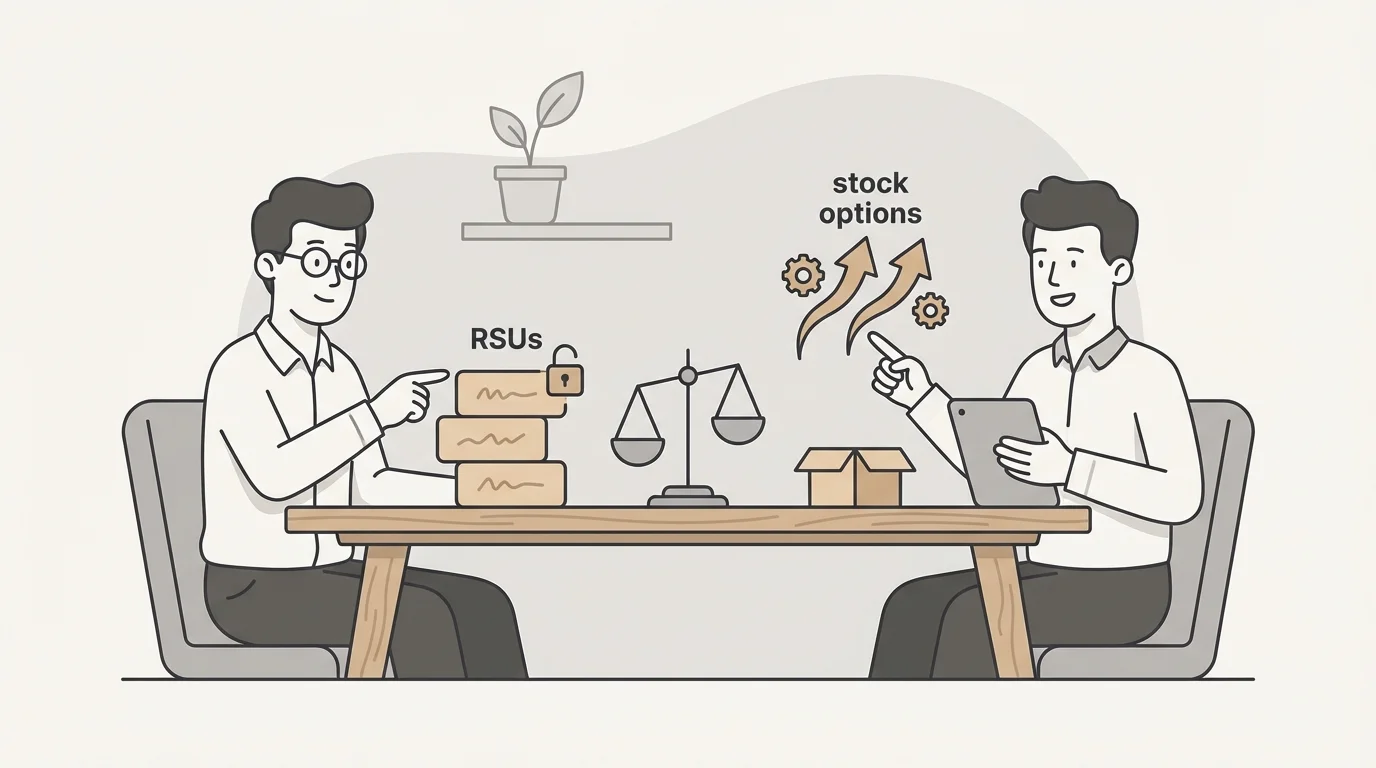
An equity refresh (sometimes called a "refresher" or "annual stock award") is an additional RSU grant your company gives you on top of your original new-hire equity. It's separate from your initial grant, with its own vesting schedule, and it's designed to keep your total compensation from collapsing after your sign-on equity runs out.
Most big tech companies grant refreshers annually, tied to the performance review cycle. The size depends on your level, your performance rating, and sometimes your location and role. Think of it as the company's primary tool for retaining people who already work there, because replacing you costs far more than topping off your equity.
Here's the catch. Refresh grants are almost always smaller than your initial grant. Candor estimates that a typical refresher runs about 25-30% of what a new hire at your same level would receive. That gap is intentional. The initial grant is an incentive to join. The refresher is an incentive to stay. But the math doesn't always work in your favor.
Why your comp is about to drop (the equity cliff)
Most engineers don't think about their equity in terms of what happens after year four. They should.
Your initial RSU grant vests over four years. If your company front-loads the vesting (Google uses roughly 33/33/22/12), the drop starts even earlier. By year three, you're vesting noticeably less than year one. By year five, your initial grant is gone entirely.
Refresh grants are supposed to fill that hole. But because each annual refresh is smaller than your initial grant, the accumulated refreshers often don't add up to the same total. The result: your total comp drops even if your performance stays the same. On forums like Bogleheads, you'll find engineers posting things like "initial RSU grant fully vested after 4 years, total comp going forward is less."
This is the equity cliff. Most engineers don't see it coming until they're already past it.
How equity refreshes work at each company
Every company handles refreshers differently. What follows is based on publicly available data from Levels.fyi, financial advisor blogs, and verified employee discussions on Team Blind.
Google grants refreshers during the annual performance review cycle in March. An internal algorithm recommends the amount based on your level and performance rating, and your manager can adjust within their allocated pool.
Target refresher by level (approximate, pre-multiplier):
| Level | Target Refresher |
|---|---|
| L4 | ~$70k |
| L5 | ~$115-160k |
| L6 | ~$350k |
Performance ratings drive the actual number. Google's rating scale includes Transformative Impact, Outstanding Impact, Significant Impact, and lower tiers. In April 2025, Google announced it would increase allocations for Outstanding Impact employees while reducing rewards for Significant Impact and below. Translation: if you're getting "meets expectations" equivalent, your refresher is getting smaller.
Refreshers vest over four years with no cliff. They start vesting immediately.
Meta
Meta uses a formula: Target for Level x Rating Multiplier x Role x Country.
Base targets (approximate):
| Level | Target Refresher |
|---|---|
| IC4 (E4) | ~$100k |
| IC5 (E5) | ~$175-200k |
| IC6 (E6) | ~$274k |
The rating multiplier is where it gets interesting:
| Rating | Multiplier |
|---|---|
| Redefine | 250% |
| Greatly Exceeds | 175% |
| Exceeds | 125% |
| Meets All | 100% |
| Meets Most | 65% |
| Meets None | 0% |
An IC5 who lands Greatly Exceeds gets roughly $350k in refresh equity. An IC5 who lands Meets Most gets closer to $115-130k. Same level, same title, vastly different outcomes. The rating is everything.
Meta refreshers vest quarterly over four years with no cliff.
Amazon
Amazon's equity structure is its own animal. The initial grant vests on a notoriously backloaded schedule: 5% in year one, 15% in year two, 40% in year three, and 40% in year four. Amazon fills the early-year gap with cash sign-on bonuses.
Refresh grants at Amazon follow a different pattern than the initial grant. They typically vest on a more balanced schedule (often quarterly over three to four years), with vest dates in May and November.
Refresh grants at Amazon stack, though. After several years of strong performance reviews, your accumulated refreshers can actually exceed the annual vesting from your initial grant. But it takes time. The first couple of years feel thin, and engineers who don't understand the system sometimes leave right before their comp was about to ramp up.
Microsoft
Microsoft grants annual stock awards tied to the Connects performance review cycle, with awards typically issued around August. The amount is level-dependent and influenced by performance, though Microsoft's multiplier system is less transparent than Meta's.
Microsoft refreshers vest over five years at 20% per year, with quarterly vesting. The specific amounts are less publicly documented than Google or Meta, but the pattern holds: higher levels and stronger ratings mean bigger grants. On Blind, Microsoft engineers at L60 have reported annual stock awards of around 7% of base salary for meeting expectations, with stronger performers receiving more.
The gap between on-hire grants and annual refreshes creates a real comp drop at year five. For the full math and a stay-or-leave framework, read what happens at the Microsoft RSU cliff.
Why promotion is your biggest equity lever
Annual refreshers are tied to your level. Getting promoted doesn't just change your title. It resets your refresh target to the new level's band.
At Meta, going from E4 to E5 roughly doubles your annual refresh target (from ~$100k to ~$175-200k). At Google, an L4 to L5 promotion jumps the target from ~$70k to $115k or higher. That's not a one-time bump. It's a permanent increase to every future refresher for as long as you stay at that level.
Some companies also issue a one-time promotion grant on top of the annual refresh. This varies by org and company, but the effect is the same: promotion lifts every future grant, not just the current one.
The raise that comes with a title change is real. But the compounding effect on future refreshers is where the real money lives.
How to ask for a bigger refresh
Refreshers aren't always automatic. At some companies, the process is formulaic. At others, there's manager discretion. Either way, you have more leverage than you think.
Know when to ask
The highest-leverage moment is your last performance review before the cliff hits. If your initial grant vests fully after year four, the conversation to have is during your year-three review cycle. By then, both you and your manager can see the drop coming, and your manager has an incentive to retain you before you start interviewing elsewhere.
Don't wait until after the cliff. By then, you've already absorbed the pay cut, and the urgency shifts from "let's retain this person" to "they're still here, so maybe they're fine."
Name the cliff directly
Most managers know about the equity cliff in theory. Few have done the math on your specific situation. Do it for them.
Calculate what your total comp looks like when your initial grant runs out and only your accumulated refreshers remain. Show your manager the gap. "My total comp is going to drop roughly $X next year when my initial grant finishes vesting. I want to talk about how we can address that."
This isn't a complaint. It's a data point. You're making it easy for your manager to go argue for you in the budget meeting, because now they have a number.
Build the case before the conversation
The refresh conversation works the same way as asking for a raise. If you walk in cold, your manager has nothing to work with. If you've spent six months building a documented case and making your impact visible, the refresh conversation becomes a formality.
Come prepared with:
- Your impact over the past year (projects shipped, incidents resolved, revenue protected, teams unblocked)
- Your current total comp trajectory, including the cliff math
- What a competitive offer at your level would look like (you don't need an actual offer, just market data from Levels.fyi)
Understand your company's system
If you're at Meta, the multiplier formula means your rating is the variable you can influence. Pushing for Exceeds versus Meets All is worth a 25% increase in your refresh grant. That's worth more than any one-time bonus.
Google works differently. Managers have a discretionary allocation pool, so the relationship with your manager and how visible your work is to them directly affects where you land.
Amazon rewards patience. Refresh grants stack over time, so your comp is designed to ramp. That changes the calculus of whether to leave after year two versus staying through year four.
Use competing signal carefully
An external offer is the strongest lever for a larger refresh, but it's also a card you can only play once. If you go to your manager and say "I have an offer from Company X," you'll likely get a retention package. But you've also signaled that you were looking, which changes the relationship.
A softer version: "I've been approached by recruiters, and the numbers I'm hearing are significantly higher than my current trajectory. I'd rather stay, but I want to make sure my comp reflects my contributions."
This gives your manager the urgency without the ultimatum.
The refresh matters more than you think
Equity refreshes aren't a bonus. They're the mechanism that determines whether your compensation grows, stays flat, or quietly shrinks while you keep doing the same job at the same level.
The engineers who come out ahead understand the system before it bites them. They know when their cliff is coming, they've done the math, and they have the conversation with their manager before the budget is already set.
If you're approaching year two or three at a big tech company and you haven't looked at your refresh trajectory, open a spreadsheet. Map out what your total comp looks like next year, the year after, and the year your initial grant runs out. The number will tell you what to do next.
CareerClimb logs your wins all year and builds the promotion case that justifies a stronger refresh. When the comp conversation comes, you'll have the evidence ready. Download CareerClimb