Staff Engineer vs Engineering Manager: How to Decide


 CareerClimb
IC or manager track?
Get coaching on which path fits your strengths.

Share this article
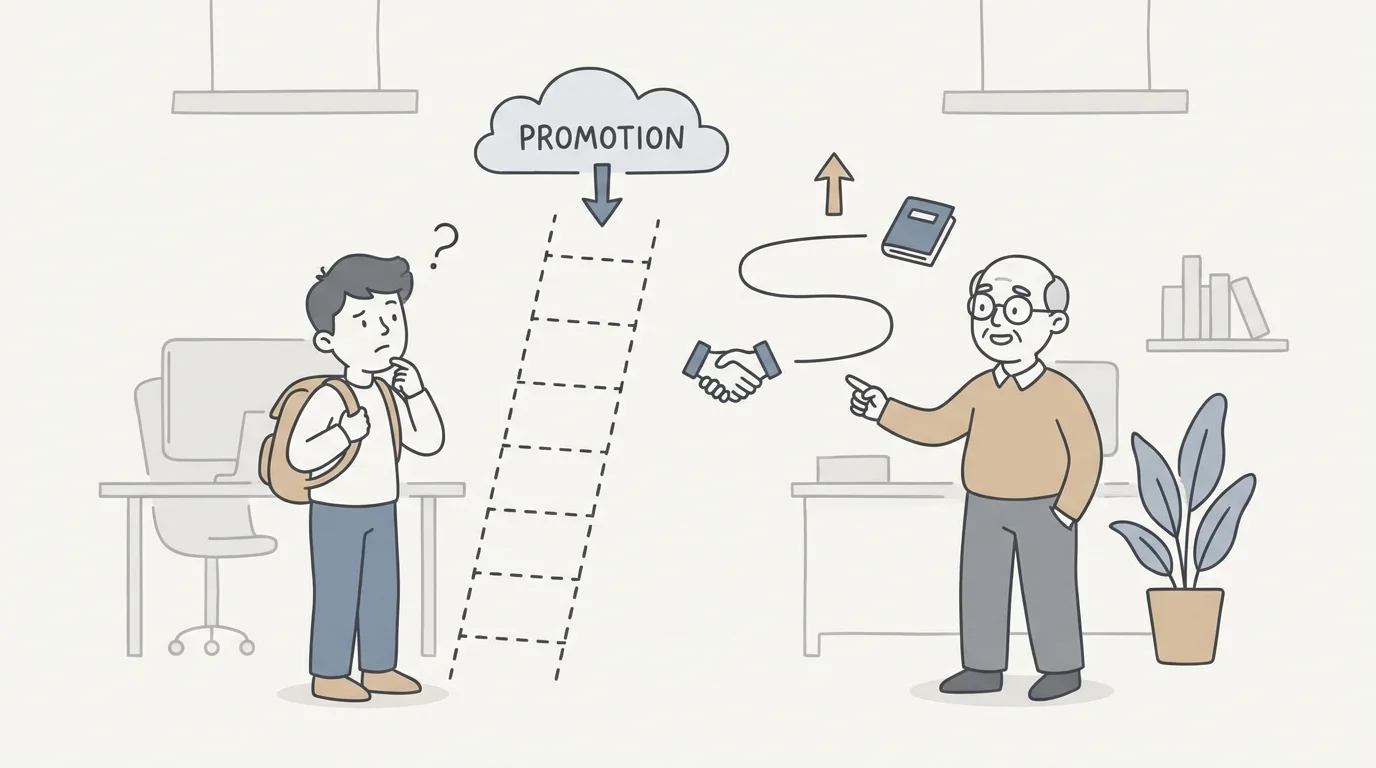
You made it to Senior. You're shipping well, your peers respect your technical judgment, and your manager keeps hinting that you're ready for "the next step." The problem is that the next step splits into two completely different jobs.
One path keeps you building systems. The other has you building teams. Both pay roughly the same and lead to executive-level roles. But the daily experience of each is so different that picking the wrong one can leave you miserable for years before you find the nerve to switch.
Why this fork exists
At most major tech companies, Senior is the last shared level on the engineering ladder. After Senior, the Individual Contributor (IC) track goes Staff → Senior Staff → Principal → Distinguished, and the management track goes Engineering Manager (EM) → Senior EM → Director → VP of Engineering. Both paths exist because companies realized that forcing every senior engineer into management drove out the best technical minds and filled management seats with people who never wanted to be there.
Here's what trips people up: moving from Senior to EM is not a promotion. At Google, Staff (L6) and EM (L6) sit at the same level. At Microsoft, Principal (64) and EM (64) share a band. At Meta, E6 and M1 are peers. The pay bands overlap. Neither path is "above" the other. If someone told you that management is the next step after Senior, they were wrong.
What each role actually looks like
The abstract descriptions don't help. What matters is what you'd be doing on a random Tuesday afternoon.
Staff Engineer
Will Larson, who literally wrote the book on this role, describes the job as a combination of five things: setting technical direction, mentoring and sponsoring other engineers, injecting engineering context into organizational decisions, exploring new technical approaches, and doing the unglamorous coordination work that holds big projects together.
The surprise: you write less code than you did as a Senior, not more. Depending on your archetype (Tech Lead, Architect, Solver, or Right Hand), coding might be 30-50% of your time or close to zero. The rest is writing design docs, reviewing architecture, running technical strategy discussions, and influencing decisions across teams you don't directly work on.
The work that matters at the Staff level is multiplied impact. You're not valued for the code you personally ship. You're valued for the technical decisions that shape what dozens of other engineers build.
Engineering Manager
Clockwise's engineering meeting benchmarks put the average EM at 17.9 hours of meetings per week, about 7 more hours than individual contributors. After meetings and 1:1s eat roughly 18 hours, you're left with about 10 hours of focus time for everything else: hiring, performance management, planning, process work, and organizational overhead.
Coding drops to zero once you're managing five or more people. Some EMs with small teams write code early on, but that window closes fast. The core of the job is people: running 1:1s, giving feedback, writing performance reviews, having difficult conversations, hiring, and sometimes firing. Your output is measured by what your team ships, not what you personally build.
Side-by-side comparison
| Dimension | Staff Engineer | Engineering Manager |
|---|---|---|
| Daily work | Design docs, architecture reviews, cross-team technical strategy, mentoring, some coding | 1:1s, team meetings, hiring, performance management, planning, stakeholder updates |
| Meetings per week | ~11 hours (IC average) | ~18 hours (EM average) |
| Coding time | 0-50% depending on archetype | Near zero with 5+ reports |
| How you're measured | Technical decisions, architecture quality, unblocking capability, org-wide technical influence | Team output, retention, hiring, project delivery, people growth |
| Influence type | Technical authority — people follow your direction because your judgment is proven | Organizational authority — you shape outcomes through people, process, and priorities |
| Skills required | Deep systems knowledge, written communication, cross-team persuasion, long-range technical thinking | Empathy, feedback delivery, hiring judgment, conflict resolution, organizational awareness |
| Career ceiling | Principal → Distinguished → Fellow (equivalent to Director → VP → SVP) | Director → VP Engineering → CTO |
| Comp trajectory | Matches management track at equivalent levels; Distinguished ≈ VP comp | Matches IC track at equivalent levels; VP Eng ≈ Distinguished comp |
| What drains you if it's wrong | Constant meetings with no deep work, strategic ambiguity with no one to "just build" | Missing technical depth, watching others code while you sit in planning meetings |
Levels.fyi data consistently shows that Staff IC and first-line EM pay bands overlap at every major tech company. The myth that management pays more is left over from an era when the IC ladder stopped at Senior. That era is over.
Three misconceptions that wreck this decision
"EM is the natural next step." This is the most damaging one. Engineers who default into management because it feels like the only path forward often resent the job within a year. They miss building things. They find 1:1s draining instead of energizing. And because they were strong Senior engineers, everyone assumes they're doing fine.
If nobody had told you management was "the next level," would you want the job? That question filters out half the people who pursue it for the wrong reasons.
"Staff Engineer is just Senior with harder problems." It's not. The role shift from Senior to Staff is as dramatic as the shift from mid-level to Senior. You stop being valued for your personal technical output and start being valued for the technical output of the organization. You write fewer pull requests and more documents. If you're chasing Staff because you want to keep doing what you're doing at Senior but with a bigger title, you'll hate it.
"You can always switch later." Technically true. Practically misleading. The direction matters.
The reversibility problem
Going from Staff to EM is the easier switch. Your technical credibility is established. You already have the cross-team influence, mentorship experience, and organizational awareness that EMs need. The gap to fill is people management mechanics: performance reviews, difficult conversations, hiring loops. Companies are often happy to let a strong Staff engineer try management internally.
Going from EM back to IC is harder, and it gets harder the longer you stay in management. Charity Majors wrote about this dynamic in 2017 and it remains true: technical skills atrophy. After two or three years of full-time management, your system design instincts weaken and your coding fluency drops. Companies may question whether a returning manager can do deep technical work. Some engineers switching back take a level cut.
Majors advocates for a "pendulum" career where you swing between IC and management over time. The concept is sound but institutional support for it is still rare.
The practical takeaway: if you're unsure, lean toward Staff first. You'll have an easier time moving to management later than moving back to IC after years away from technical work.
How to test the waters before committing
You don't have to guess. Both paths have trial versions that let you experience the work without a permanent commitment.
Testing the Staff path
- Lead a cross-team technical initiative. Own a Request for Comments (RFC) or design document that spans multiple teams. If this kind of work energizes you instead of draining you, you're getting a taste of Staff life.
- Write a technical strategy doc. Propose a multi-quarter technical direction for your area. See how it feels to think at the systems level rather than the feature level.
- Mentor someone through a stretch project. Sponsoring a junior or mid-level engineer on a project that pushes their limits is core Staff work. Notice whether their growth feels like your win or like a distraction from your own work.
Testing the EM path
- Tech lead your team. The Tech Lead role blends IC and management responsibilities and is the single best trial run for management. You'll deal with scope, priorities, and people dynamics while still contributing technically.
- Run sprint planning or retros. Process facilitation is core EM work. If you find it tedious, that's a signal. If you find yourself thinking about how to make the team more effective, that's a different signal.
- Cover for your manager during their PTO. This is the closest simulation of the actual job. Pay attention to how the week feels. Did you miss coding, or did you barely notice?
- Volunteer for interview panels. Hiring consumes 20-30% of an EM's time at many companies. If evaluating candidates feels like a chore rather than an investment, that matters.
The honest test is simple: when you have a great week, what happened? If the answer involves solving a hard technical problem, lean IC. If the answer involves helping someone else break through a plateau, lean management.
The questions that actually matter
Forget the career ladder diagrams. These six questions cut through the noise.
-
When a project goes sideways, do you want to debug the system or debug the team dynamics? Staff engineers dig into the technical root cause. EMs dig into why the team didn't catch it earlier.
-
How do you feel about 1:1s? Not the idea of them. The actual experience. Sitting with someone for 30 minutes talking about their career anxiety and their conflict with a coworker. If that sounds draining, management will drain you.
-
Do you need to build things to feel productive? Some engineers can't function without writing code regularly. That's not a flaw, but it's incompatible with EM work past the first year.
-
Are you energized by technical ambiguity or organizational ambiguity? Staff engineers work through "We need to rebuild this system but nobody agrees on the architecture." EMs work through "The team is demoralized and shipping is slow and I need to figure out why."
-
Do you want to be known for what you built or the team you built? Both are legitimate. But the satisfaction is different, and you should be honest about which one you actually want.
-
Could you go a full year without writing production code and still feel good about your work? EMs have to answer yes. Staff engineers face this in stretches too, but the ratio is different.
If you're sitting at Senior wondering which direction to push, there's no shame in not knowing yet. Most engineers don't have enough information at the point where the decision matters most. That's what the trial runs are for.
CareerClimb helps you figure out where you actually stand and what the next level requires. Your AI coach, Summit, works through the Staff vs. EM question with you based on your specific skills, experience, and what energizes you, then builds a plan to get there. Download CareerClimb