How to Professionally Disagree with Your Manager


 CareerClimb
Need to push back?
Practice difficult conversations with an AI coach who knows your manager and your situation.

Share this article
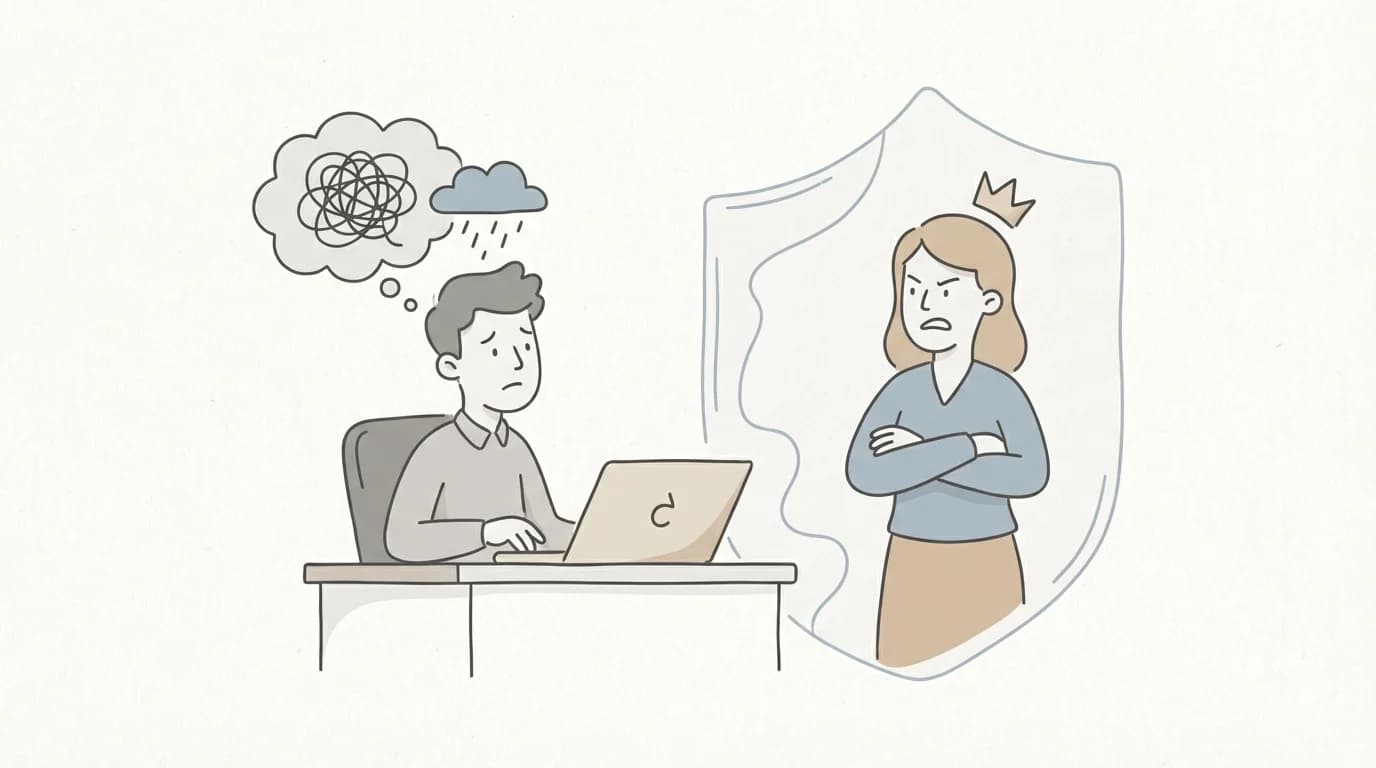
Your manager just proposed a technical direction you know is wrong. Or they assigned a project timeline that is impossible. Or they made a decision about your team's roadmap that ignores the reality you deal with every day.
You want to say something. But the voice in your head says: is this worth it? Will they take it personally? Will I get labeled as "difficult"?
So you nod, go back to your desk, and spend the next three months executing a plan you never believed in. That frustration builds. And it is avoidable.
Disagreeing with your manager is not insubordination. Done well, it changes how your manager sees you. Research by Amy Edmondson at Harvard Business School found that psychological safety, the ability to speak up without fear of punishment, is the single biggest predictor of high-performing teams. Google's Project Aristotle confirmed the same finding: the best teams are the ones where people feel safe to disagree.
The question is not whether to disagree. It is how.
Why most engineers handle disagreement badly
Engineers tend to make one of two mistakes when they disagree with their manager.
The first is saying nothing. You convince yourself the boss probably knows something you do not. Or that pushing back is not worth the political cost. So you stay quiet, and the bad decision goes unchallenged. Three months later, the project fails exactly the way you predicted, and your manager is surprised. You are not surprised. You are resentful.
The second is going too hard. You push back in a team meeting, in front of everyone, with a tone that says "you are wrong and I am going to prove it." Even if you are right, the public challenge puts your manager on the defensive. They dig in. You dig in. Nobody changes their mind, and now there is tension.
The sweet spot is somewhere in between: honest, direct, private, and framed around the problem rather than the person.
The framework for productive disagreement
Step 1: Separate the decision from the person
Before you open your mouth, ask yourself: am I reacting to the decision itself, or to the way it was communicated? Engineers sometimes disagree not because the idea is wrong but because they were not consulted. That is a process complaint, not a substance complaint. Know which one you are making.
If it is the decision itself, proceed. If it is about not being consulted, name that directly: "I want to share my perspective on this because I think there is context I can add."
Step 2: Start with facts, not opinions
The single best technique from the Crucial Conversations framework is to lead with observable facts before sharing your interpretation. Facts are hard to argue with. Opinions trigger defensiveness.
Weak: "I think migrating to this framework is a bad idea."
Strong: "The last time we tried a framework migration of this size, it took six months longer than projected and required pulling three engineers off feature work. I am worried we are going to hit the same pattern here. Can I share what I am seeing?"
The first statement is a judgment. The second is evidence plus a concern, followed by a question. The question matters because it invites dialogue instead of creating a debate.
Step 3: Disagree in private first
If your disagreement is significant, raise it in a 1:1 before raising it in a group setting. You are giving your manager space to consider your perspective without feeling challenged in front of the team.
In a 1:1: "I have been thinking about the decision to move the launch date up. I have some concerns I would like to walk through with you."
In a group meeting the same concern becomes: "I think the timeline is wrong and here is why." That forces your manager to either agree with you in front of everyone (unlikely) or defend the decision they already made (likely).
Private disagreement gives your manager the chance to change their mind without losing face. That is not manipulation. That is how adult relationships work.
Step 4: Propose an alternative
The difference between a complaint and a contribution is an alternative. If you only say "I disagree," you are creating a problem. If you say "I disagree, and here is what I would suggest instead," you are adding value.
You do not need a fully formed counter-proposal. Even a question works: "What if we tried X instead? It addresses the same goal but avoids the risk I am seeing."
Step 5: Know when to commit
Sometimes you will disagree, make your case, and your manager will still go the other direction. At that point, you have two options: commit or escalate.
In most cases, the right move is to commit. You made your case. Your manager heard it. They have context you might not have (budget constraints, cross-team dependencies, signals from leadership). The decision is theirs to make.
"Disagree and commit" means you made your argument, your manager chose differently, and you execute their decision as if it were your own. That is professional maturity. If the real issue is that your manager consistently shuts down input, the problem may be bigger than one disagreement, and the guide to dealing with a difficult manager covers when managing up stops working and what to do next.
The exception: if the decision is harmful (ethically, technically, or to your team), escalate. Talk to your skip-level. Document your concerns in writing. But this should be rare, not your default.
Scripts for common scenarios
When you disagree with a technical decision
"I want to share a concern about the approach we discussed. Based on what I have seen with [specific evidence], I think there is a risk of [specific problem]. Have you considered [alternative]? I want to make sure we are not missing something."
When you disagree with a timeline
"I want to make sure I am being honest about what is realistic. To hit [date], we would need to cut [specific thing] or add [specific resource]. I would rather flag this now than miss the deadline later. What trade-offs are you comfortable with?"
When you disagree with a priority decision
"I understand the direction on [priority]. I want to raise a concern though. Right now my plate includes [list], and adding this means I will need to drop or delay [specific thing]. Is that the right trade-off, or should we revisit the sequencing?"
When your manager shuts you down
"I hear you. I want to make sure my perspective is on the record though. I have concerns about [specific thing] for [specific reason]. If you have decided, I will commit to making it work. But I wanted to be transparent about what I am seeing."
What happens when you disagree well
Engineers who disagree well get noticed. Most managers would rather hear a concern early than discover a preventable failure later. Research published in the Journal of Applied Psychology found that interpersonal influence, including the ability to challenge ideas constructively, is a strong predictor of career advancement.
The engineers who stagnate are the ones who stay quiet and then complain in private. Your manager cannot fix a problem they do not know exists. And they cannot advocate for your promotion if they think you are just a quiet executor who never contributes beyond the code. Knowing when to speak up and when to let it go is one of the highest-leverage skills you can develop.
Disagreement, done right, is proof that you are thinking at a higher level than your current role requires. That is exactly what promotion cases are made of.